
Shorter days do not have to mean a lost winter. Seasonal affective disorder, or SAD, is a type of depression that comes back around the same time each year, and it can be treated. Knowing the signs lets you and your provider plan ahead, before the darkest weeks arrive. Here is how to tell SAD from the winter blues, how it is diagnosed and what treatment can include.
What seasonal affective disorder is
The National Institute of Mental Health (NIMH) describes SAD as a type of depression with a recurring seasonal pattern. Symptoms last about 4 to 5 months of the year. The more common form, winter-pattern SAD, usually starts in late fall or early winter and lifts in spring and summer. A less common summer pattern brings symptoms in spring and summer instead. SAD is not the "holiday blues," which NIMH describes as sadness or anxiety brought on by stress at certain times of the year. SAD is tied to daylight, not the calendar.
Symptoms to watch for
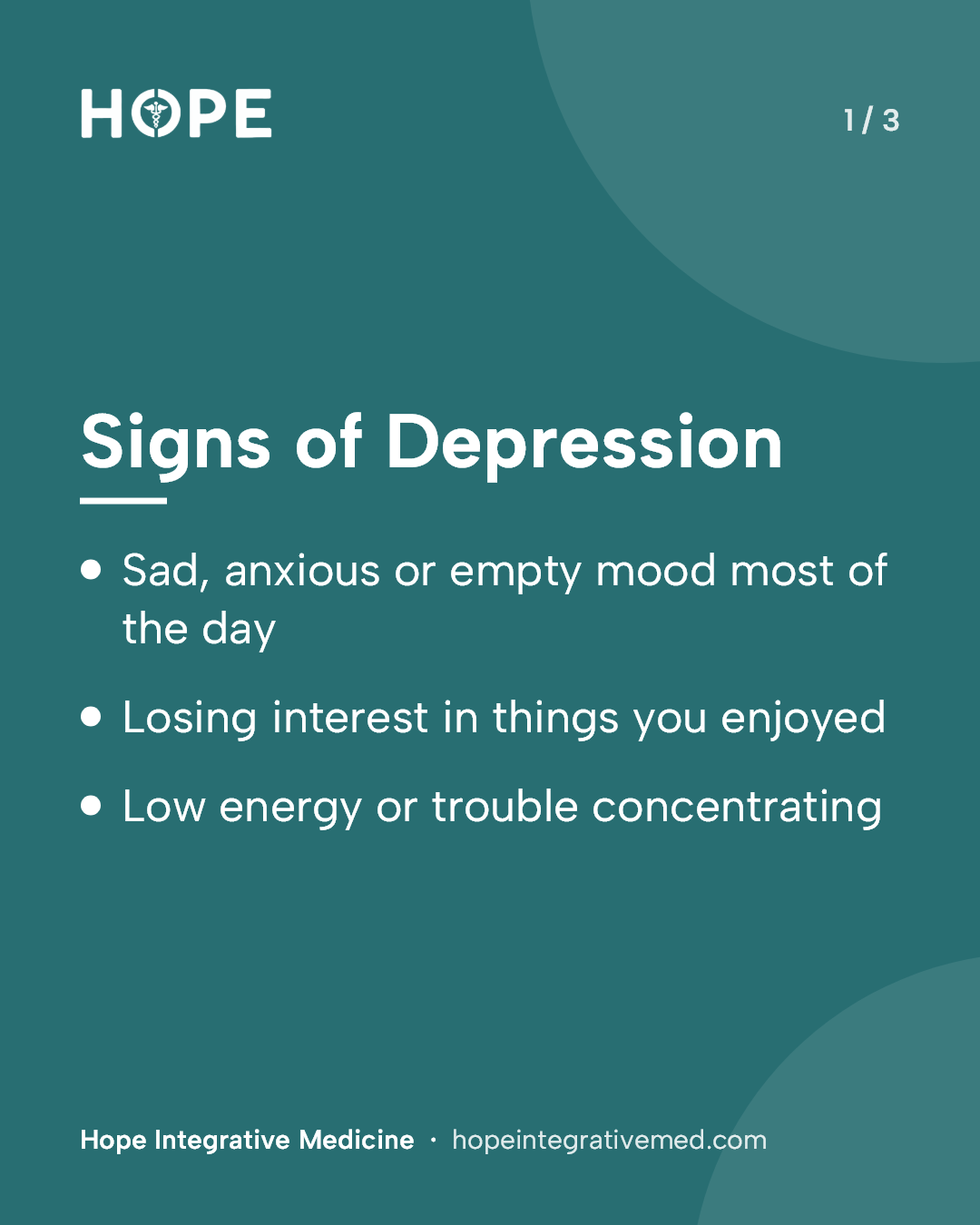
SAD includes the signs of depression. These can include a sad, anxious or "empty" mood most of the day for at least 2 weeks; feeling hopeless, irritable, guilty or worthless; losing interest in things you used to enjoy; low energy; trouble concentrating; changes in sleep or appetite; aches or pains with no clear physical cause; and thoughts of death or suicide.
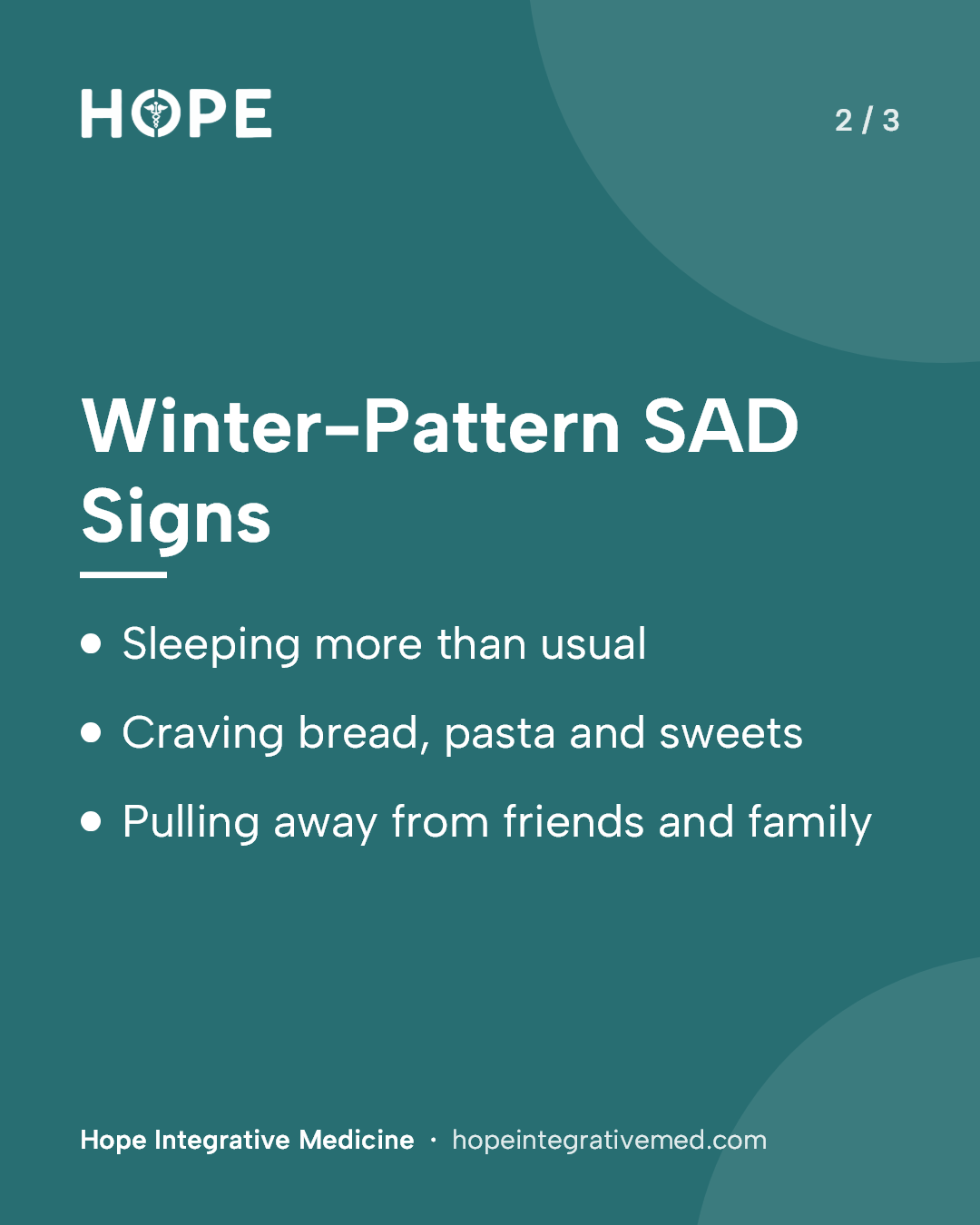
Winter-pattern SAD often adds three more signs: oversleeping; overeating, with cravings for carbohydrates (starchy and sugary foods such as bread, pasta and sweets) and weight gain; and social withdrawal, which means pulling away from friends and family. Summer-pattern SAD can bring trouble sleeping, poor appetite with weight loss, restlessness, agitation, anxiety, and violent or aggressive behavior.
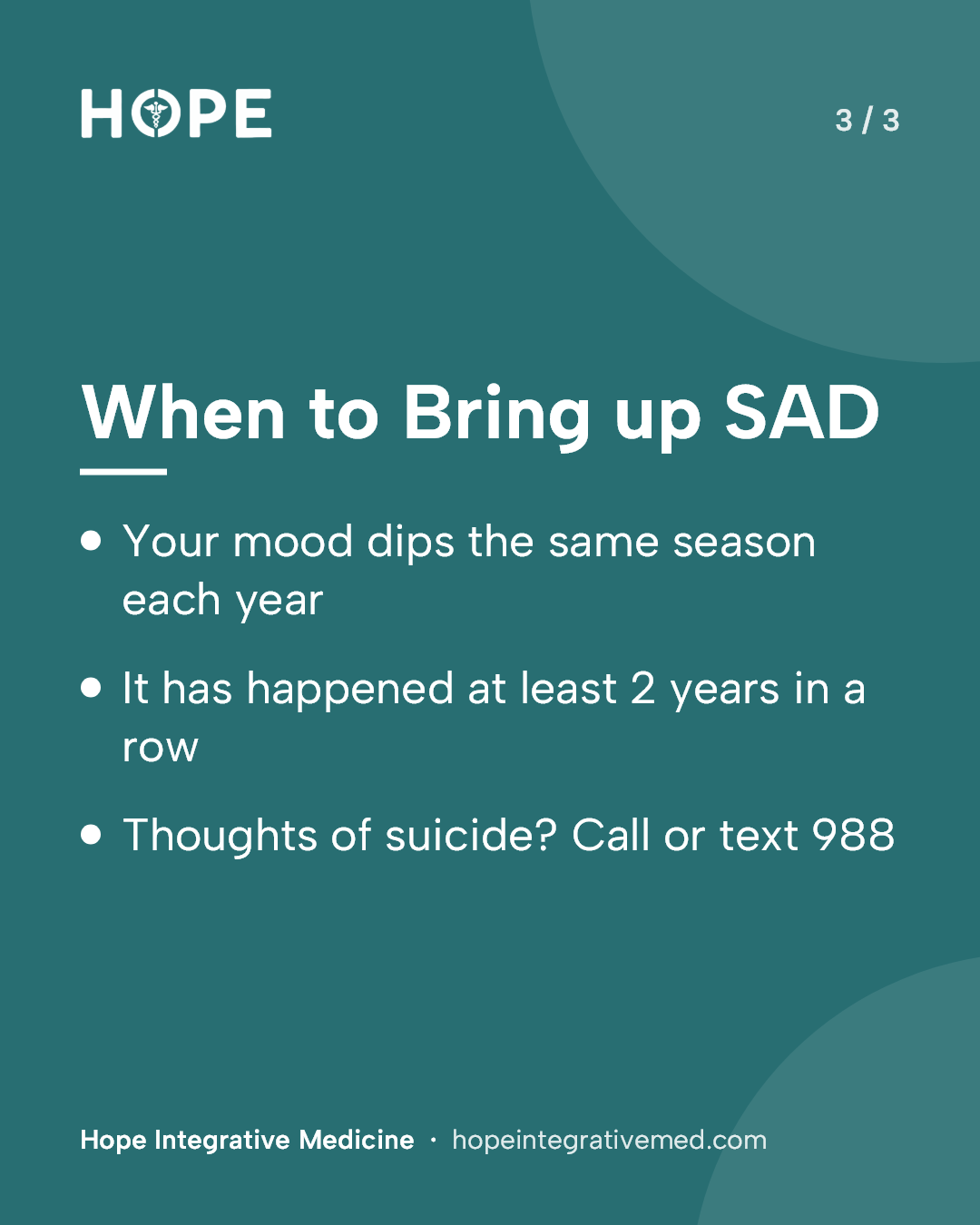
If you are having thoughts of suicide, call or text 988 any time. The 988 Suicide & Crisis Lifeline is free and confidential.
Who is more likely to have SAD
NIMH estimates that millions of Americans experience SAD. It often begins in young adulthood and is much more common in women than in men. It is also more common in people with depression or bipolar disorder, especially bipolar II disorder, and in people with ADHD, eating disorders, anxiety or panic disorder. It sometimes runs in families.
Where you live matters, too. SAD is more common farther north, where winter days are shorter. NIMH notes that people in Alaska or New England are more likely to develop it than people in Texas or Florida. Less likely is not never. Our days in South Carolina get shorter too, so if your mood follows the seasons, it is worth a conversation.
How SAD is diagnosed
Your provider may ask you to fill out a short questionnaire. According to NIMH, a diagnosis of SAD means three things. First, you have symptoms of depression, or the seasonal symptoms above. Second, your depression episodes have come during a specific season for at least 2 years in a row, although not everyone has symptoms every single year. Third, those seasonal episodes happen more often than episodes at other times of year. The American Psychiatric Association says its diagnostic manual, the DSM-5-TR, identifies SAD as a type of depression: major depressive disorder with a seasonal pattern.
Your provider will also look for other causes. NIMH notes that certain medicines and medical conditions, such as viruses or thyroid disorders, can cause the same symptoms as depression, and a provider can rule these out with a physical exam, an interview and lab tests. At Hope Integrative Medicine, blood is drawn in the office and sent to the LabCorp or Quest of your choice.
Ready to Get Started?
Primary care, mental health, and addiction medicine in one practice. New patients are often able to be scheduled within a week of requesting an appointment.
5 cards. Swipe or tap to see the next one.
What treatment can include
NIMH names four main treatments, used alone or together: light therapy, antidepressant medicine, talk therapy (psychotherapy) and vitamin D. Treatment can include medication, counseling or both, and your provider can help you decide what fits.
Light therapy. This is used for winter-pattern SAD. It usually means sitting in front of a 10,000-lux light box for about 30 to 45 minutes a day, most often first thing in the morning, from fall to spring. Lux is a measure of how bright a light is. If you have certain eye diseases or take medicines that make you more sensitive to sunlight, ask your provider first.
Antidepressant medicine. Antidepressants usually take 4 to 8 weeks to work, and you may need to try more than one. Selective serotonin reuptake inhibitors (SSRIs), a common type of antidepressant, are sometimes used. NIMH notes that the FDA has approved extended-release bupropion, which for many people can prevent seasonal episodes when taken daily from fall through early spring.
Talk therapy. NIMH describes a form of cognitive behavioral therapy adapted for SAD, called CBT-SAD. In one direct comparison, CBT-SAD and light therapy worked about equally well. Talk with a provider about whether talk therapy fits you.
Vitamin D. Many people with winter-pattern SAD are low in vitamin D, so supplements may help, but study results are mixed. Vitamin D can interact with some medicines, so check with your provider first.
A question to bring to your next visit
"Do my symptoms follow a seasonal pattern, and should we plan my treatment before the days get shorter next fall?"
Depression care at Hope Integrative Medicine
Our mental health team provides psychiatric medication management and counseling for depression, including depression that follows the seasons, in person in West Ashley or by telehealth across South Carolina. New patients are often able to be scheduled within a week of requesting an appointment. Request an appointment.
Sources: National Institute of Mental Health, Seasonal Affective Disorder (2023); National Institute of Mental Health, Depression (2024); SAMHSA, 2025 National Survey on Drug Use and Health: Annual National Report; American Psychiatric Association, Seasonal Affective Disorder (SAD); American Psychiatric Association, Diagnostic and Statistical Manual of Mental Disorders, Fifth Edition, Text Revision (DSM-5-TR, 2022); 988 Suicide & Crisis Lifeline.
This article is general information, not medical advice, and does not create a patient–provider relationship. Every situation is different, so see a provider who can evaluate yours and develop a plan of care. Any medication discussed here may not be right for you: the right choice depends on your diagnoses, other health conditions and current medicines, so take medication only as directed by the provider managing your care. If you are ever in doubt about an emergency, call 911 or go to the nearest emergency room. If you are having thoughts of suicide, call or text 988, or call 911 if you are in immediate danger.
Frequently Asked Questions
The National Institute of Mental Health describes SAD as a type of depression with a recurring seasonal pattern that lasts about 4 to 5 months a year. The holiday blues are sadness or anxiety brought on by stress at certain times of the year, while SAD is tied to changes in daylight.
SAD includes the signs of depression, such as a low mood most of the day, losing interest in things and low energy. Winter-pattern SAD often adds oversleeping, carbohydrate cravings and weight gain, and pulling away from friends and family.
A provider may use a questionnaire. NIMH says depression episodes must come during a specific season for at least 2 years in a row and happen more often than at other times of year. A provider can also rule out causes such as thyroid disorders with an exam and lab tests.
NIMH says light therapy usually means about 30 to 45 minutes a day in front of a 10,000-lux light box, most often first thing in the morning, from fall to spring. Ask your provider first if you have an eye disease or take medicines that increase sensitivity to sunlight.
NIMH says SAD is more common farther north, where winter days are shorter, and that people in Texas or Florida are less likely to develop it than people in Alaska or New England. Less likely does not mean never, so talk with a provider if your mood follows the seasons.
Many people with winter-pattern SAD are low in vitamin D, and NIMH says supplements may help, but study results are mixed. Vitamin D can interact with some medicines, so check with your provider first.