
The clocks fell back an hour this weekend, and many people notice their sleep is off for a few days. For some, poor sleep lasts much longer, and it often travels with a low mood or constant worry. Here is how sleep and mental health affect each other, what helps, and how care that brings your mental health into your primary care can treat both.
What insomnia is
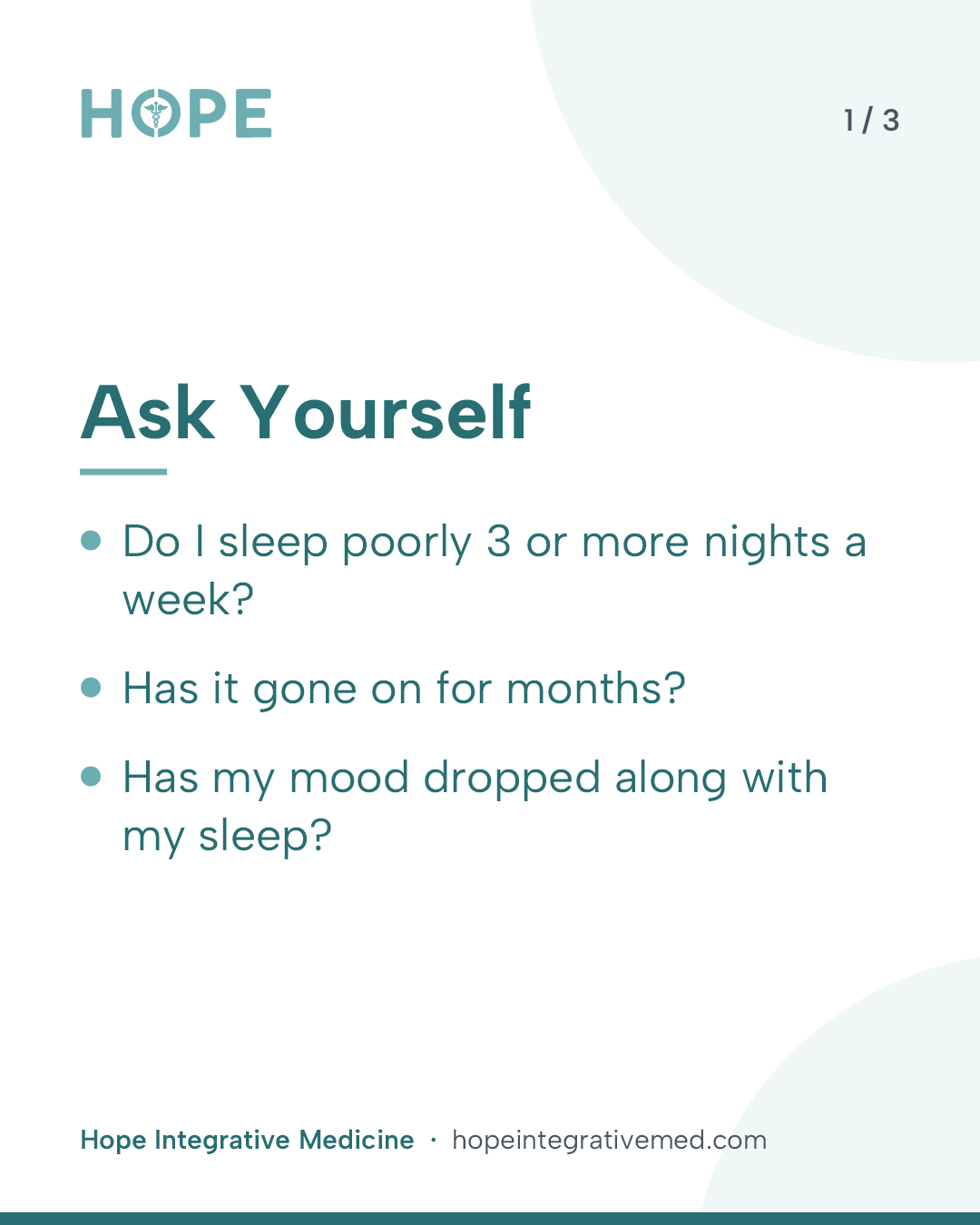
The National Heart, Lung, and Blood Institute (NHLBI) says that with insomnia, you may have trouble falling asleep, staying asleep or getting good quality sleep. Short-term insomnia is often linked to stress or changes in your routine or surroundings, and it can last for a few days or weeks. Chronic insomnia happens 3 or more nights a week and lasts more than 3 months. NHLBI notes you can develop insomnia at any age, and your chances of having it increase as you get older.
How sleep and mood are connected
Sleep problems are part of how depression and anxiety show up. The National Institute of Mental Health (NIMH) lists trouble sleeping, waking too early or oversleeping among the signs of depression. People with generalized anxiety disorder may have trouble falling asleep or staying asleep, or feel fatigued.
The connection also runs the other way. NHLBI says sleep deficiency has been linked to depression, suicide and risk-taking behavior. Stress and worry about work, relationships, money or the death of a loved one raise your risk of insomnia, and NHLBI notes that worrying about whether you will get enough sleep and watching the clock can raise it too.
Habits that support sleep
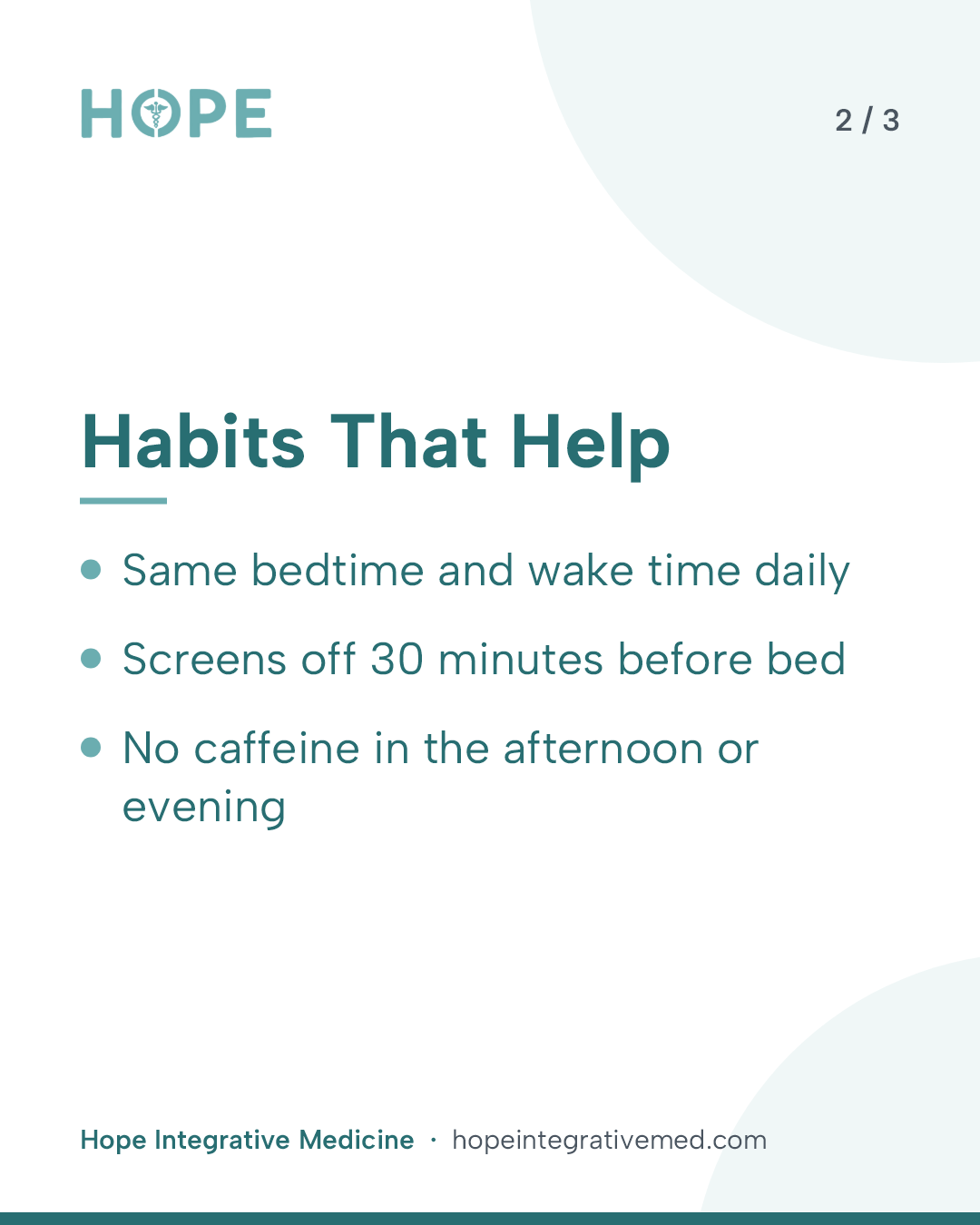
The Centers for Disease Control and Prevention (CDC) says adults ages 18 to 60 need 7 or more hours of sleep, adults 61 to 64 need 7 to 9 hours, and adults 65 and older need 7 to 8 hours. CDC suggests going to bed and getting up at the same time every day, turning off electronic devices at least 30 minutes before bedtime, and avoiding caffeine in the afternoon or evening. NHLBI also suggests avoiding caffeine, nicotine and alcohol close to bedtime.
Habits help, but they are not always enough. NIMH says a healthy lifestyle, including getting enough sleep and reducing caffeine, can help with anxiety, although this alone cannot replace treatment.
Treatment for insomnia
NHLBI describes cognitive behavioral therapy for insomnia (CBT-I) as a 6- to 8-week treatment plan to help you learn how to fall asleep faster and stay asleep longer. It can include sleep education, relaxation techniques, a regular sleep-wake schedule and therapy that reduces anxiety about not being able to sleep.
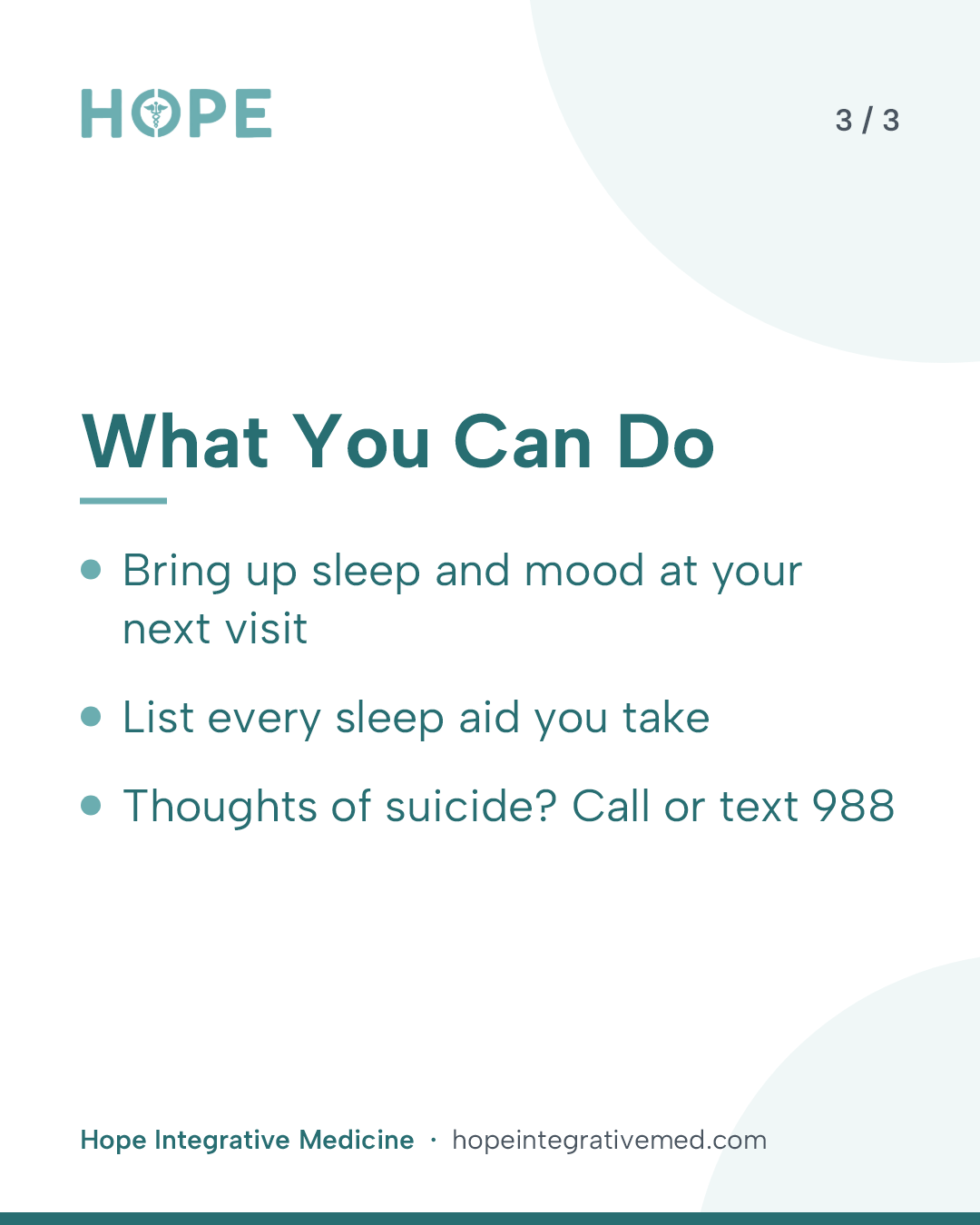
Medicines are another option, and they need care. NHLBI says benzodiazepines can be habit-forming, should be taken for only a few weeks, and can interact dangerously with other medicines. It also says research has not proven that melatonin is an effective treatment for insomnia. Tell your provider about every medicine and supplement you take for sleep.
Treating sleep and mood together
When depression or anxiety is part of the picture, treating it can be part of treating your sleep. NIMH says treatment for generalized anxiety disorder typically involves psychotherapy, medication or both. Your provider can help you decide what fits.
Behavioral Health Integration (BHI) is a Medicare service that brings mental health care into your primary care. Medicare covers two kinds: psychiatric Collaborative Care and general BHI. Hope offers general BHI. The Centers for Medicare & Medicaid Services (CMS) describes general BHI as care that systematically assesses and monitors how you are doing, adjusts the care plan if you are not improving enough, and gives you a continuous relationship with an appointed member of your care team. At Hope, that is a care coordinator who works closely with your provider, so your sleep, your mood and your physical health are part of the same plan.
Medicare Part B may pay for BHI services if you have a behavioral health condition such as depression or anxiety and you are eligible. After the Part B deductible, you generally pay 20% of the Medicare-approved amount. Medicare Advantage plans must cover everything Original Medicare covers, but costs and rules vary, so check with your plan. Before BHI begins, we ask for your consent, and you can stop at any time.
Ready to Get Started?
Primary care, mental health, and addiction medicine in one practice. New patients are often able to be scheduled within a week of requesting an appointment.
5 cards. Swipe or tap to see the next one.
A question to bring to your next visit
"I have not been sleeping well, and my mood has been low. Could we look at both as part of my care plan?"
If you or someone you know is struggling or having thoughts of suicide, call or text the 988 Suicide & Crisis Lifeline at 988. In a life-threatening emergency, call 911.
Care coordination at Hope Integrative Medicine
Our primary care, mental health and addiction medicine teams work as one practice, connected by care coordinators who keep your plan moving between visits. Care is available in person in West Ashley and through hybrid care across South Carolina.
Want a care team member focused on your care between visits? Ask us about enrolling. Bring it up at your next visit, send us a message or call (843) 737-0312, and we'll check whether Behavioral Health Integration or Chronic Care Management is right for you. New to Hope? Request an appointment.
Sources: National Heart, Lung, and Blood Institute, Insomnia (2022); National Heart, Lung, and Blood Institute, Insomnia: Treatment (2022); National Heart, Lung, and Blood Institute, How Sleep Affects Your Health (2022); National Institute of Mental Health, Depression (2024); National Institute of Mental Health, Generalized Anxiety Disorder (2025); Centers for Disease Control and Prevention, About Sleep (2024); Centers for Medicare & Medicaid Services, Behavioral Health Integration Services, MLN909432 (January 2026); Medicare.gov, Behavioral health integration services; Medicare.gov, Compare Original Medicare & Medicare Advantage.
This article is general information, not medical advice, and does not create a patient–provider relationship. Every situation is different, so see a provider who can evaluate yours and develop a plan of care. Any medication discussed here may not be right for you: the right choice depends on your diagnoses, other health conditions and current medicines, so take medication only as directed by the provider managing your care. If you are ever in doubt about an emergency, call 911 or go to the nearest emergency room.
Frequently Asked Questions
The National Heart, Lung, and Blood Institute says chronic insomnia happens 3 or more nights a week and lasts more than 3 months. Short-term insomnia can last a few days or weeks and is often linked to stress or a change in routine.
Yes. The National Institute of Mental Health lists trouble sleeping, waking too early or oversleeping among the signs of depression, and trouble falling or staying asleep among the signs of generalized anxiety disorder.
NHLBI says sleep deficiency has been linked to depression, suicide and risk-taking behavior. If poor sleep and a low mood have lasted, tell your provider.
The Centers for Disease Control and Prevention says adults ages 18 to 60 need 7 or more hours, adults 61 to 64 need 7 to 9 hours, and adults 65 and older need 7 to 8 hours.
NHLBI describes cognitive behavioral therapy for insomnia (CBT-I) as a 6- to 8-week treatment plan to help you learn how to fall asleep faster and stay asleep longer.
Medicare Part B may pay for BHI services if you have a behavioral health condition such as depression or anxiety and you are eligible. After the Part B deductible, you generally pay 20% of the Medicare-approved amount.