Sleep and Your Mood: What to Know
Based on National Heart, Lung, and Blood Institute, Insomnia (2022)
5 cards. Swipe or tap to see the next one.
How sleep and mental health affect each other, what insomnia is, habits and treatments that help, and how Behavioral Health Integration brings mental health care into your primary care.
Looking for a Primary Care Provider?
Checkups, preventive care and ongoing care for chronic conditions in West Ashley, Charleston. New patients are often able to be scheduled within a week of requesting an appointment. Schedule an appointment today.
In this guide
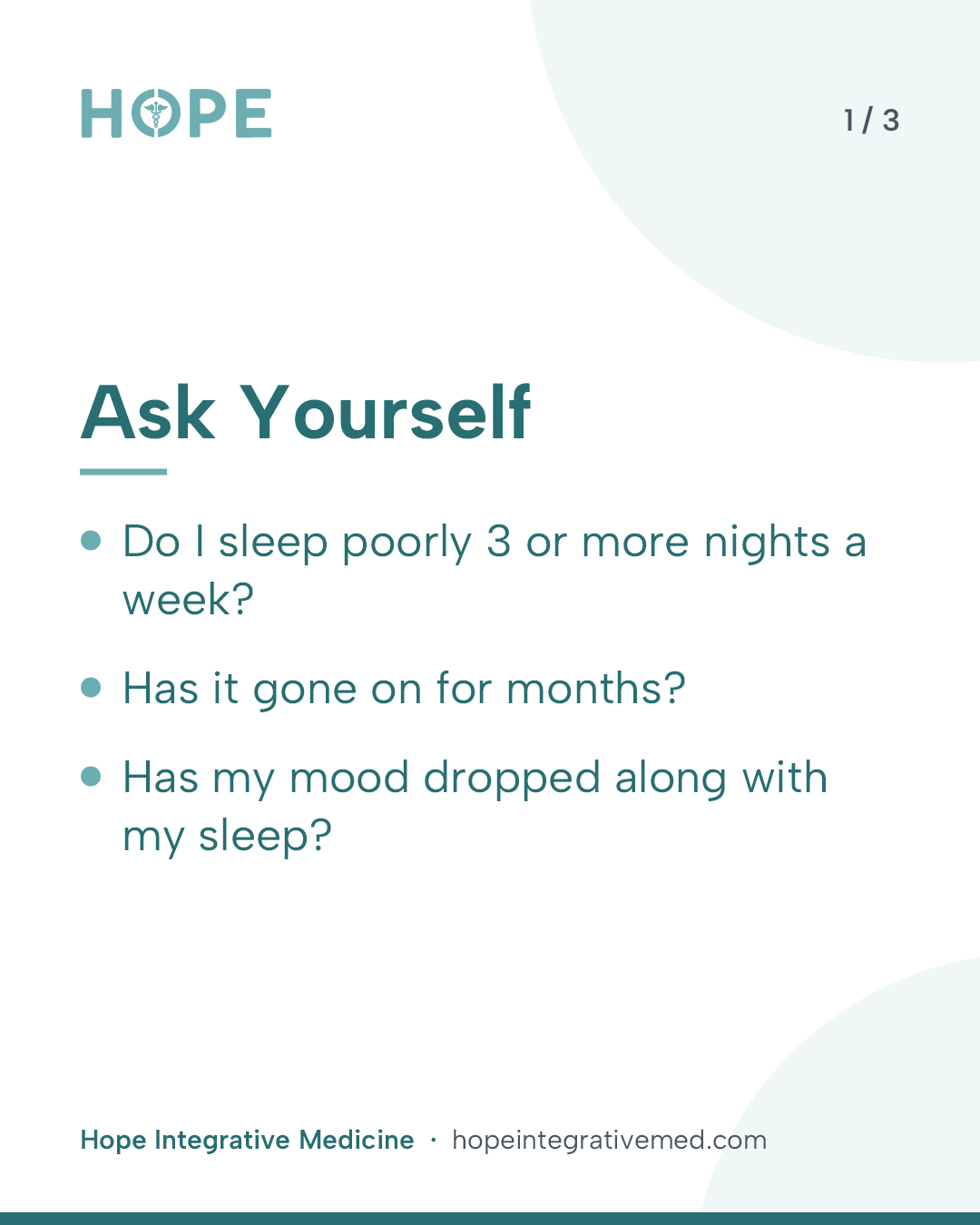
Ask Yourself
- Do I sleep poorly 3 or more nights a week?
- Has it gone on for months?
- Has my mood dropped along with my sleep?
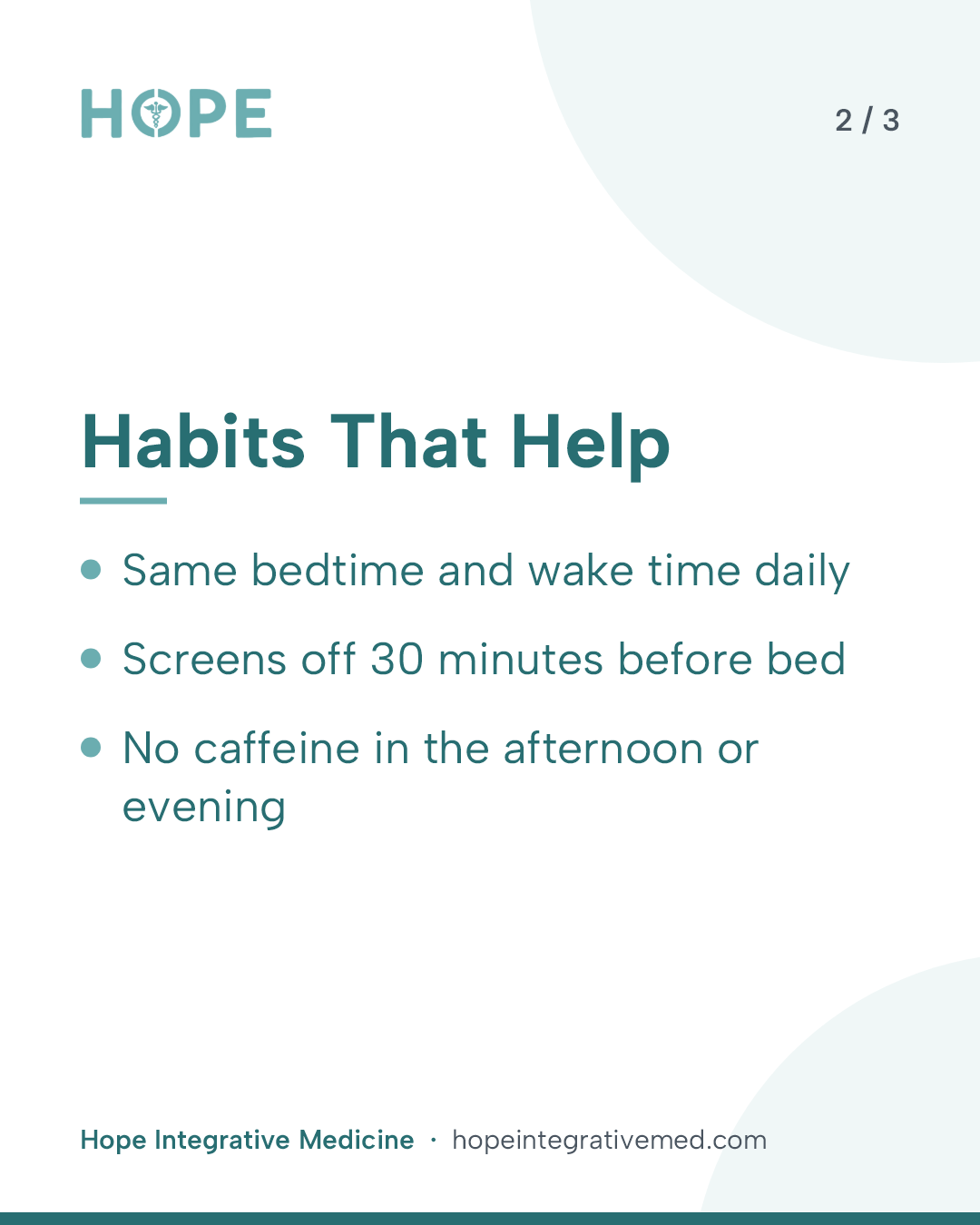
Habits That Help
- Same bedtime and wake time daily
- Screens off 30 minutes before bed
- No caffeine in the afternoon or evening
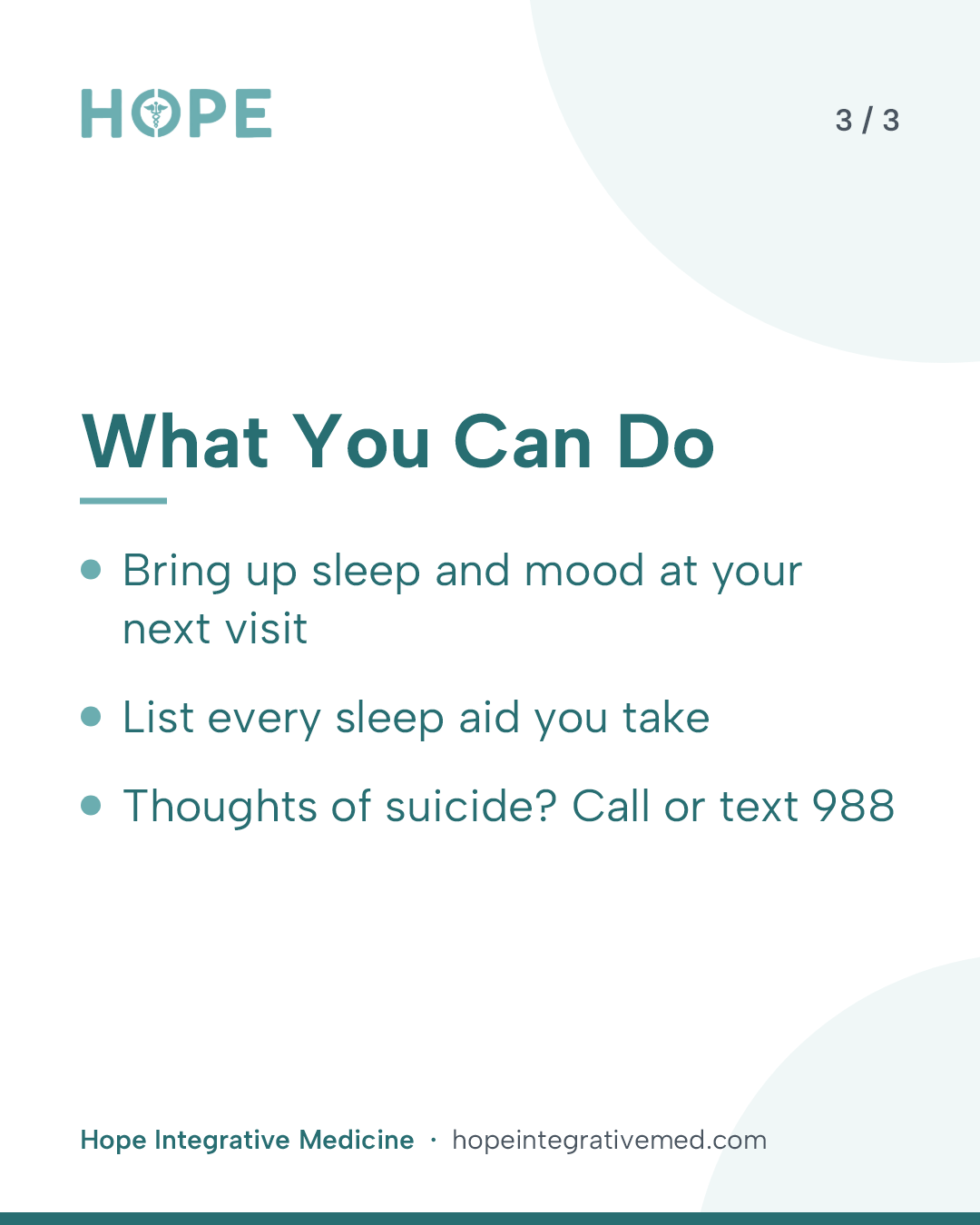
What You Can Do
- Bring up sleep and mood at your next visit
- List every sleep aid you take
- Thoughts of suicide? Call or text 988
What the guideline says
- NHLBI says chronic insomnia happens 3 or more nights a week and lasts more than 3 months; short-term insomnia is often linked to stress or a change in routine.
- NIMH lists trouble sleeping, waking too early or oversleeping among the signs of depression, and trouble falling or staying asleep among the signs of generalized anxiety disorder.
- NHLBI says sleep deficiency has been linked to depression, suicide and risk-taking behavior.
- CDC says adults 18 to 60 need 7 or more hours of sleep, and suggests a regular schedule, devices off 30 minutes before bed and no caffeine late in the day.
- Cognitive behavioral therapy for insomnia is a 6- to 8-week treatment plan, and Behavioral Health Integration can bring sleep and mood care into one primary care plan.
Source: National Heart, Lung, and Blood Institute, Insomnia (2022)
Read the full article: Sleep and Mental Health: When Poor Sleep and a Low Mood Go Together →
This guide is general health information and does not replace advice from your own provider.
Frequently Asked Questions
The Centers for Disease Control and Prevention says adults ages 18 to 60 need 7 or more hours, adults 61 to 64 need 7 to 9 hours, and adults 65 and older need 7 to 8 hours.
CDC suggests going to bed and getting up at the same time every day, turning off devices at least 30 minutes before bedtime and avoiding caffeine in the afternoon or evening.
Try: "I have not been sleeping well, and my mood has been low. Could we look at both as part of my care plan?"