Winter Blues or SAD? Signs to Watch
Based on National Institute of Mental Health, Seasonal Affective Disorder (2023)
5 cards. Swipe or tap to see the next one.
How to tell seasonal affective disorder from the winter blues, the symptoms to watch for, how SAD is diagnosed, and what treatment can include, from light therapy to medication.
Ready to Talk With Someone?
We care for anxiety, depression and stress in West Ashley and by telehealth across South Carolina. Schedule an appointment today.
In this guide
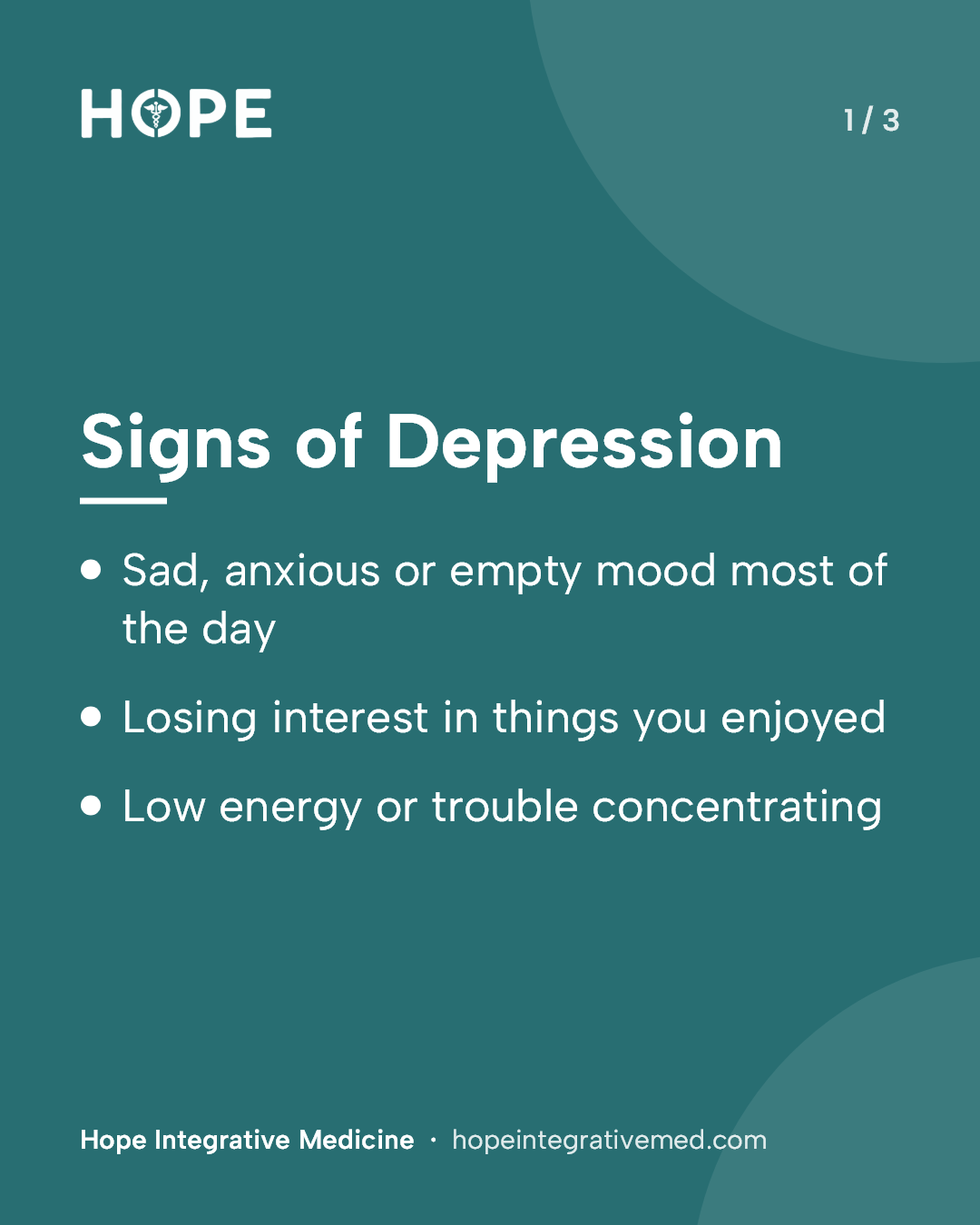
Signs of Depression
- Sad, anxious or empty mood most of the day
- Losing interest in things you enjoyed
- Low energy or trouble concentrating
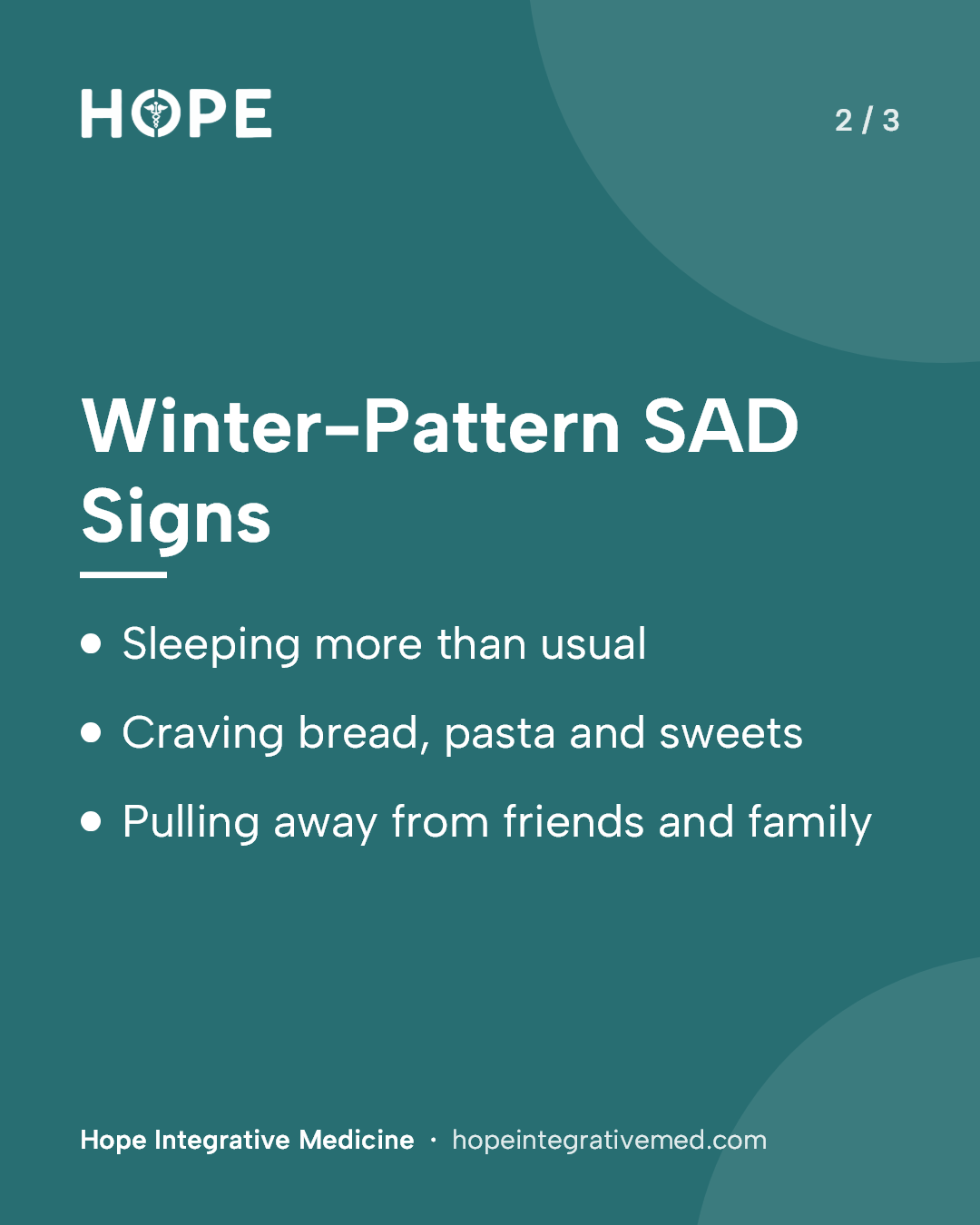
Winter-Pattern SAD Signs
- Sleeping more than usual
- Craving bread, pasta and sweets
- Pulling away from friends and family
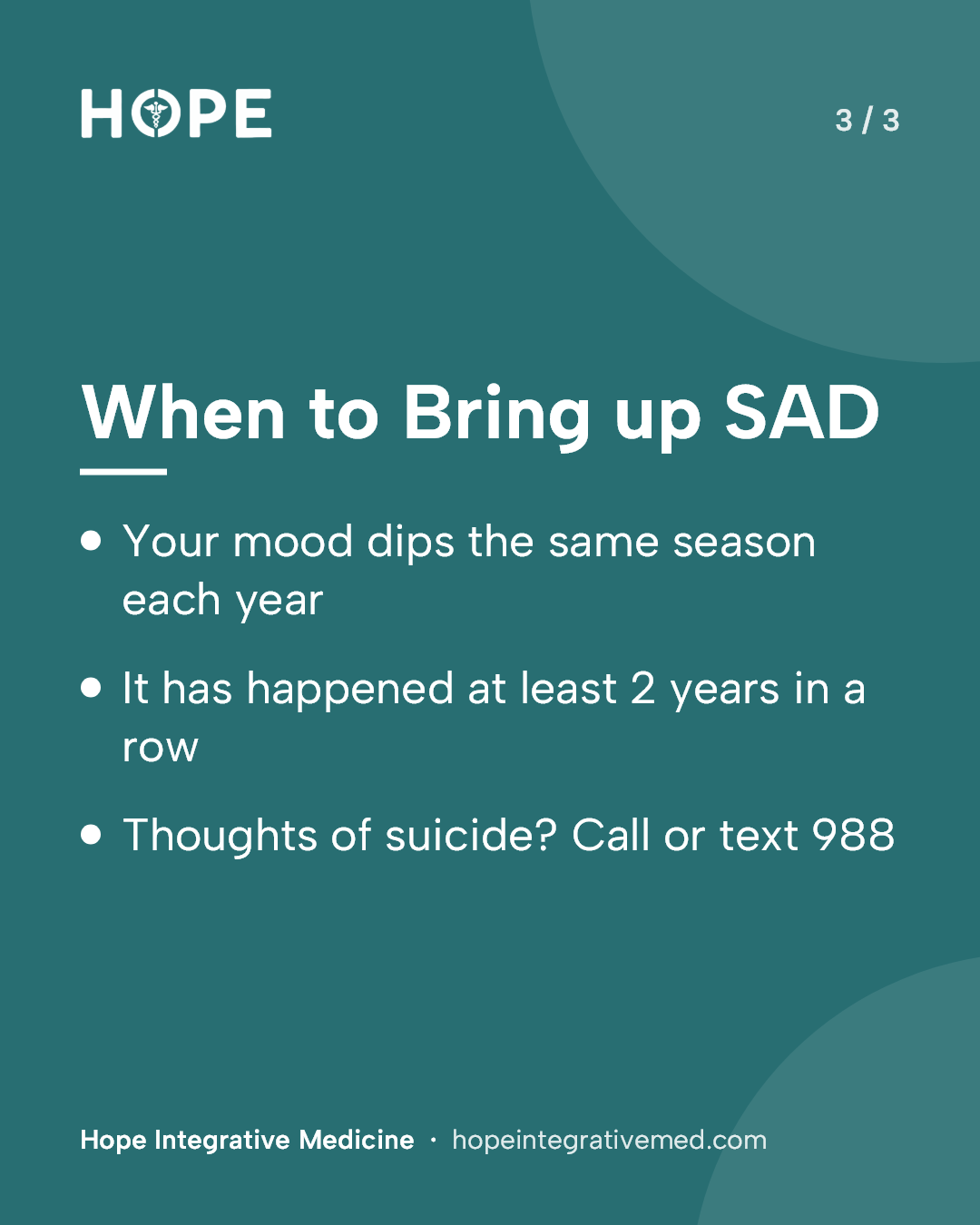
When to Bring Up SAD
- Your mood dips the same season each year
- It has happened at least 2 years in a row
- Thoughts of suicide? Call or text 988
What the guideline says
- Seasonal affective disorder (SAD) is a type of depression with a recurring seasonal pattern; symptoms last about 4 to 5 months of the year.
- Winter-pattern SAD usually starts in late fall or early winter and often adds oversleeping, carbohydrate cravings with weight gain, and social withdrawal.
- A SAD diagnosis means depression episodes during a specific season for at least 2 years in a row, more often than episodes at other times of year.
- A provider can rule out causes such as thyroid disorders with a physical exam, an interview and lab tests.
- NIMH names four main treatments, used alone or together: light therapy, antidepressant medicine, talk therapy and vitamin D.
Source: National Institute of Mental Health, Seasonal Affective Disorder (2023)
Read the full article: Seasonal Affective Disorder: When Winter Depression Is More Than the Blues →
This guide is general health information and does not replace advice from your own provider.
Frequently Asked Questions
NIMH says to ask your provider first if you have certain eye diseases or take medicines that make you more sensitive to sunlight. Light therapy is used for winter-pattern SAD.
NIMH says antidepressants usually take 4 to 8 weeks to work, and you may need to try more than one. Selective serotonin reuptake inhibitors (SSRIs), a common type of antidepressant, are sometimes used.
NIMH notes that the FDA has approved extended-release bupropion, which for many people can prevent seasonal episodes when taken daily from fall through early spring. Ask your provider whether planning ahead fits you.