Getting the right diagnosis is the first step toward the right treatment. If you have been treated for depression but also have times when you feel unusually "up," wired or full of energy, those times matter. They can point to bipolar disorder, which is treated differently from depression alone. The National Institute of Mental Health (NIMH) says treatment often helps, even in severe cases. Here is how to tell the two apart, how bipolar disorder is diagnosed and what treatment involves.
How bipolar disorder differs from depression
Depression brings periods of low mood. Bipolar disorder is a mental illness with extreme mood changes. It includes "up" periods, called mania or a milder form called hypomania, along with periods of depression. NIMH estimates that 2.8% of U.S. adults had bipolar disorder in the past year. It usually starts in late adolescence or early adulthood.
The two can be hard to tell apart. NIMH notes that people with bipolar II disorder may seek help only for their depressive episodes, and their hypomanic episodes may go unnoticed. Some people have bipolar disorder for years before it is diagnosed.
Symptoms of mania, hypomania and depression
Mania can include an "up," elevated or irritable mood; being much more active than usual; racing thoughts; needing much less sleep; talking fast; seeking pleasure to excess; feeling unusually important; and trouble keeping up with work, social life or relationships.
Hypomania has similar symptoms that are milder. A person may feel good and get a lot done, and may not notice that anything is wrong. Family and friends may notice the change.
Depression can include feeling sad, hopeless or anxious; losing interest in activities; low energy; trouble concentrating; sleep changes; and thoughts of death or suicide. Some people have mixed episodes, with manic and depressive symptoms at the same time. NIMH says mood episodes typically last a week or two or longer, with symptoms most of each day.
If you or someone you know is in crisis, call or text 988 any time. The 988 Suicide & Crisis Lifeline is free and confidential.
The types of bipolar disorder
NIMH describes three main types. In bipolar I disorder, manic episodes last at least 7 days or are severe enough to need hospital care, and depressive episodes usually happen too. In bipolar II disorder, a person has depressive episodes and hypomanic episodes, and many people also have ongoing low-grade depression. In cyclothymic disorder, hypomanic and depressive symptoms keep coming back but are not strong or long enough to count as full episodes. Having 4 or more mood episodes within a year is called rapid cycling. Providers use the American Psychiatric Association's diagnostic manual, the DSM-5-TR, to tell these types apart.
How bipolar disorder is diagnosed
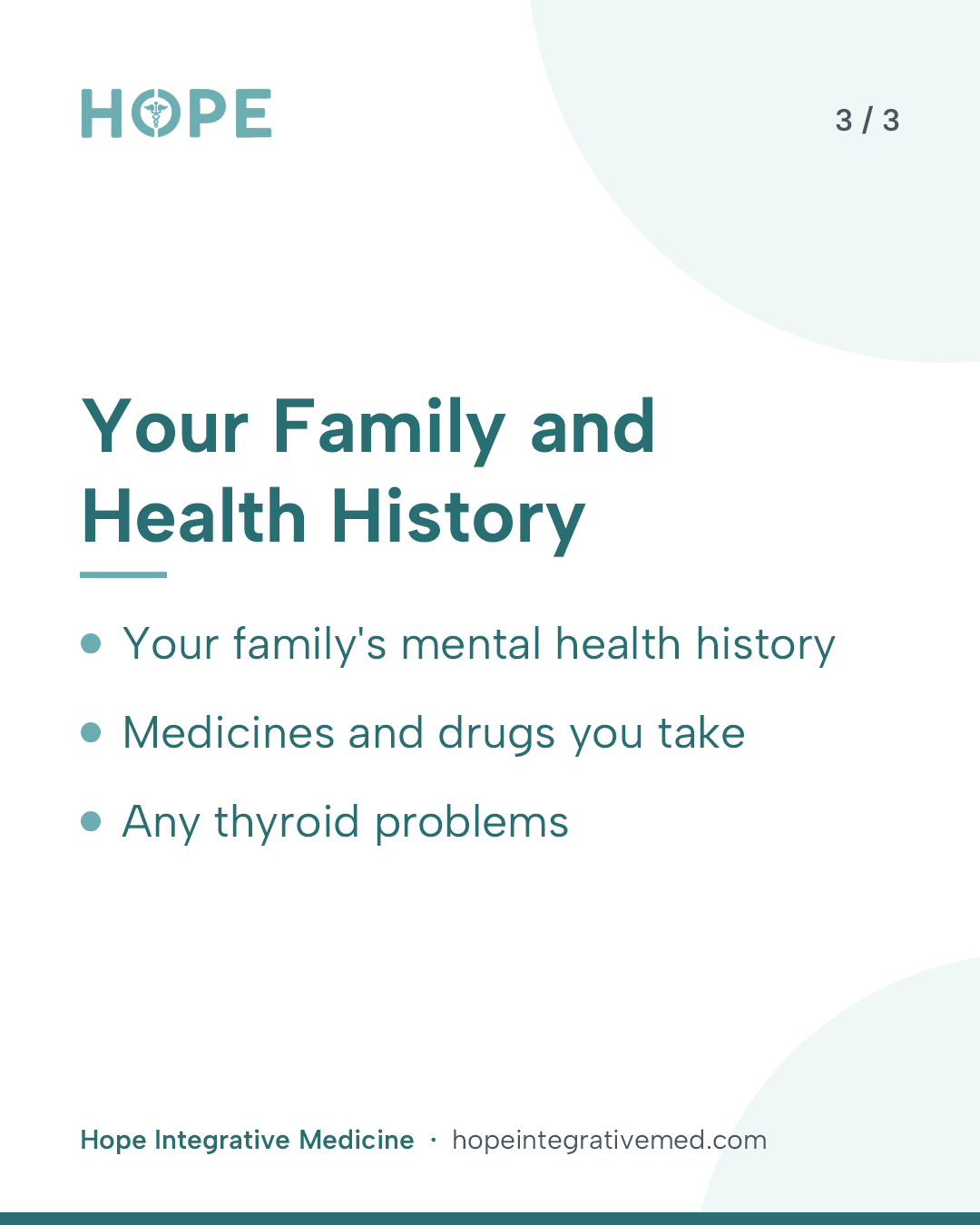
A provider may do a physical exam and order medical tests to rule out other illnesses, and may refer you to a mental health professional. NIMH explains that diagnosis looks at how severe your symptoms have been, how long they lasted and how often they came back over your lifetime, along with your family history. Other causes matter, because thyroid disease and some drugs can cause or worsen mood symptoms. Many people with bipolar disorder also have anxiety disorders, ADHD, substance misuse or eating disorders.
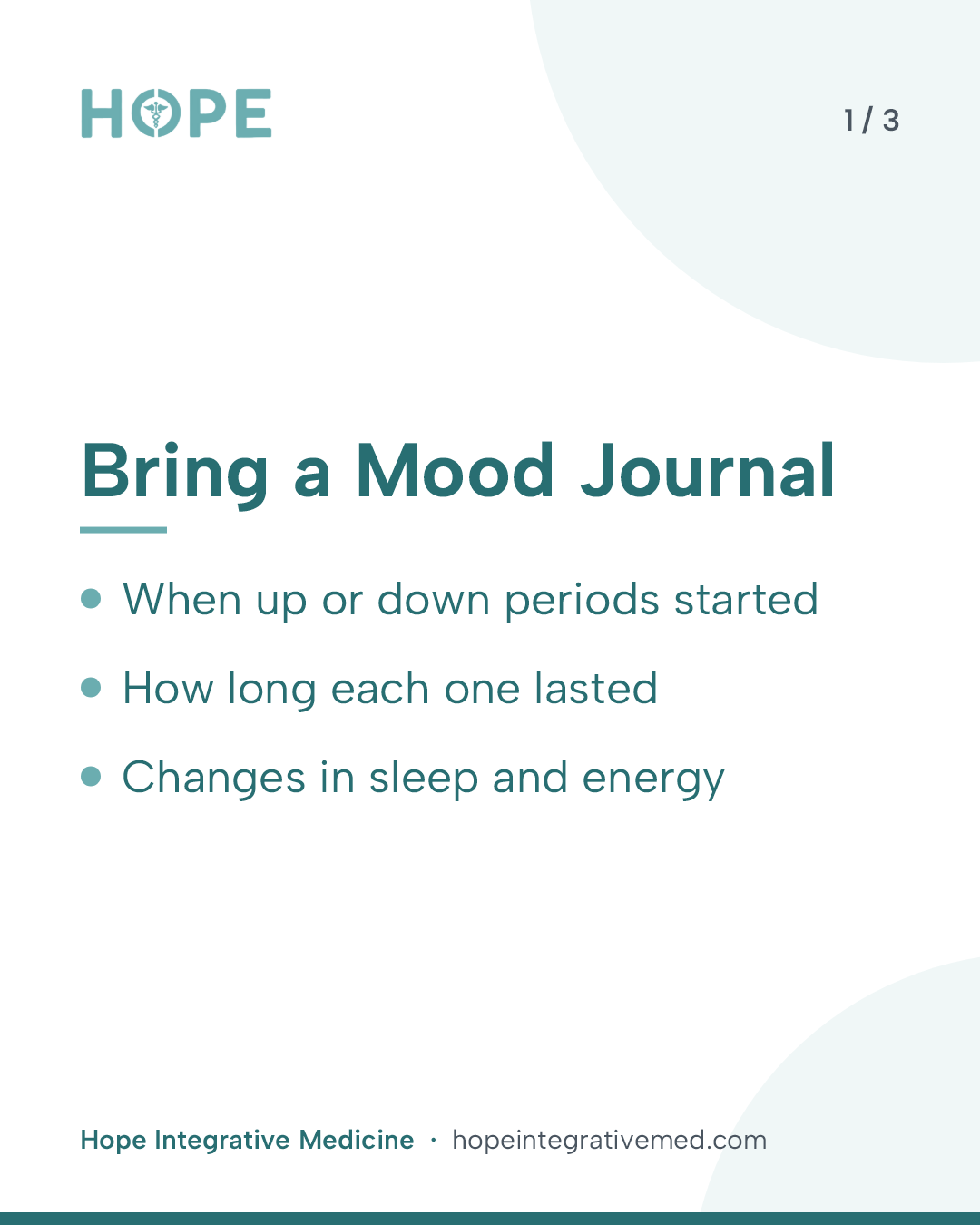
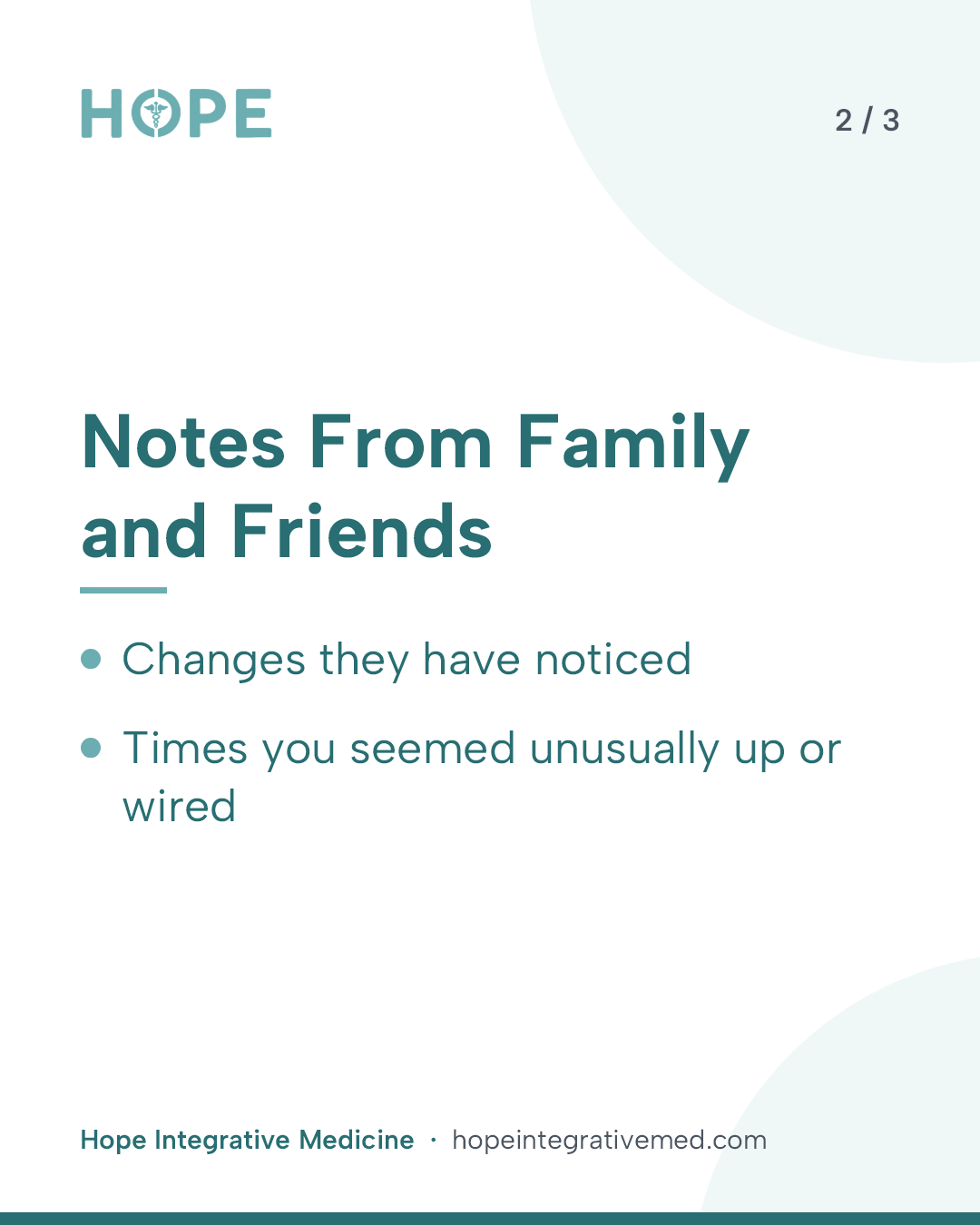
You can help. NIMH suggests keeping a life chart or mood journal to help recognize mood swings. Bring it to your visit, along with anything family or friends have noticed. At Hope Integrative Medicine, blood is drawn in the office and sent to the LabCorp or Quest of your choice.
Ready to Get Started?
Primary care, mental health, and addiction medicine in one practice. New patients are often able to be scheduled within a week of requesting an appointment.
5 cards. Swipe or tap to see the next one.
Treatment
Bipolar disorder usually needs lifelong treatment. Symptoms may come and go, but it does not go away on its own. NIMH says treatment can include medication, talk therapy (psychotherapy) or both.
Mood stabilizers, such as lithium or valproate, help prevent mood episodes or make them less severe. Lithium can also lower the risk of suicide. Atypical antipsychotics, another type of medicine used to help control mood symptoms, are also commonly prescribed. Sleep or anxiety medicines are sometimes added.
Why an antidepressant alone is not the answer. This is a key difference from depression care. Depression in bipolar disorder is often treated with a mood stabilizer or an antipsychotic. NIMH says an antidepressant may be added for some people, but antidepressants are not used alone because they can trigger a manic episode or rapid cycling. That is one reason an accurate diagnosis matters so much.
Do not stop a medicine without talking to your provider first. NIMH lists talk therapy approaches used alongside medication, such as interpersonal and social rhythm therapy, family-focused therapy and cognitive behavioral therapy; talk with a provider about what fits you.
Daily habits that support treatment
NIMH suggests keeping a routine for eating, sleeping and exercising, and avoiding alcohol and drugs. Winter can be a harder season for some people. NIMH notes that many people with bipolar disorder have depression that worsens in winter, and seasonal affective disorder is more common in people with bipolar II disorder. Learn more about seasonal affective disorder.
A question to bring to your next visit
"Have I ever had 'up' periods that could change my diagnosis, and does my treatment plan account for them?"
Mood disorder care at Hope Integrative Medicine
Our mental health team provides psychiatric medication management and counseling for bipolar disorder, depression and other conditions, in person in West Ashley or by telehealth across South Carolina. New patients are often able to be scheduled within a week of requesting an appointment. Request an appointment.
Sources: National Institute of Mental Health, Bipolar Disorder (2025); National Institute of Mental Health, Bipolar Disorder statistics; National Institute of Mental Health, Seasonal Affective Disorder (2023); American Psychiatric Association, Diagnostic and Statistical Manual of Mental Disorders, Fifth Edition, Text Revision (DSM-5-TR, 2022); 988 Suicide & Crisis Lifeline.
This article is general information, not medical advice, and does not create a patient–provider relationship. Every situation is different, so see a provider who can evaluate yours and develop a plan of care. Any medication discussed here may not be right for you: the right choice depends on your diagnoses, other health conditions and current medicines, so take medication only as directed by the provider managing your care. If you are ever in doubt about an emergency, call 911 or go to the nearest emergency room. If you are having thoughts of suicide, call or text 988, or call 911 if you are in immediate danger.
Frequently Asked Questions
Depression brings periods of low mood. Bipolar disorder also includes "up" periods called mania or hypomania, along with periods of depression, according to the National Institute of Mental Health.
Hypomania has symptoms like mania, such as an "up" or irritable mood, more activity, racing thoughts and less need for sleep, but milder. A person may feel good and productive and not notice anything is wrong, while family and friends may notice the change.
It can be missed. NIMH says people with bipolar II disorder may seek help only for depressive episodes, and their hypomanic episodes may go unnoticed. Some people have bipolar disorder for years before it is diagnosed.
NIMH says antidepressants are not used alone in bipolar disorder because they can trigger a manic episode or rapid cycling. Depression in bipolar disorder is often treated with a mood stabilizer or an antipsychotic, and an antidepressant may be added for some people.
A provider may do a physical exam and medical tests to rule out other causes, such as thyroid disease. Diagnosis looks at how severe, long and frequent your mood symptoms have been over your lifetime, along with your family history.
NIMH says bipolar disorder usually needs lifelong treatment and does not go away on its own, though symptoms may come and go. Treatment often helps, even in severe cases.