What to Bring to a Visit About Mood Swings
Based on National Institute of Mental Health, Bipolar Disorder (2025)
5 cards. Swipe or tap to see the next one.

How bipolar disorder differs from depression, the signs of mania and hypomania, how bipolar disorder is diagnosed, and why antidepressants are not used alone to treat it.
Ready to Talk With Someone?
We care for anxiety, depression and stress in West Ashley and by telehealth across South Carolina. Schedule an appointment today.
In this guide
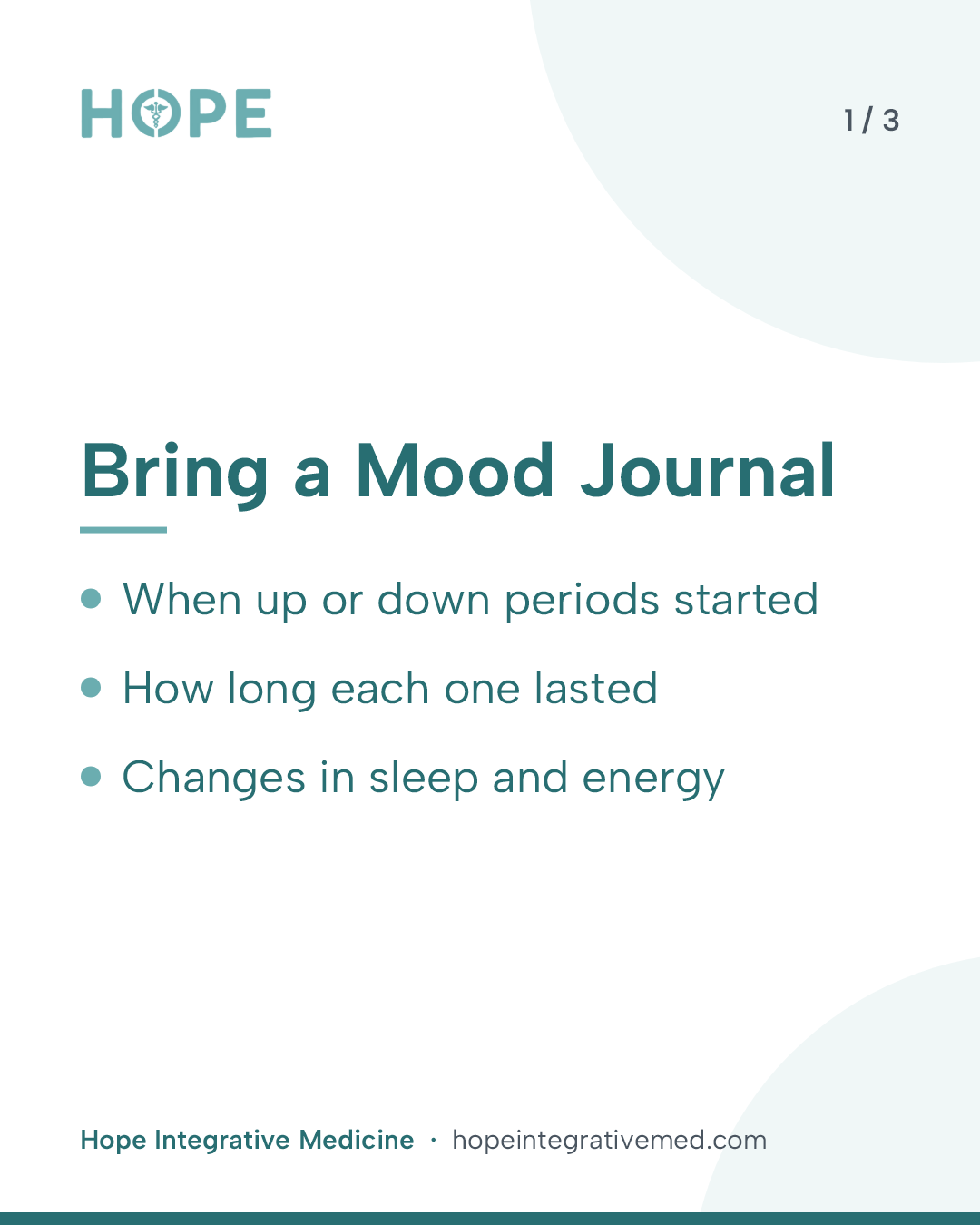
Bring a Mood Journal
- When up or down periods started
- How long each one lasted
- Changes in sleep and energy
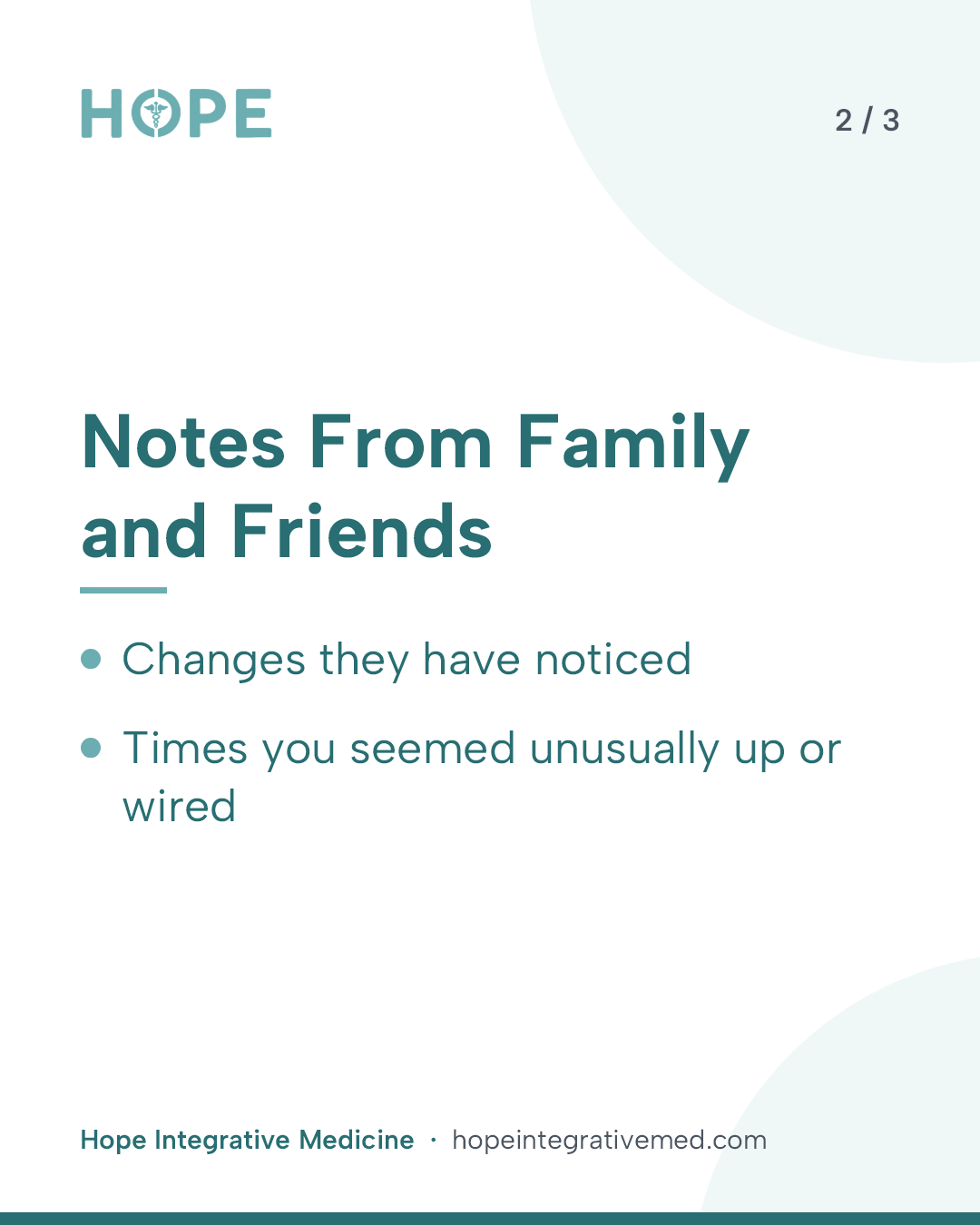
Notes From Family and Friends
- Changes they have noticed
- Times you seemed unusually up or wired
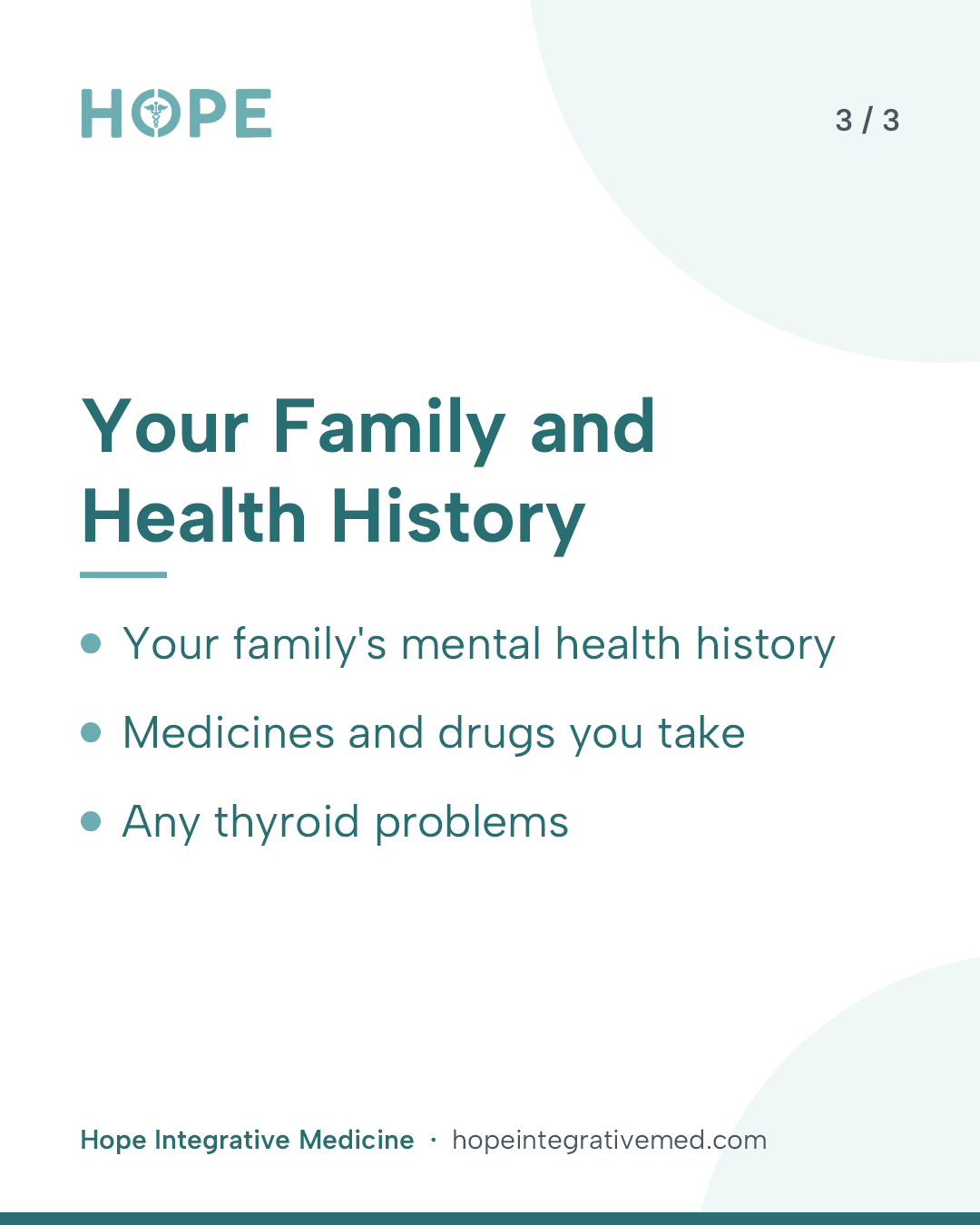
Your Family and Health History
- Your family's mental health history
- Medicines and drugs you take
- Any thyroid problems
What the guideline says
- Bipolar disorder includes up periods, called mania or a milder form called hypomania, along with periods of depression.
- People with bipolar II disorder may seek help only for depressive episodes, and their hypomanic episodes may go unnoticed.
- Diagnosis looks at how severe, long and frequent mood symptoms have been over a lifetime, along with family history; tests can rule out causes such as thyroid disease.
- Bipolar disorder usually needs lifelong treatment, usually medication combined with talk therapy; mood stabilizers such as lithium or valproate help prevent mood episodes.
- Antidepressants are not used alone in bipolar disorder because they can trigger a manic episode or rapid cycling.
Source: National Institute of Mental Health, Bipolar Disorder (2025)
Read the full article: Bipolar Disorder or Depression? Symptoms, Diagnosis and Treatment →
This guide is general health information and does not replace advice from your own provider.
Frequently Asked Questions
NIMH suggests keeping a life chart or mood journal to help recognize mood swings. Bring it to your visit, along with anything family or friends have noticed.
NIMH explains that diagnosis looks at your family history, along with how severe your mood symptoms have been, how long they lasted and how often they came back over your lifetime.
NIMH says thyroid disease and some drugs can cause or worsen mood symptoms. That is one reason a provider may do a physical exam and order medical tests.