
Your heart and your mood are more connected than many people realize. Heart disease can bring on depression or anxiety, and long-lasting depression, anxiety or stress can affect the heart. Here is what the research shows, why it matters for your care, and how bringing mental health care into your primary care can help you look after both.
The connection runs both ways
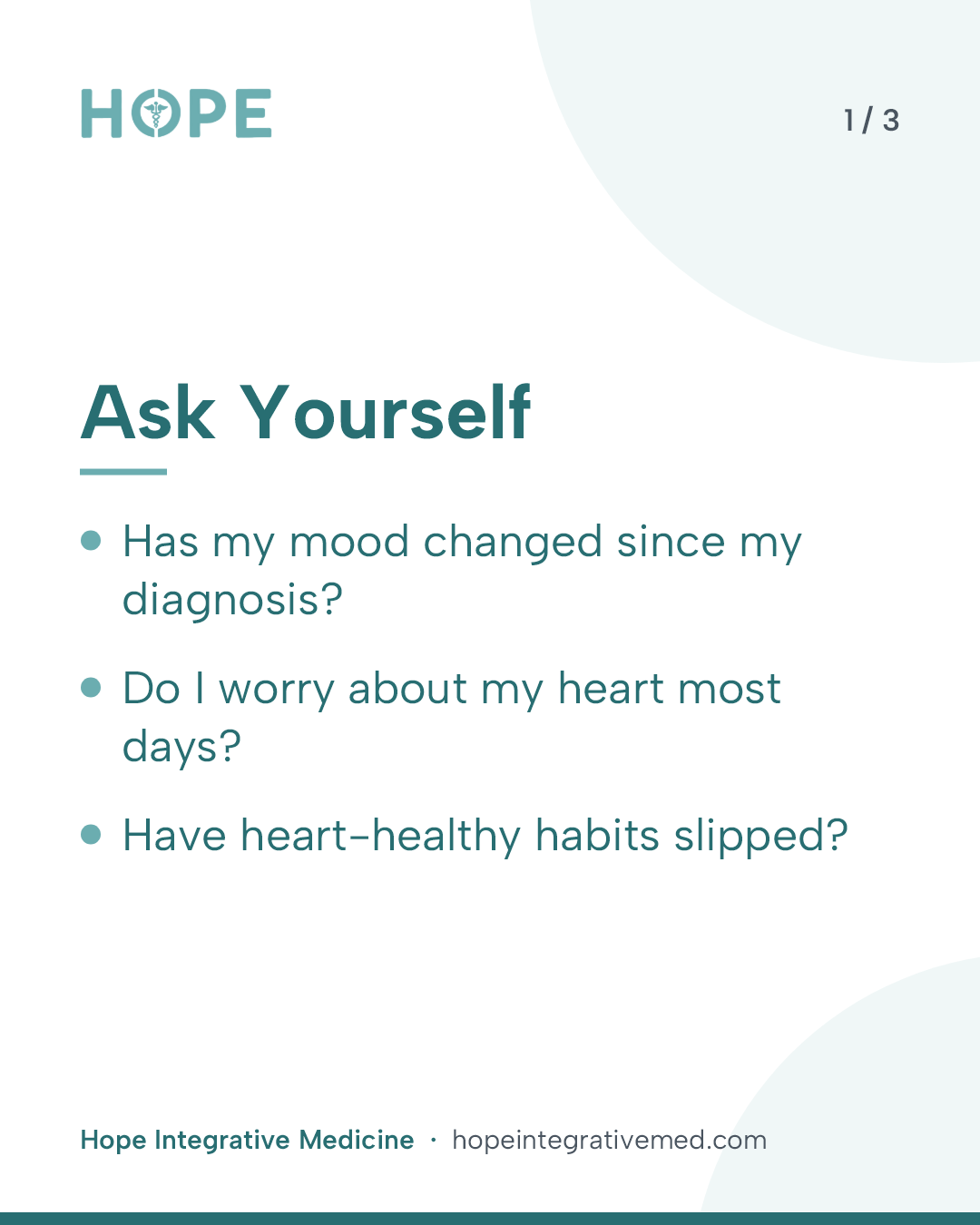
The Centers for Disease Control and Prevention (CDC) says a large and growing body of research shows that mental health is associated with risk factors for heart disease. CDC also says evidence shows that mental health disorders, such as depression, anxiety and post-traumatic stress disorder (PTSD), can develop after cardiac events. Pain, fear of death or disability, and money worries after a heart attack or other cardiac event can all play a part.
The National Institute of Mental Health (NIMH) notes that depression may raise the risk of other conditions, including heart disease, and that people who have a chronic disease and depression tend to have more severe symptoms of both illnesses.
How mood can affect the heart
CDC describes how long-term depression, anxiety, stress and PTSD can change how the body works: the heart can react more strongly, with a higher heart rate and blood pressure, blood flow to the heart can drop, and levels of the stress hormone cortisol can rise. Over time, CDC says, these effects can lead to calcium buildup in the arteries, metabolic disease and heart disease.
Mood also affects daily habits. CDC notes that mental health disorders may increase the chance of smoking, being inactive or not taking prescribed medicines, all of which matter for heart health.
Signs worth bringing up
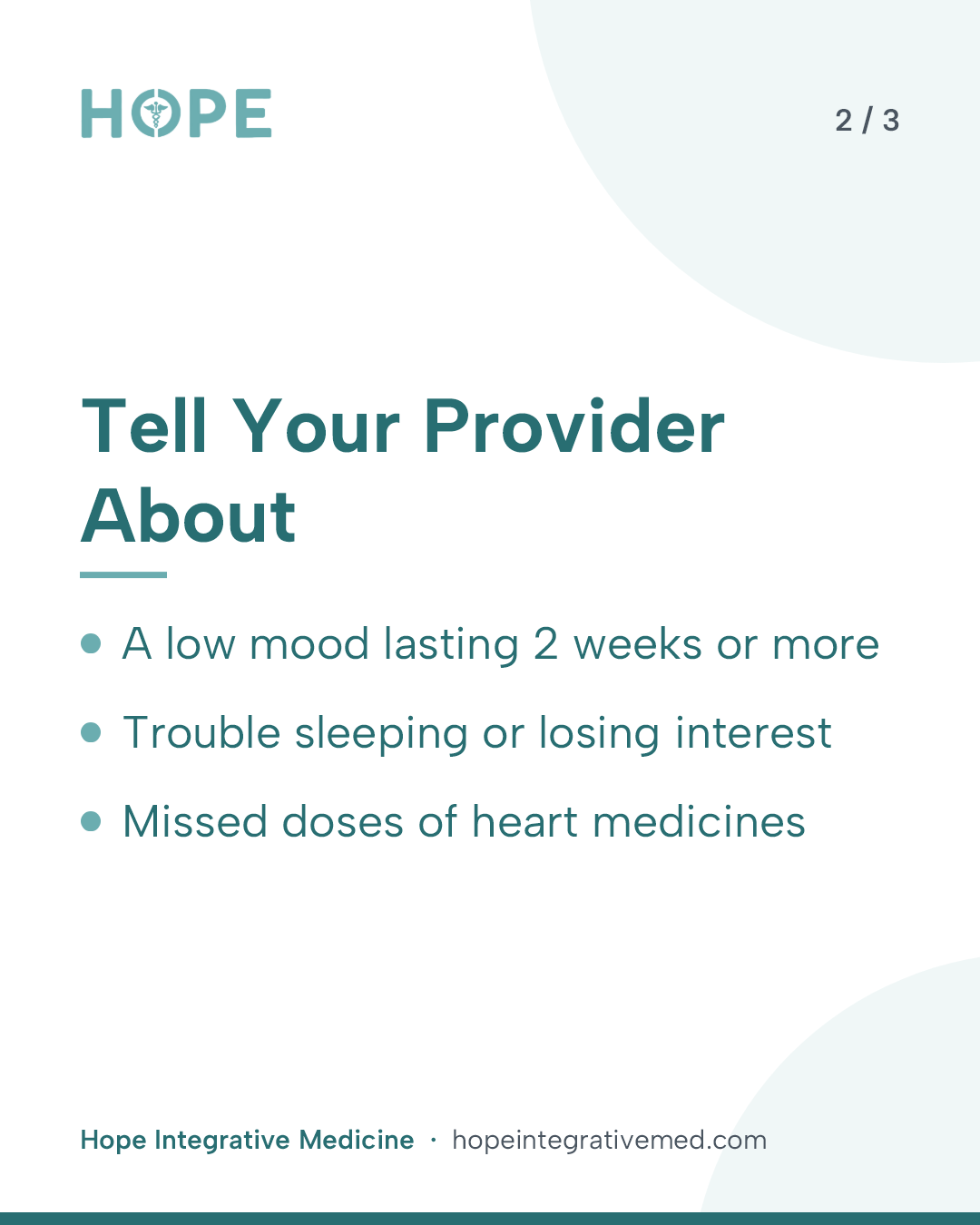
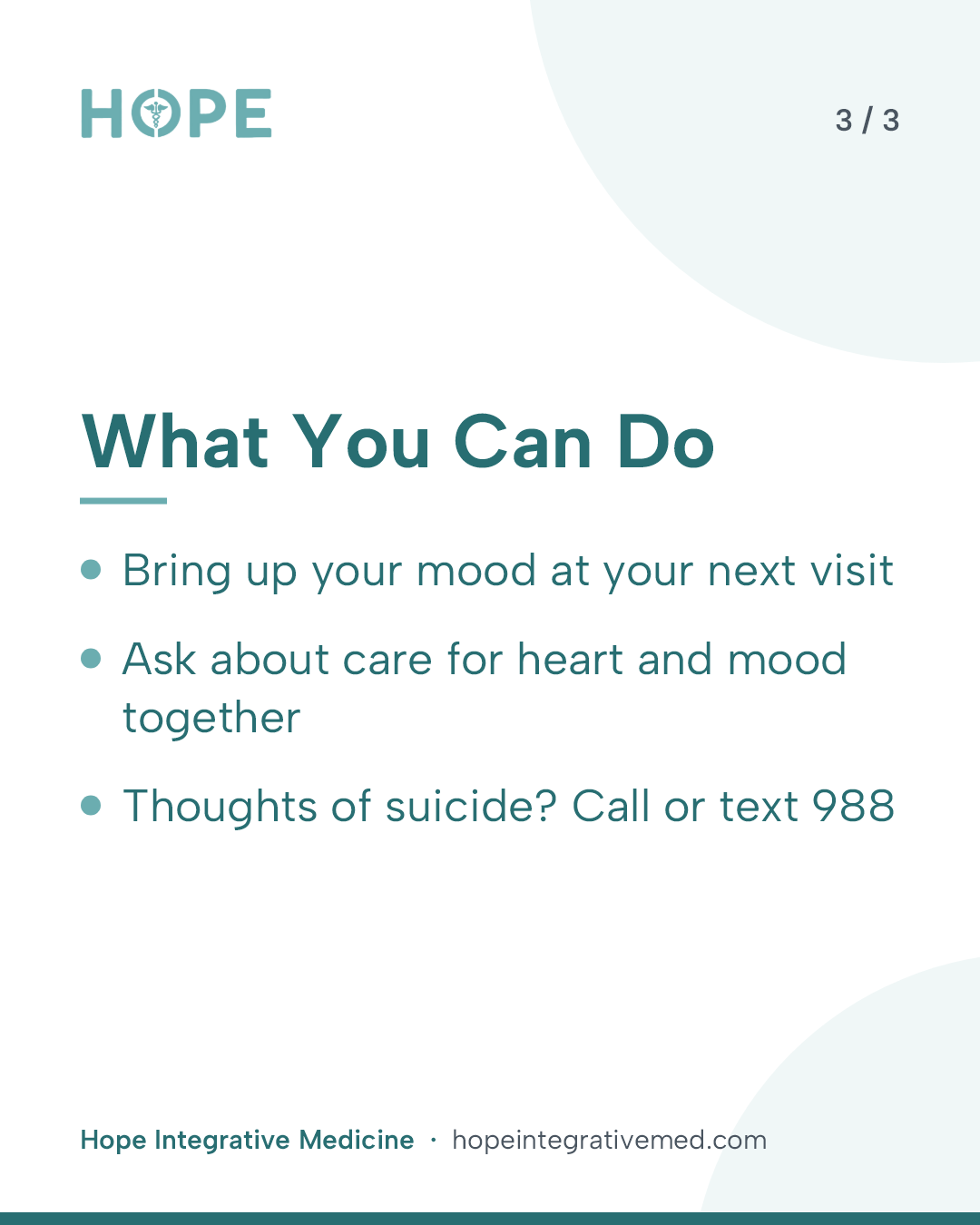
After a heart attack, a new heart diagnosis or a hospital stay, it is common to feel shaken for a while. Tell your provider if a sad, anxious or empty mood, losing interest in things you used to enjoy, or trouble sleeping lasts 2 weeks or more. NIMH lists these among the signs of depression. If you are having thoughts of suicide, call or text 988 any time.
Treating mood is part of caring for your heart
CDC recommends building mental health screening and treatment into care after a major heart event and into care for chronic disease, and says addressing mental health early can reduce heart disease risk. CDC also encourages people to talk with their health care professionals about how their mental health and their heart health connect.
Depression and anxiety are treatable. Treatment can include talk therapy, medication or both, and your provider can help you choose what fits alongside your heart medicines.
Care that brings mental health into primary care
Behavioral Health Integration (BHI) is a Medicare service that brings mental health care into your primary care. Medicare covers two kinds: psychiatric Collaborative Care and general BHI. Hope offers general BHI. The Centers for Medicare & Medicaid Services (CMS) describes general BHI as care that systematically assesses and monitors how you are doing, adjusts the care plan if you are not improving enough, and gives you a continuous relationship with an appointed member of your care team. At Hope, that is a care coordinator who works closely with your provider, so your mood and your heart health are part of the same plan.
Medicare Part B may pay for BHI services if you have a behavioral health condition such as depression or anxiety and you are eligible. After the Part B deductible, you generally pay 20% of the Medicare-approved amount. Medicare Advantage plans must cover everything Original Medicare covers, but costs and rules vary, so check with your plan. Before BHI begins, we ask for your consent, and you can stop at any time.
Ready to Get Started?
Primary care, mental health, and addiction medicine in one practice. New patients are often able to be scheduled within a week of requesting an appointment.
5 cards. Swipe or tap to see the next one.
A question to bring to your next visit
"Since my heart diagnosis, my mood has not been the same. Could we look at my mental health as part of my care plan?"
If you or someone you know is struggling or having thoughts of suicide, call or text the 988 Suicide & Crisis Lifeline at 988. In a life-threatening emergency, call 911.
Care coordination at Hope Integrative Medicine
Our primary care, mental health and addiction medicine teams work as one practice, connected by care coordinators who keep your plan moving between visits. Care is available in person in West Ashley and through hybrid care across South Carolina.
Want a care team member focused on your care between visits? Ask us about enrolling. Bring it up at your next visit, send us a message or call (843) 737-0312, and we'll check whether Behavioral Health Integration or Chronic Care Management is right for you. New to Hope? Request an appointment.
Sources: Centers for Disease Control and Prevention, About Heart Disease and Mental Health (2024); National Institute of Mental Health, Understanding the Link Between Chronic Disease and Depression (2024); National Institute of Mental Health, Depression (2024); Centers for Medicare & Medicaid Services, Behavioral Health Integration Services, MLN909432 (January 2026); Medicare.gov, Behavioral health integration services; Medicare.gov, Compare Original Medicare & Medicare Advantage.
This article is general information, not medical advice, and does not create a patient–provider relationship. Every situation is different, so see a provider who can evaluate yours and develop a plan of care. Any medication discussed here may not be right for you: the right choice depends on your diagnoses, other health conditions and current medicines, so take medication only as directed by the provider managing your care. If you are ever in doubt about an emergency, call 911 or go to the nearest emergency room.
Frequently Asked Questions
The Centers for Disease Control and Prevention says evidence shows that mental health disorders, such as depression, anxiety and PTSD, can develop after cardiac events such as a heart attack.
CDC says long-term depression, anxiety, stress and PTSD can raise heart rate and blood pressure, reduce blood flow to the heart and raise cortisol, and that over time these effects can lead to calcium buildup in the arteries and heart disease.
CDC notes that mental health disorders may increase the chance of smoking, being inactive or not taking prescribed medicines.
Yes. CDC recommends building mental health screening and treatment into care after a major heart event and into care for chronic disease, and says addressing mental health early can reduce heart disease risk.
Behavioral Health Integration (BHI) is a Medicare service that brings mental health care into your primary care. Hope offers general BHI, which tracks how you are doing, adjusts your plan if you are not improving enough and gives you an appointed care team member.
Medicare Part B may pay for BHI services if you have a behavioral health condition such as depression or anxiety and you are eligible. After the Part B deductible, you generally pay 20% of the Medicare-approved amount.