Your Heart and Your Mood: What to Know
Based on Centers for Disease Control and Prevention, About Heart Disease and Mental Health (2024)
5 cards. Swipe or tap to see the next one.
How heart disease and depression affect each other, how long-lasting stress can affect the heart, signs worth bringing up, and how Behavioral Health Integration brings mental health care into your primary care.
Ready to Talk With Someone?
We care for anxiety, depression and stress in West Ashley and by telehealth across South Carolina. Schedule an appointment today.
In this guide
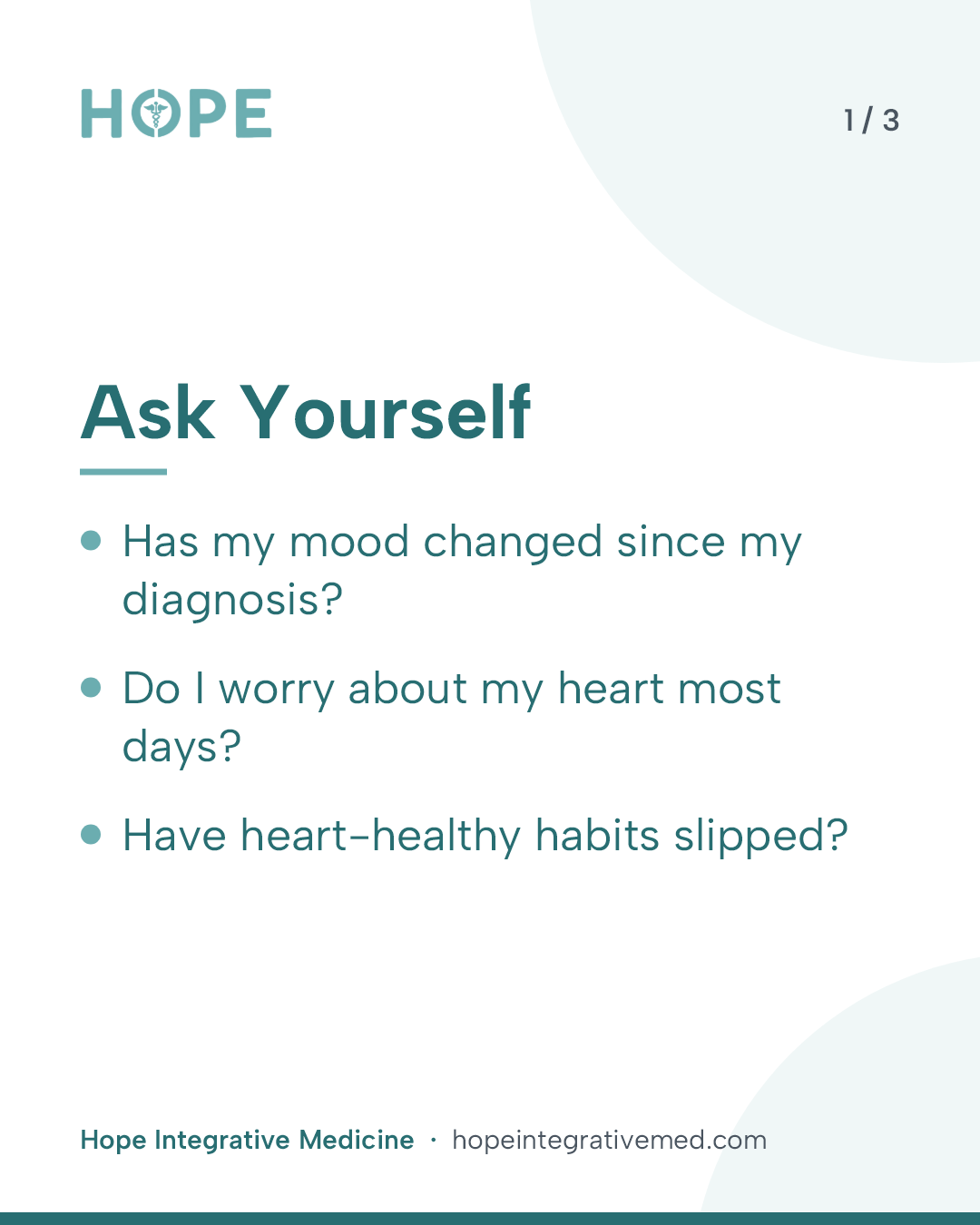
Ask Yourself
- Has my mood changed since my diagnosis?
- Do I worry about my heart most days?
- Have heart-healthy habits slipped?
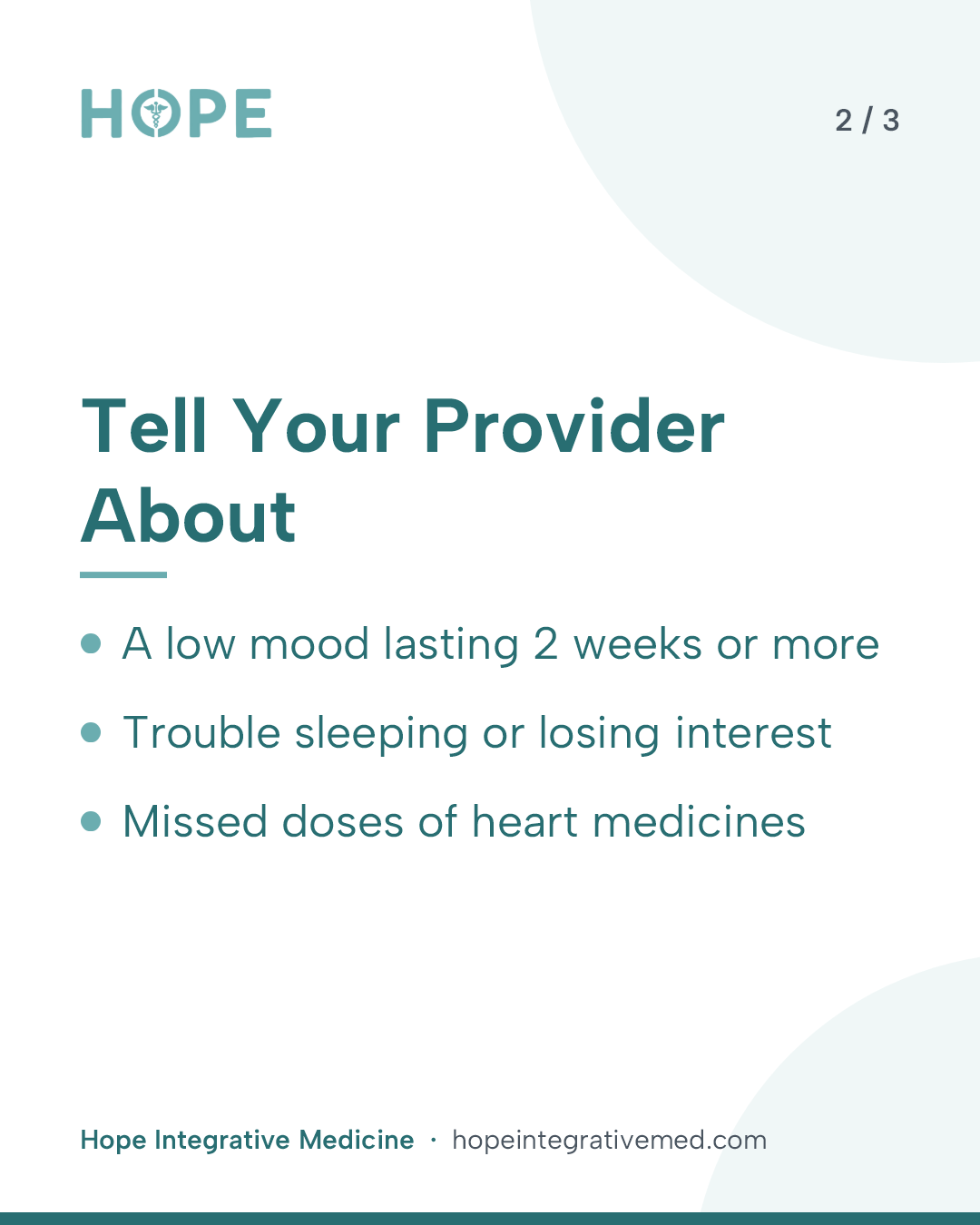
Tell Your Provider About
- A low mood lasting 2 weeks or more
- Trouble sleeping or losing interest
- Missed doses of heart medicines
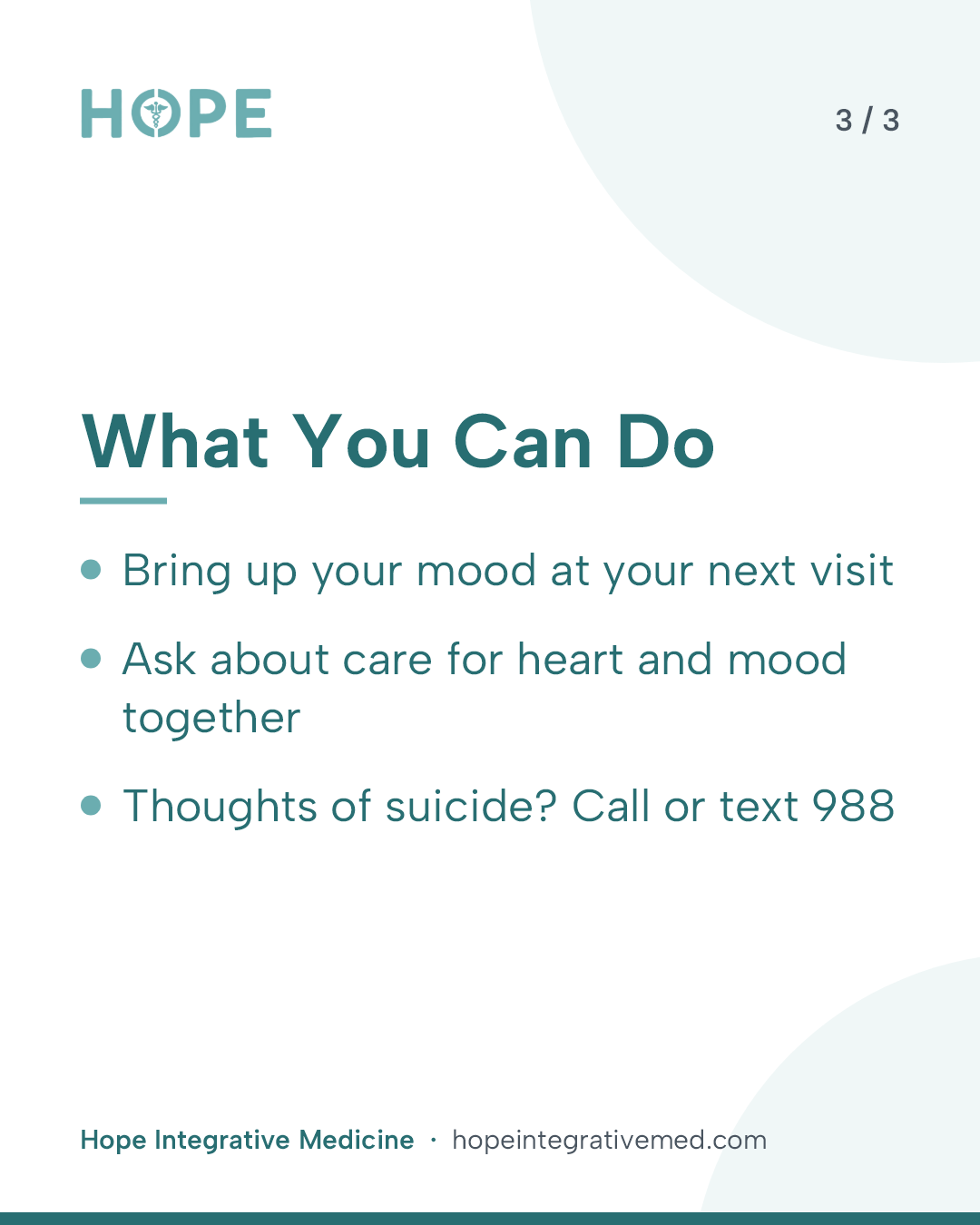
What You Can Do
- Bring up your mood at your next visit
- Ask about care for heart and mood together
- Thoughts of suicide? Call or text 988
What the guideline says
- CDC says depression, anxiety and PTSD can develop after cardiac events such as a heart attack.
- CDC says a large and growing body of research shows that mental health is associated with risk factors for heart disease.
- Long-term depression, anxiety and stress can raise heart rate and blood pressure, reduce blood flow to the heart and raise cortisol, CDC says.
- Mental health disorders may increase the chance of smoking, inactivity or not taking prescribed medicines, CDC notes.
- CDC recommends building mental health screening and treatment into heart care, and Behavioral Health Integration brings that care into primary care.
Source: Centers for Disease Control and Prevention, About Heart Disease and Mental Health (2024)
Read the full article: Heart Disease and Depression: How Your Heart and Mood Are Connected →
This guide is general health information and does not replace advice from your own provider.
Frequently Asked Questions
CDC notes that mental health disorders may increase the chance of smoking, being inactive or not taking prescribed medicines.
If a sad, anxious or empty mood, losing interest in things you enjoy, or trouble sleeping lasts 2 weeks or more, tell your provider.
Try: "Since my heart diagnosis, my mood has not been the same. Could we look at my mental health as part of my care plan?"