
For many people, mental health care and medical care happen in separate places, with separate phone numbers and separate records. Behavioral Health Integration (BHI) takes a different approach. The Centers for Medicare & Medicaid Services (CMS) describes it as integrating behavioral health care with other care, including primary care, and calls it an effective strategy to improve mental, behavioral or psychiatric health for many patients. Here is what that means for you, and how it works at Hope Integrative Medicine.
What Behavioral Health Integration is
BHI brings care for mental health and substance use into your primary care practice. Instead of your medical care and your behavioral health care running on separate tracks, one coordinated team works from a shared plan, keeps track of how you are doing and adjusts that plan when something is not working. It is whole-person care: your mood, your stress, your substance use and your physical health are treated as parts of the same life.
Who may qualify
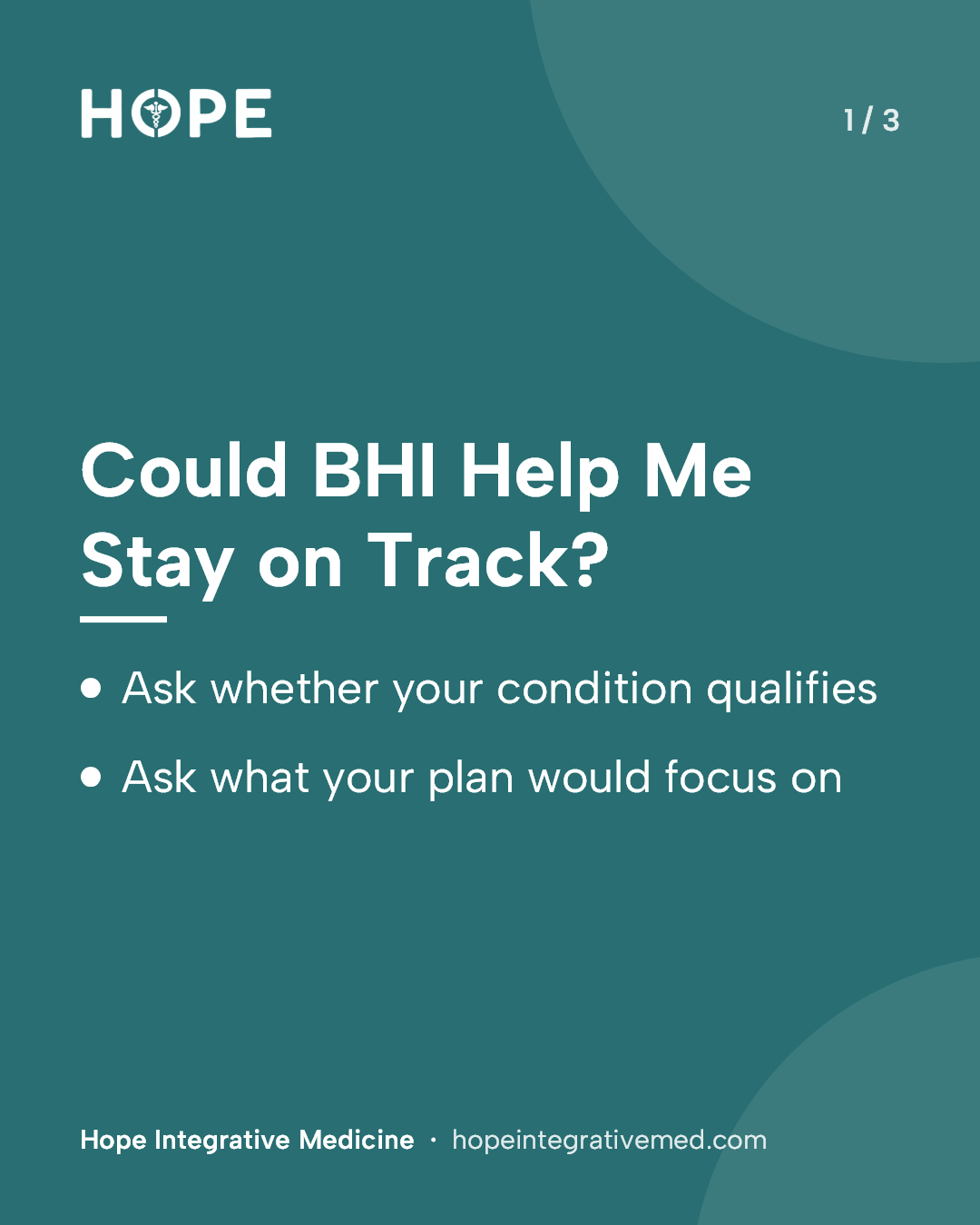
Medicare Part B may pay for BHI services if you are eligible. Medicare says you must have a behavioral health condition like depression, anxiety or another mental health condition, and CMS guidance also includes substance use disorders. You may have other medical conditions that your provider manages, but they are not required. Whether BHI is right for you is a decision you and your provider make together. If you also live with two or more long-term health conditions, our earlier post on Chronic Care Management explains a related program.
The kind of BHI Hope offers
Medicare covers two kinds of BHI. One is a team model called psychiatric Collaborative Care. The other, which is the program Hope offers, is general BHI. CMS describes general BHI as care that:
- Systematically assesses and monitors how you are doing.
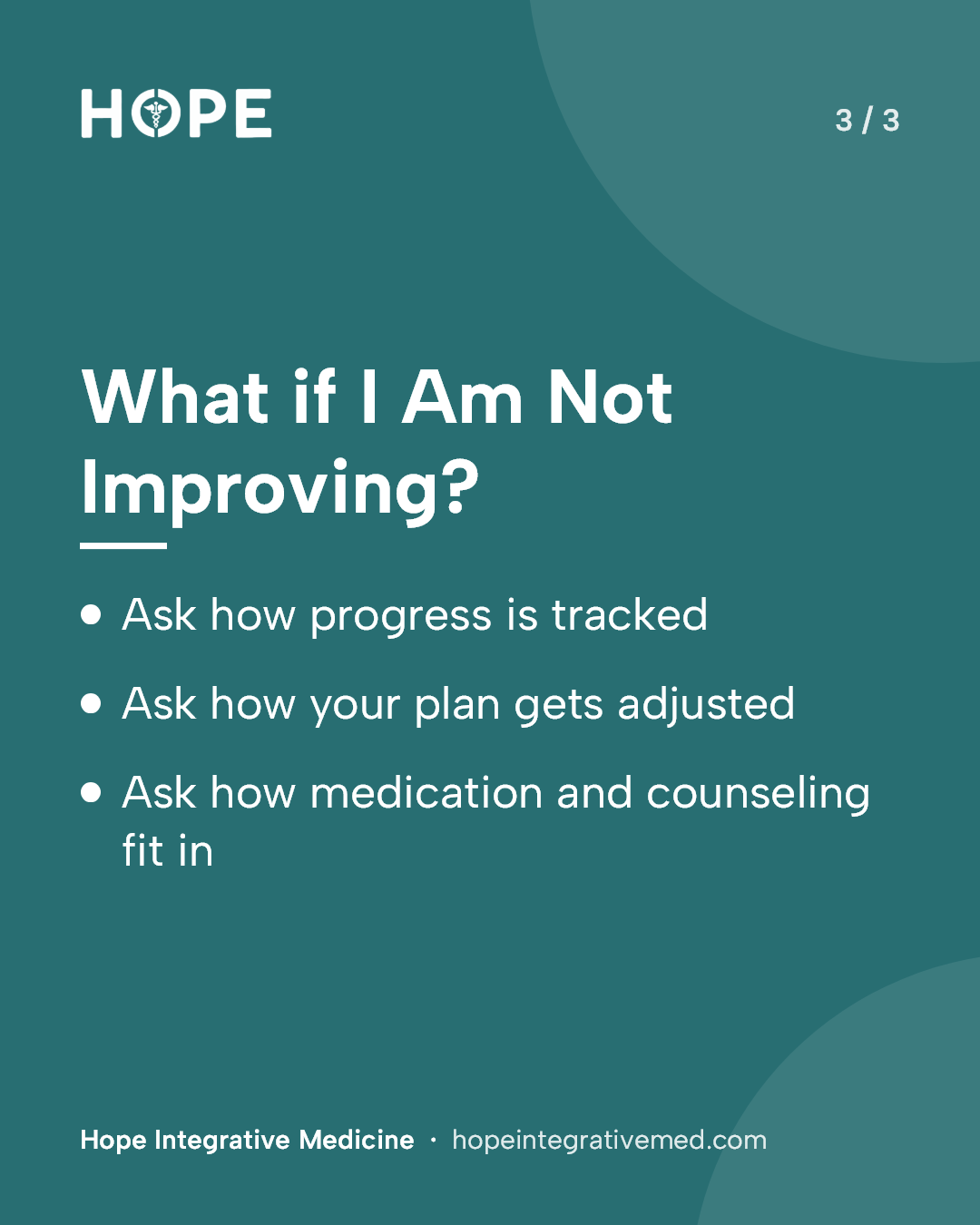
- Adjusts the care plan if you are not improving enough.
- Gives you a continuous relationship with an appointed member of your care team.
BHI is not the same as a course of psychotherapy. It is care management that works alongside counseling or medication when you need them, and it helps make sure those pieces fit together.
How BHI works at Hope
Hope offers primary care, mental health care and addiction medicine, in person in West Ashley and through hybrid care across South Carolina. Our BHI program connects those services through care coordinators who work closely with your provider. When you enroll:
- You get a customized care plan that captures your care goals, based on what is important to you.
- Your care coordinator tracks, revisits and charts your progress toward those goals every month with your provider.
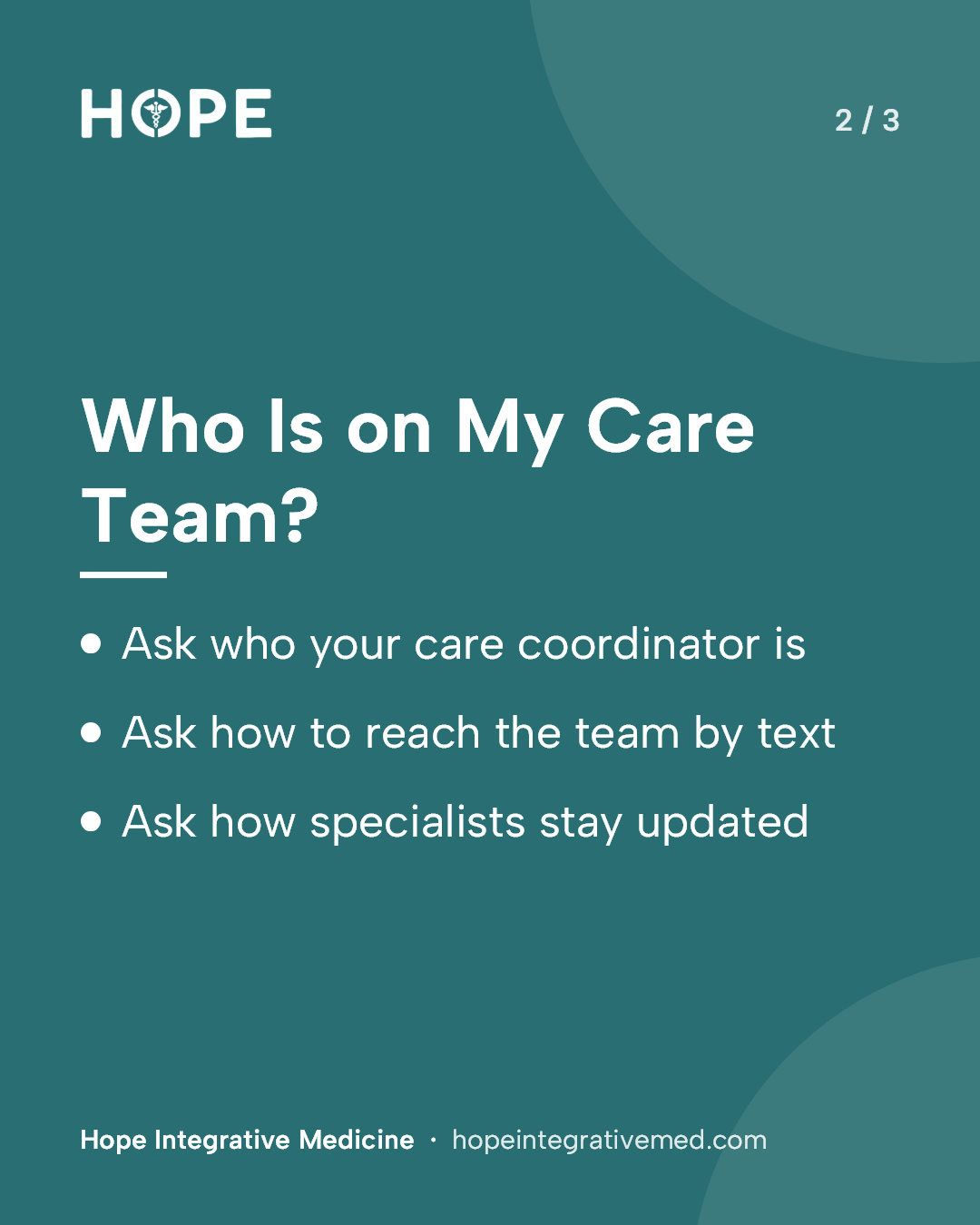
- You can reach the care coordination team through secure SMS (text) messaging.
- Your full care team, at Hope and across any outside specialists involved in your care, is kept up to date on your care events and your progress.
That means your care keeps moving forward on the days you don't have an appointment, while you're at work, at home or away on vacation. Our patients tell us they really appreciate the check-ins between visits, and over time many build a personal relationship with the coordinators who, along with their provider, make up their care team.
Ready to Get Started?
Primary care, mental health, and addiction medicine in one practice. New patients are often able to be scheduled within a week of requesting an appointment.
5 cards. Swipe or tap to see the next one.
BHI and Chronic Care Management together
BHI focuses on behavioral health conditions. Chronic Care Management focuses on two or more qualifying chronic conditions. You may be able to take part in both at the same time, as long as each program covers different needs; your care team will sort out the details with you.
Consent, cost and your right to stop
It starts with a visit with your provider. If you are new to Hope or haven't been seen in the past year, that visit comes first. Before BHI begins, we'll ask for your consent, including your permission for us to consult with relevant specialists. Medicare Part B cost-sharing applies: after the Part B deductible, you generally pay 20% of the Medicare-approved amount, and cost-sharing applies to services in person and between visits. Supplemental coverage may help. Medicare Advantage plans must cover everything Original Medicare covers, but costs and rules vary, so check with your plan. You can stop at any time.
A question to bring to your next visit
"Could Behavioral Health Integration help me stay on track between visits, and what would my care plan focus on?"
If you or someone you know is struggling or having thoughts of suicide, call or text the 988 Suicide & Crisis Lifeline at 988. In a life-threatening emergency, call 911.
Care coordination at Hope Integrative Medicine
Our primary care, mental health and addiction medicine teams work as one practice, connected by care coordinators who keep your plan moving between visits. Care is available in person in West Ashley and through hybrid care across South Carolina.
Want a care team member focused on your care between visits? Ask us about enrolling. Bring it up at your next visit, send us a message or call (843) 737-0312, and we'll check whether Behavioral Health Integration or Chronic Care Management is right for you. New to Hope? Request an appointment.
Sources: Centers for Medicare & Medicaid Services, Behavioral Health Integration Services, MLN909432 (January 2026); Medicare.gov, Behavioral health integration services; Medicare.gov, Compare Original Medicare & Medicare Advantage; AIMS Center, University of Washington, Behavioral Health Integration and Collaborative Care billing.
This article is general information, not medical advice, and does not create a patient–provider relationship. Every situation is different, so see a provider who can evaluate yours and develop a plan of care. Any medication discussed here may not be right for you: the right choice depends on your diagnoses, other health conditions and current medicines, so take medication only as directed by the provider managing your care. If you are ever in doubt about an emergency, call 911 or go to the nearest emergency room.
Frequently Asked Questions
CMS describes Behavioral Health Integration as integrating behavioral health care with other care, including primary care. It brings care for mental health and substance use conditions into your primary care practice, with a team that monitors how you are doing and adjusts your plan if you are not improving.
Hope offers general BHI. CMS describes it as care that systematically assesses and monitors how you are doing, adjusts your care plan if you are not improving enough and gives you a continuous relationship with an appointed member of your care team.
Medicare Part B may pay for BHI services if you have a behavioral health condition such as depression, anxiety or a substance use disorder and you are eligible. After the Part B deductible, you generally pay 20% of the Medicare-approved amount. We'll ask for your consent before starting, and you can stop at any time.
You may be able to take part in both at the same time, as long as each program covers different needs. BHI focuses on behavioral health conditions, and Chronic Care Management focuses on two or more qualifying chronic conditions.
No. BHI is not the same as a course of psychotherapy. It is care management that works alongside medication or counseling when you need them, and it helps make sure those pieces fit together.