
If you live with more than one long-term health condition, you already know that most of the work of staying well happens between appointments: taking your medicines, keeping track of your numbers, seeing specialists and handling whatever comes up in the weeks between visits. Medicare has a service built for exactly that stretch of time. It is called Chronic Care Management, or CCM, and the Centers for Medicare & Medicaid Services (CMS) calls it "a critical primary care service that contributes to better patient health and care." Here is what it is, who may qualify and how it works at Hope Integrative Medicine.
What Chronic Care Management is
CMS defines CCM as managing a patient's two or more chronic conditions that are expected to last at least 12 months, or until the end of life, and that put the patient at significant risk of death, a sudden flare-up or worsening, or a decline in how well they function day to day. In plain words, CCM is organized, ongoing help with long-term conditions that need steady attention. CMS notes that CCM services are typically provided outside of face-to-face visits. That is the point: your care keeps moving forward on the days you do not have an appointment, while you are at work, busy with family or away on vacation.
Who may qualify
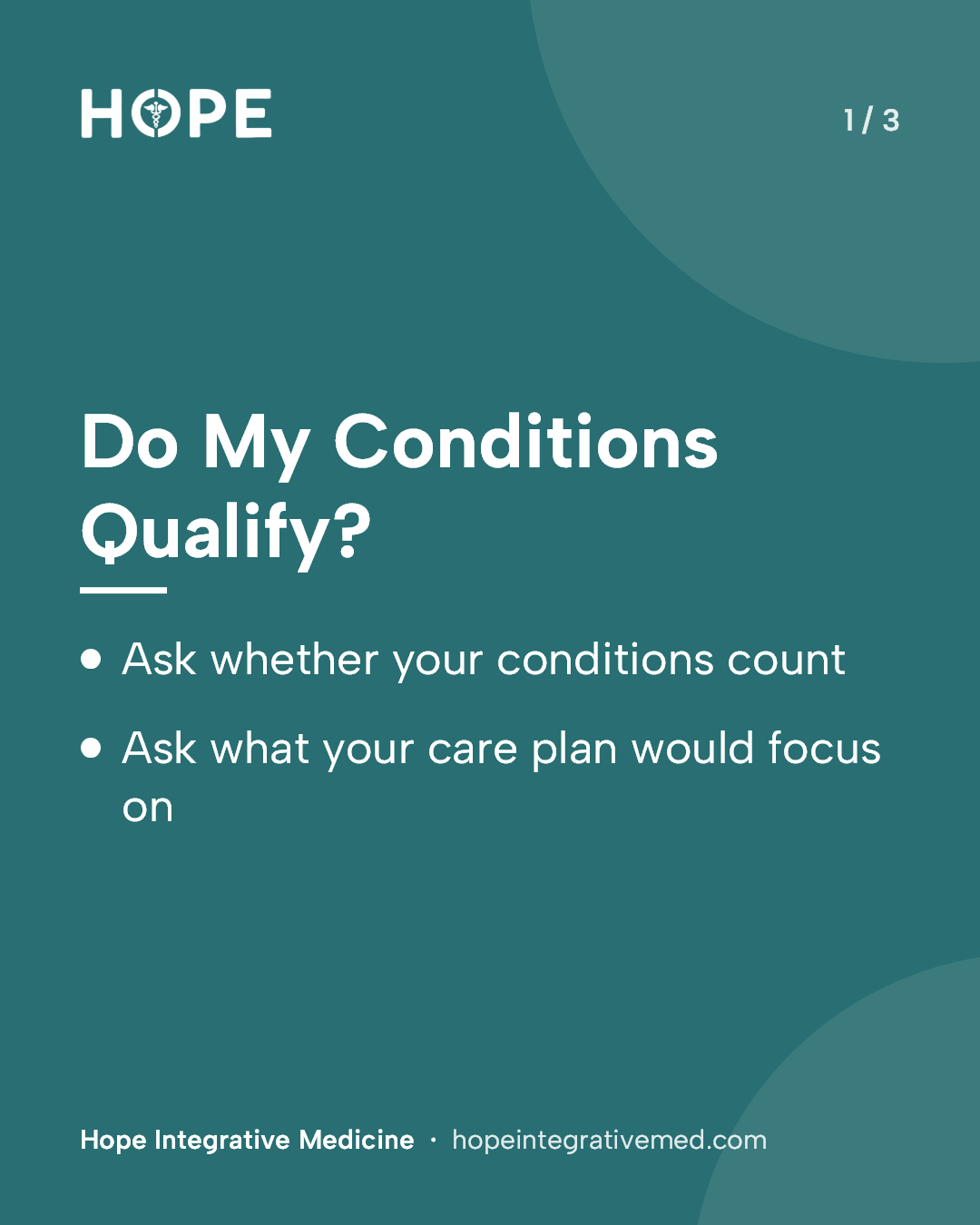
Medicare.gov says you must have two or more serious chronic conditions, like arthritis and diabetes, that you expect to last at least a year. CMS lists examples that include, but are not limited to, high blood pressure, diabetes, heart disease, atrial fibrillation, asthma, COPD, arthritis, cancer, glaucoma, Alzheimer's disease and related dementia, depression and substance use disorders. Having two diagnoses does not automatically mean CCM is right for you. Eligibility is a clinical decision your provider makes with you, based on your conditions and your needs.
What CCM includes
Medicare describes CCM as a set of services you get on a monthly basis. Under Medicare's rules, CCM includes:
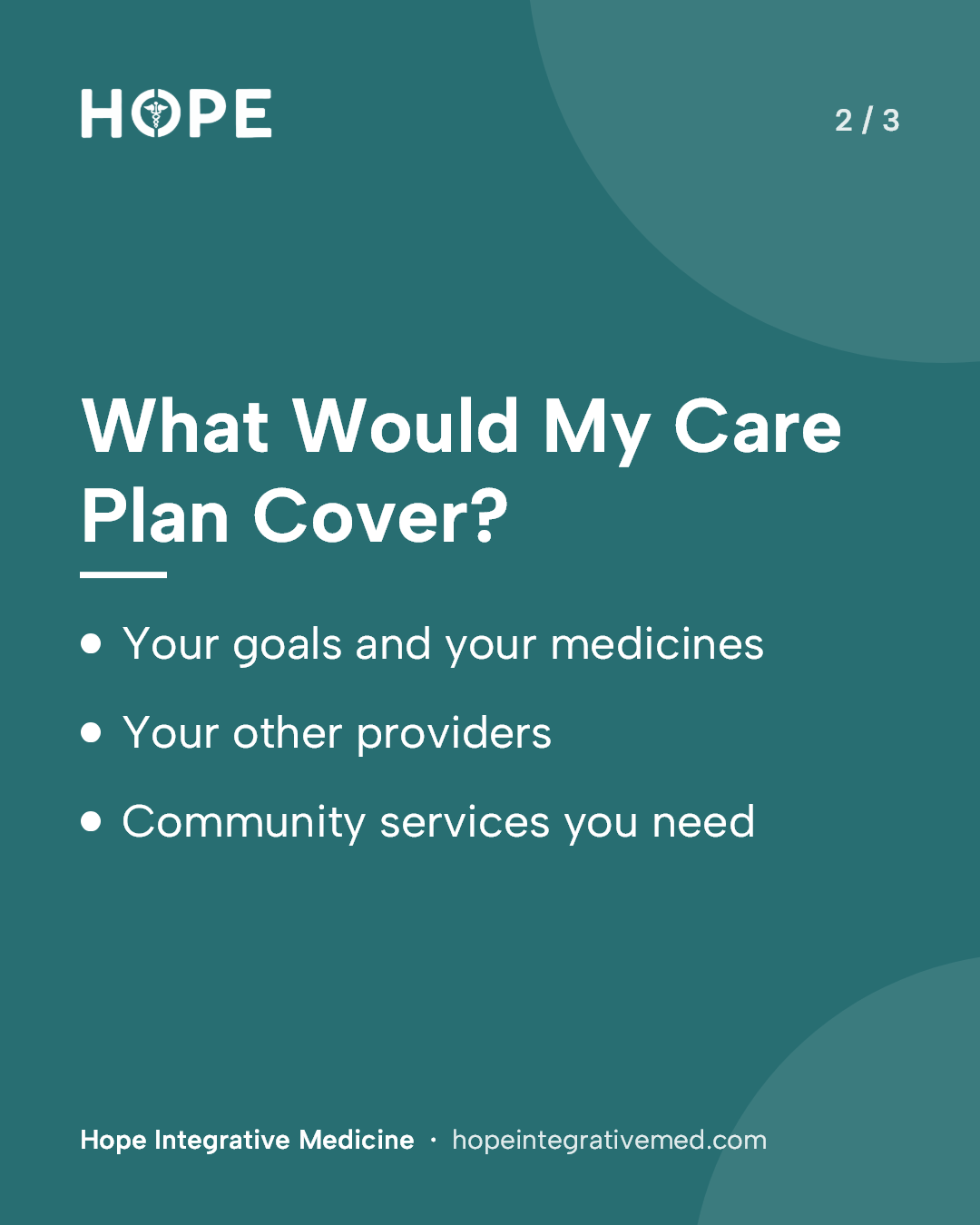
- A comprehensive care plan that lists your health problems and goals, your other providers, your medicines, the community services you have and need, and other information about your health.
- A review of your medicines and how you take them.
- Support when you move from one care setting to another, such as follow-up after an emergency room visit or after you leave the hospital or a skilled nursing facility.
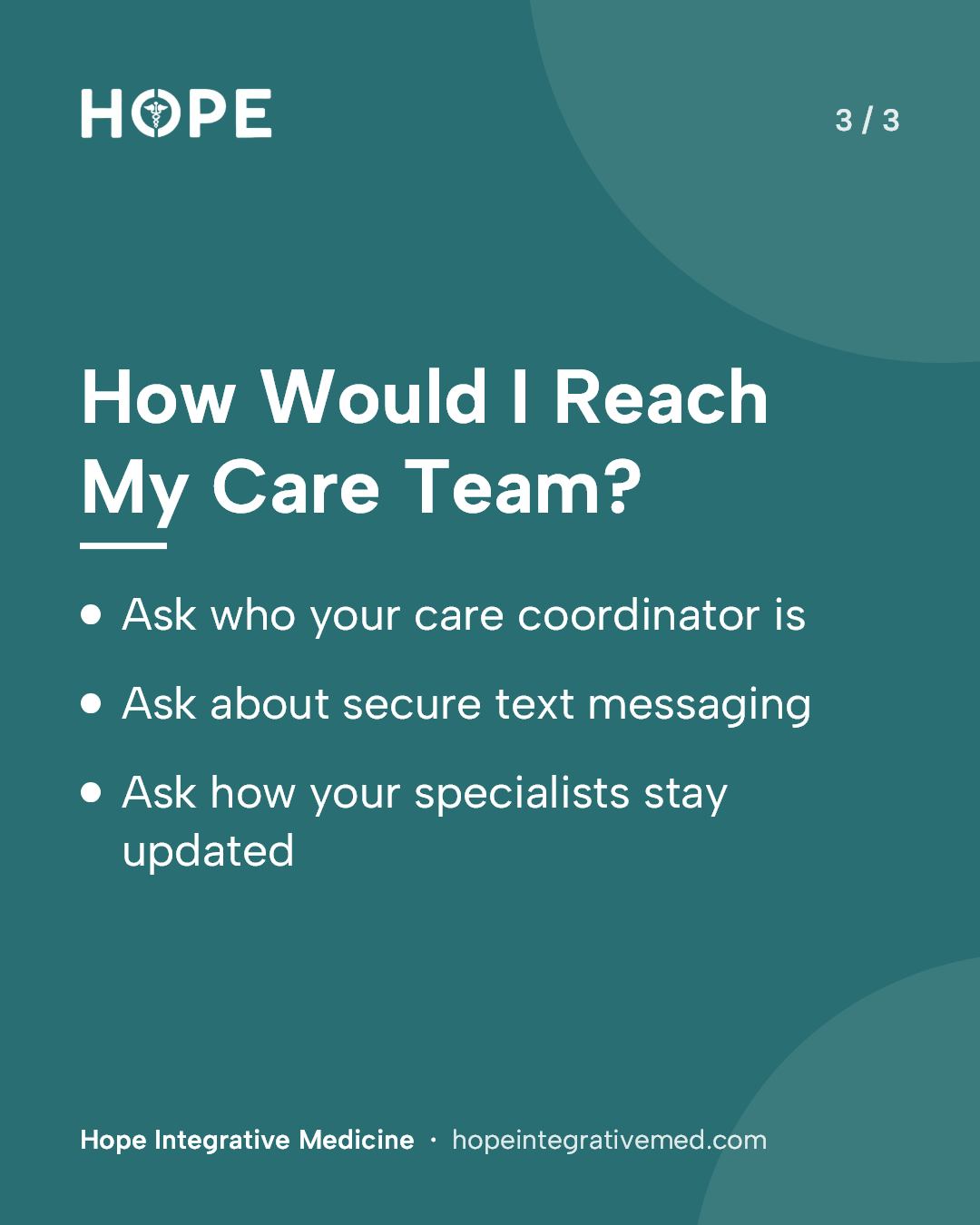
- A consistent member of your care team who stays in touch with you between visits and helps you manage your conditions.
- Ways to communicate with your care team about your care by phone and through secure messaging.
- Help making sure you get recommended preventive care on time.
CMS also asks that the care plan be patient-centered and based on an assessment of your physical, mental, cognitive, psychosocial, functional and environmental needs, along with the resources and supports you have. That is whole-person care written into the rules: your plan is meant to reflect your life, not just a list of diagnoses. CMS also asks practices to make the plan available to your other practitioners, so everyone works from the same plan.
How CCM works at Hope
At Hope Integrative Medicine, CCM is coordinated care between your visits, so important parts of your care do not fall through the cracks. When you enroll:
- Your customized care plan captures your care goals, based on what is important to you.
- You have access to our care coordination team, including through secure SMS messaging.
- Your care coordinators work closely with your provider, and track, revisit and chart your progress toward your goals every month.
- Your full care team, here at Hope and among the outside specialists involved in your care, is kept up to date on your care events and your progress toward your health and wellness goals.
- We generate and track longitudinal trends in your care, giving you and your providers a bird's-eye view of your progress, or your challenges, over time.
Our patients tell us they really appreciate their care coordinators checking in with them between visits, and over time they build a personal relationship with this extended team, who make up their care team along with their provider. We also find that the program improves access to care: your coordinators are a resource you can reach with questions about your care.
Ready to Get Started?
Primary care, mental health, and addiction medicine in one practice. New patients are often able to be scheduled within a week of requesting an appointment.
5 cards. Swipe or tap to see the next one.
Three services, one coordinated team
Depression and substance use disorders are on CMS's list of conditions that can count toward CCM, alongside conditions like diabetes and high blood pressure. Hope offers primary care, mental health care and addiction medicine in the same practice, so when your conditions span more than one of those areas, your care plan can too, and your care coordinators can keep all of your providers working from the same plan. That is what we mean by whole-person, patient-centered care.
How it starts
CCM starts with a visit with your provider. If you are new to Hope, or it has been more than a year since your last visit, that visit comes first; it can be a comprehensive visit, an annual wellness visit or an initial preventive physical exam. Before CCM begins, we will explain the service, including any cost-sharing under your coverage, and ask for your consent. Medicare allows only one practice to provide CCM for you in a given calendar month, so your care has one home base. Participation is your choice, and you can stop at any time; under Medicare's rules, stopping takes effect at the end of the calendar month.
A question to bring to your next visit
"Do my conditions make me a candidate for Chronic Care Management, and what would my care plan focus on?"
Care coordination at Hope Integrative Medicine
Hope Integrative Medicine brings primary care, mental health and addiction medicine together, in person in West Ashley and through hybrid care across South Carolina. Our Chronic Care Management and Behavioral Health Integration programs connect that care between visits, so your plan keeps moving forward. Hope Integrative Medicine is not an emergency service; in an emergency, call 911.
Want a care team member focused on your care between visits? Ask us about enrolling. Bring it up at your next visit, send us a message or call (843) 737-0312, and we'll check whether Chronic Care Management or Behavioral Health Integration is right for you. New to Hope? Request an appointment.
Sources: Medicare.gov, Chronic Care Management Services; CMS Medicare Learning Network, Chronic Care Management Services (MLN909188, June 2025); CMS, Chronic Care Management for Complex Conditions; Mathematica Policy Research for CMS, Evaluation of the Diffusion and Impact of the Chronic Care Management (CCM) Services: Final Report (2017).
This article is general information, not medical advice, and does not create a patient–provider relationship. Every situation is different, so see a provider who can evaluate yours and develop a plan of care. If you are ever in doubt about an emergency, call 911 or go to the nearest emergency room. Coverage rules can change; check with your plan for your own costs.
Frequently Asked Questions
Medicare says Chronic Care Management is for people with two or more serious chronic conditions, like arthritis and diabetes, that are expected to last at least a year. Having two diagnoses does not qualify you automatically; your provider decides with you whether CCM is right for you.
Under Medicare's rules, CCM includes a care plan that lists your health problems, goals, other providers and medicines, a review of your medicines, support when you move between care settings, a consistent care team member who stays in touch, and ways to reach your care team by phone and secure messaging.
Yes. CCM starts only with your consent, and you can stop at any time. Under Medicare's rules, stopping takes effect at the end of the calendar month.
CCM starts with a visit with your provider. If you are new to Hope, or it has been more than a year since your last visit, that visit comes first. Before CCM begins, we explain the service, including any cost-sharing under your coverage, and ask for your consent.
Yes. Depression and substance use disorders are on CMS's list of conditions that can count toward CCM, alongside conditions like diabetes and high blood pressure. Whether CCM is right for you is a decision your provider makes with you.