
Knowing your BMI is one of the easiest first steps you can take for your health. It takes a minute to find, and it gives you and your provider a starting point for talking about weight, heart health and blood sugar. Here is what BMI is, what the numbers mean and what you can do with yours.
What BMI is
BMI stands for body mass index. It measures your weight relative to your height: your weight in kilograms divided by your height in meters squared. You do not need to do the math. CDC's Adult BMI Calculator works it out from your height and weight, in feet and pounds or in metric units. It is meant for adults 20 and older. Children and teens use a different calculator.
CDC calls BMI a quick, safe and reliable screening measure. A screening measure is a first check that helps decide whether to look more closely. CDC says BMI is not meant to diagnose disease or illness, and that it should be considered along with other factors.
What the numbers mean
CDC uses these categories for adults:
- Underweight: below 18.5
- Healthy weight: 18.5 to 24.9
- Overweight: 25 to 29.9
- Obesity: 30 or higher
Obesity is split into three classes. Class 1 is a BMI of 30 to 34.9, class 2 is 35 to 39.9, and class 3 is 40 or higher. CDC calls class 3 "severe obesity."
Why BMI matters
The National Institute of Diabetes and Digestive and Kidney Diseases (NIDDK) links overweight and obesity to many health problems, including type 2 diabetes, high blood pressure, heart disease, stroke, sleep apnea, osteoarthritis, gout, kidney disease and certain cancers. It also lists fatty liver disease. NIDDK explains that nonalcoholic fatty liver disease, also called MASLD (metabolic dysfunction-associated steatotic liver disease), means extra fat builds up in the liver, and that it is more common in people with obesity.
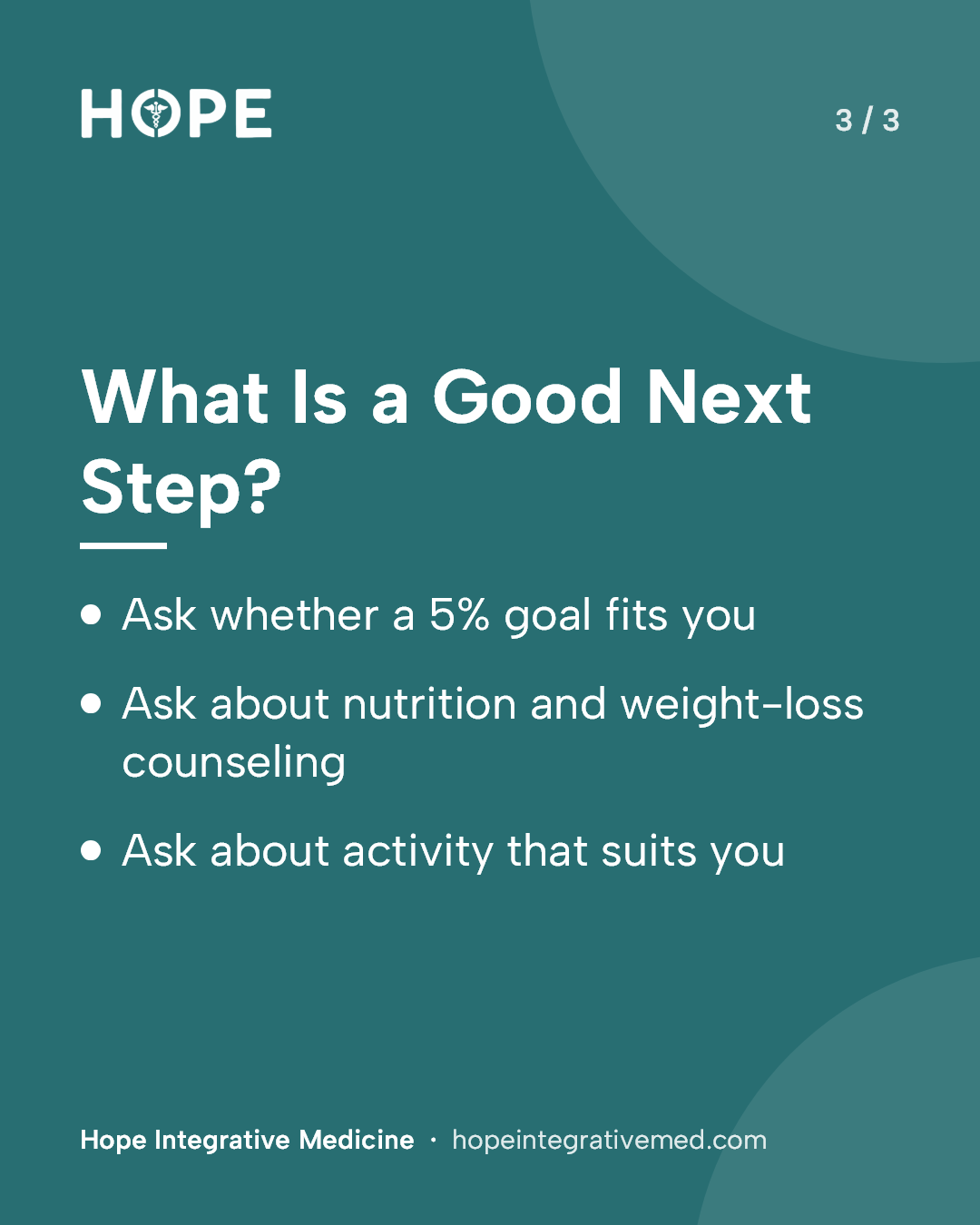
The good news is that a little weight loss can go a long way. The National Heart, Lung, and Blood Institute (NHLBI) says health professionals recommend losing 5% to 10% of your starting weight over about 6 months. Losing even 3% to 5% can lower triglycerides (a type of blood fat) and blood sugar and reduce the risk of type 2 diabetes. CDC gives an example: for a 200-pound person, 5% is 10 pounds.
What BMI does not tell you
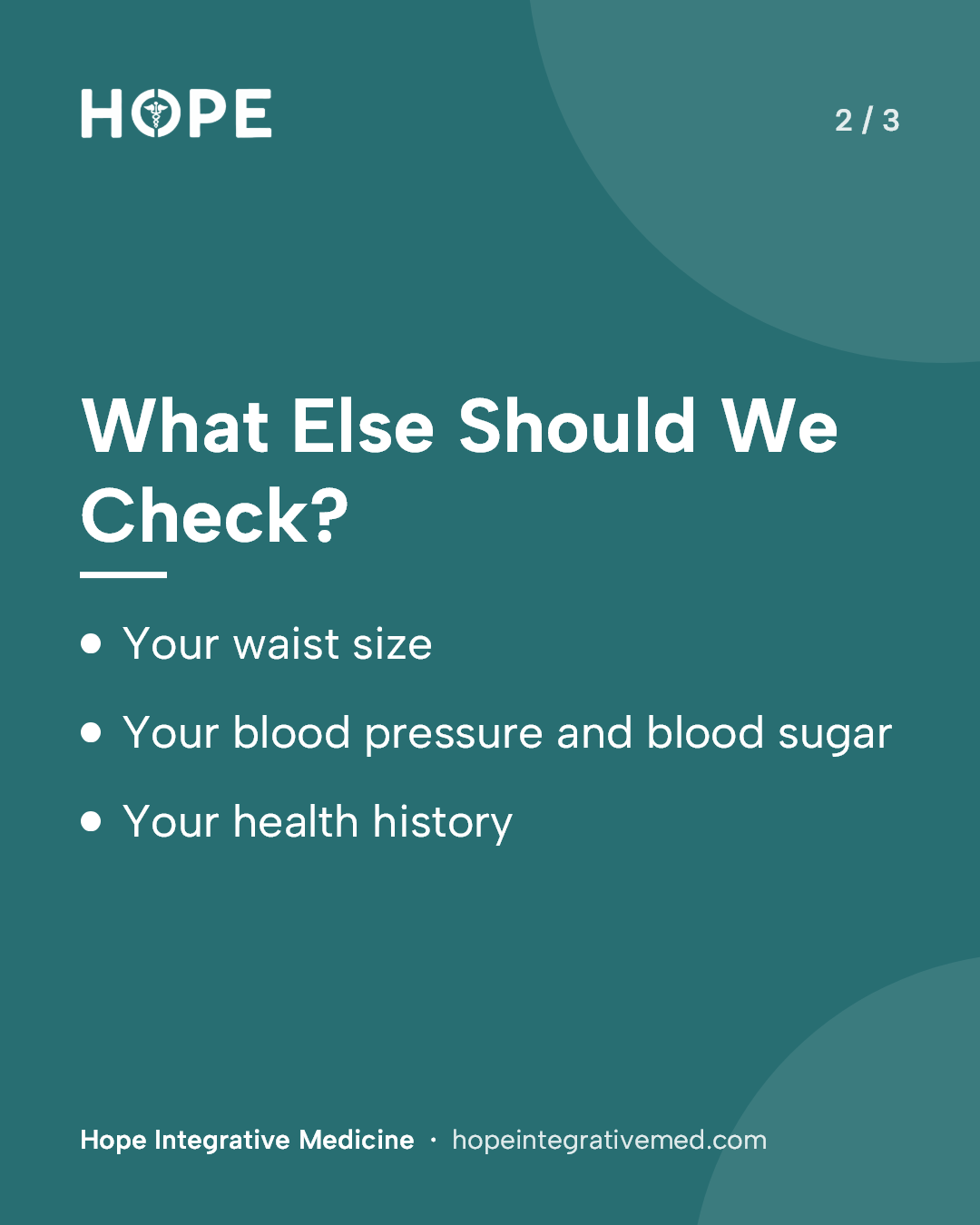
BMI is a starting point, not the whole picture. CDC notes that BMI does not tell fat apart from muscle and bone, and it does not show where in the body you carry fat. Where fat sits matters. NHLBI says that if most of your fat is around your waist rather than your hips, your risk of heart disease and type 2 diabetes is higher, and that a waist of more than 40 inches for men or more than 35 inches for women raises risk. To check yours, stand and wrap a tape measure around your middle just above your hipbones, then read it just after you breathe out.
The cut points can also differ by background. The U.S. Preventive Services Task Force, a national panel of medical experts, recommends screening adults 35 to 70 who have overweight or obesity for prediabetes and type 2 diabetes. The panel notes that a BMI of 23 or higher may be a better cut point for Asian American adults. Medicare's Diabetes Prevention Program also uses a BMI of 23 or more for people who are Asian, instead of 25 or more.
Ready to Get Started?
Primary care, mental health, and addiction medicine in one practice. New patients are often able to be scheduled within a week of requesting an appointment.
5 cards. Swipe or tap to see the next one.
What you can do with your number
If your BMI is 30 or higher, the panel recommends that clinicians offer or refer you to an intensive behavioral program, built around healthy eating, physical activity and support. The programs it reviewed aimed for at least 5% weight loss, and most had 12 or more sessions in the first year. If your BMI is in the overweight range, talk with your provider about your other risks, such as blood pressure, blood sugar and waist size, to decide on next steps.
A question to bring to your next visit
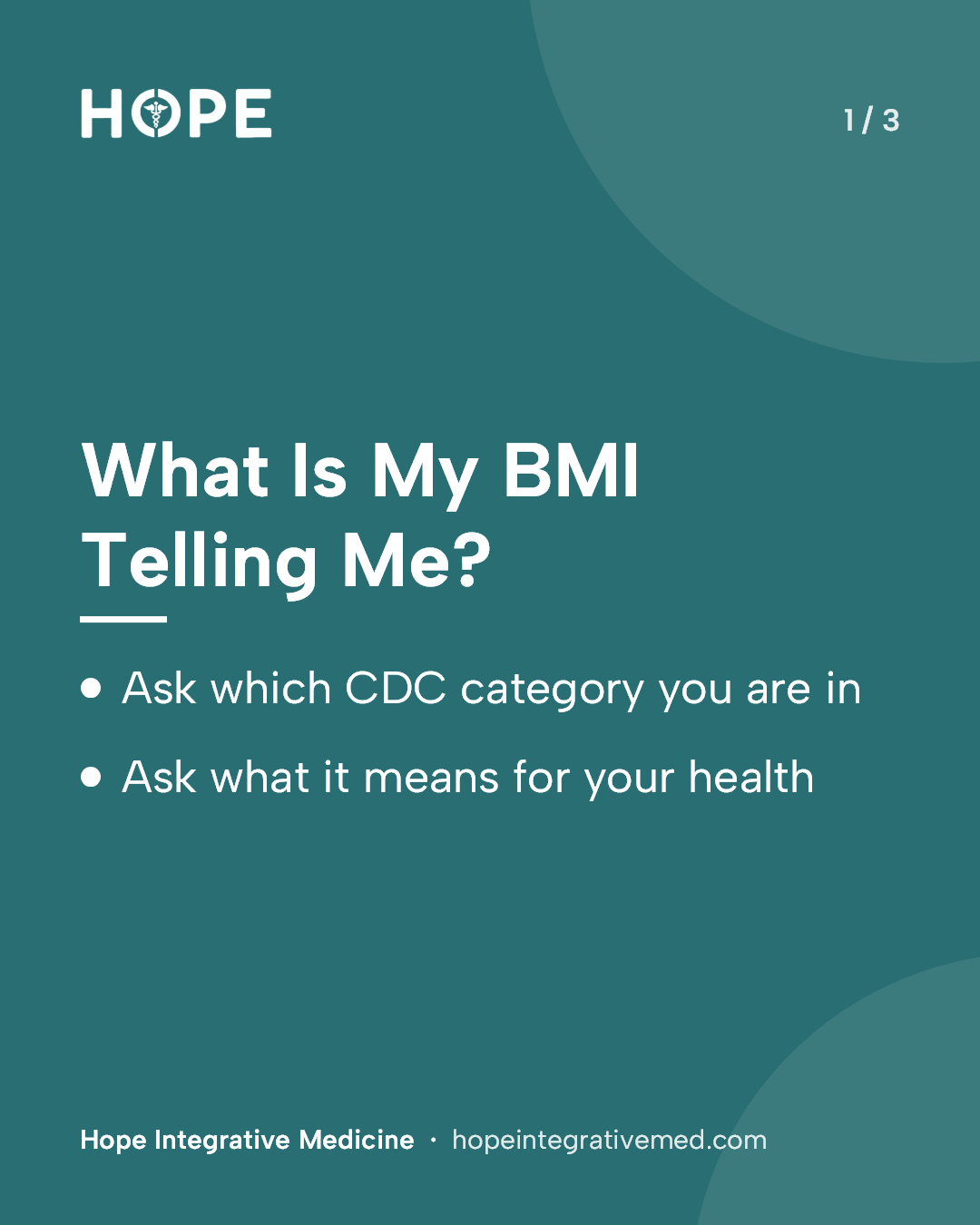
"What are my BMI and my waist size, and what do they mean for my health?"
Weight care at Hope Integrative Medicine
Your height, weight and waist can be measured at any visit in West Ashley. Our primary care team can look at your BMI alongside your blood pressure, blood work and health history, and our lifestyle medicine care includes nutrition and weight-loss counseling with Jessica Ace, FNP-C. Weight care combines in-person weigh-ins in West Ashley with virtual check-ins. New patients are often able to be scheduled within a week of requesting an appointment. Request an appointment.
Sources: CDC, Adult BMI Calculator (2024); CDC, About Body Mass Index (2025); NIDDK, Health Risks of Overweight & Obesity (2023); NIDDK, Definition & Facts of NAFLD & NASH (2021); NHLBI, Assessing Your Weight and Health Risk (2025); CDC, Steps for Losing Weight (2025); U.S. Preventive Services Task Force, Weight Loss to Prevent Obesity-Related Morbidity and Mortality in Adults: Behavioral Interventions (2018); U.S. Preventive Services Task Force, Prediabetes and Type 2 Diabetes: Screening (2021); Medicare.gov, Medicare Diabetes Prevention Program; CDC National Center for Health Statistics, Data Brief No. 508 (2024).
This article is general information, not medical advice, and does not create a patient–provider relationship. Every situation is different, so see a provider who can evaluate yours and develop a plan of care. If you are ever in doubt about an emergency, call 911 or go to the nearest emergency room.
Frequently Asked Questions
CDC lists a BMI of 18.5 to 24.9 as a healthy weight for adults. A BMI of 25 to 29.9 is overweight, and 30 or higher is obesity.
BMI is your weight in kilograms divided by your height in meters squared. CDC's Adult BMI Calculator does the math for adults 20 and older from your height and weight.
CDC defines obesity as a BMI of 30 or higher. Class 1 is 30 to 34.9, class 2 is 35 to 39.9, and class 3, or severe obesity, is 40 or higher.
BMI is a screening measure, not a diagnosis. CDC notes that it does not tell fat apart from muscle and bone, or show where fat sits, so your provider looks at it with other factors such as waist size.
For diabetes screening, the U.S. Preventive Services Task Force notes that a BMI of 23 or higher may be a better cut point for Asian American adults. Medicare's Diabetes Prevention Program also uses 23 or more for people who are Asian.