3 Questions to Ask About Your BMI
Based on CDC, About Body Mass Index (2025)
5 cards. Swipe or tap to see the next one.
What body mass index is, how to find yours with CDC's adult calculator, what the BMI categories and obesity classes mean, what BMI does not tell you, and what to do with your number.
Looking for a Primary Care Provider?
Checkups, preventive care and ongoing care for chronic conditions in West Ashley, Charleston. New patients are often able to be scheduled within a week of requesting an appointment. Schedule an appointment today.
In this guide
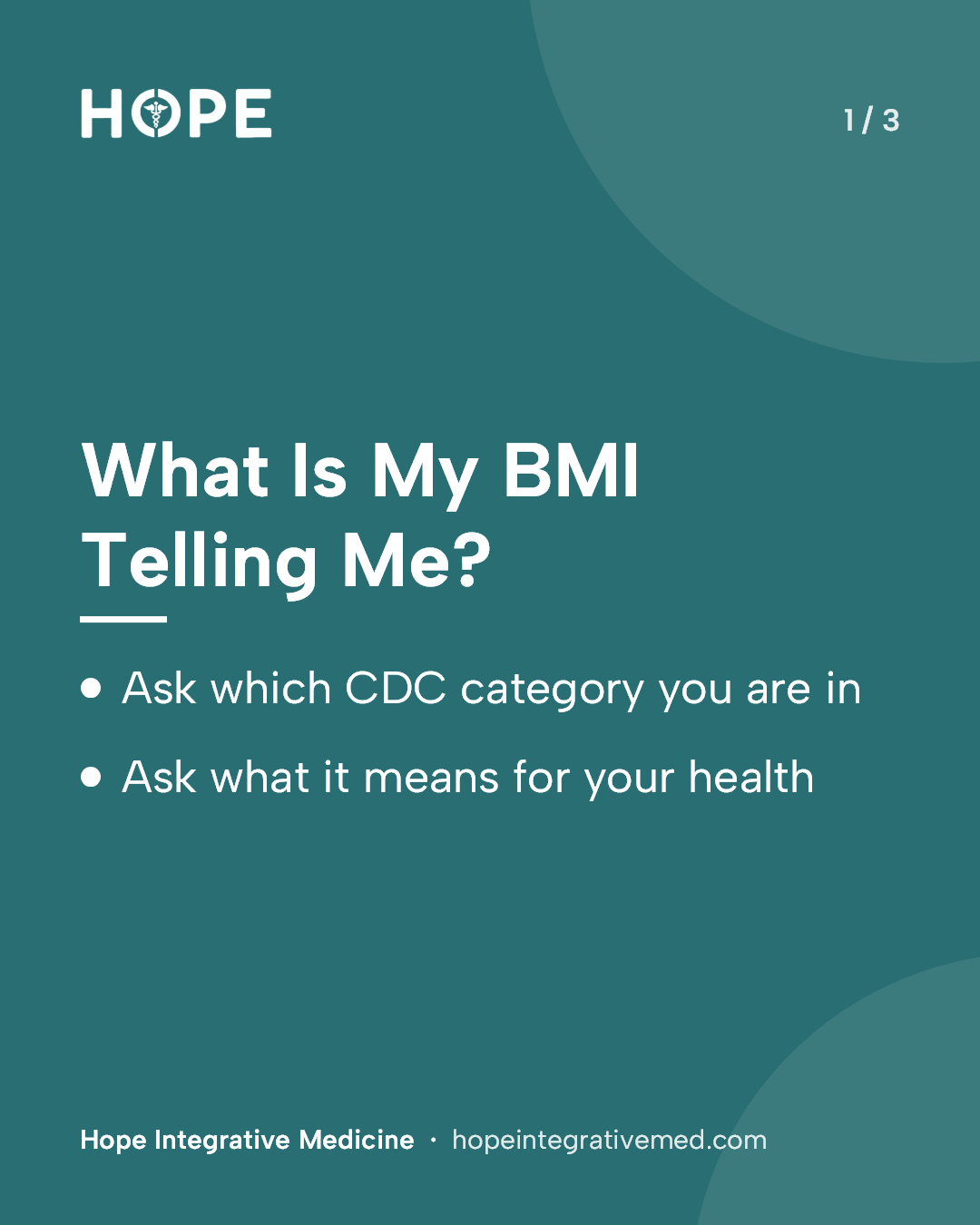
What Is My BMI Telling Me?
- Ask which CDC category you are in
- Ask what it means for your health
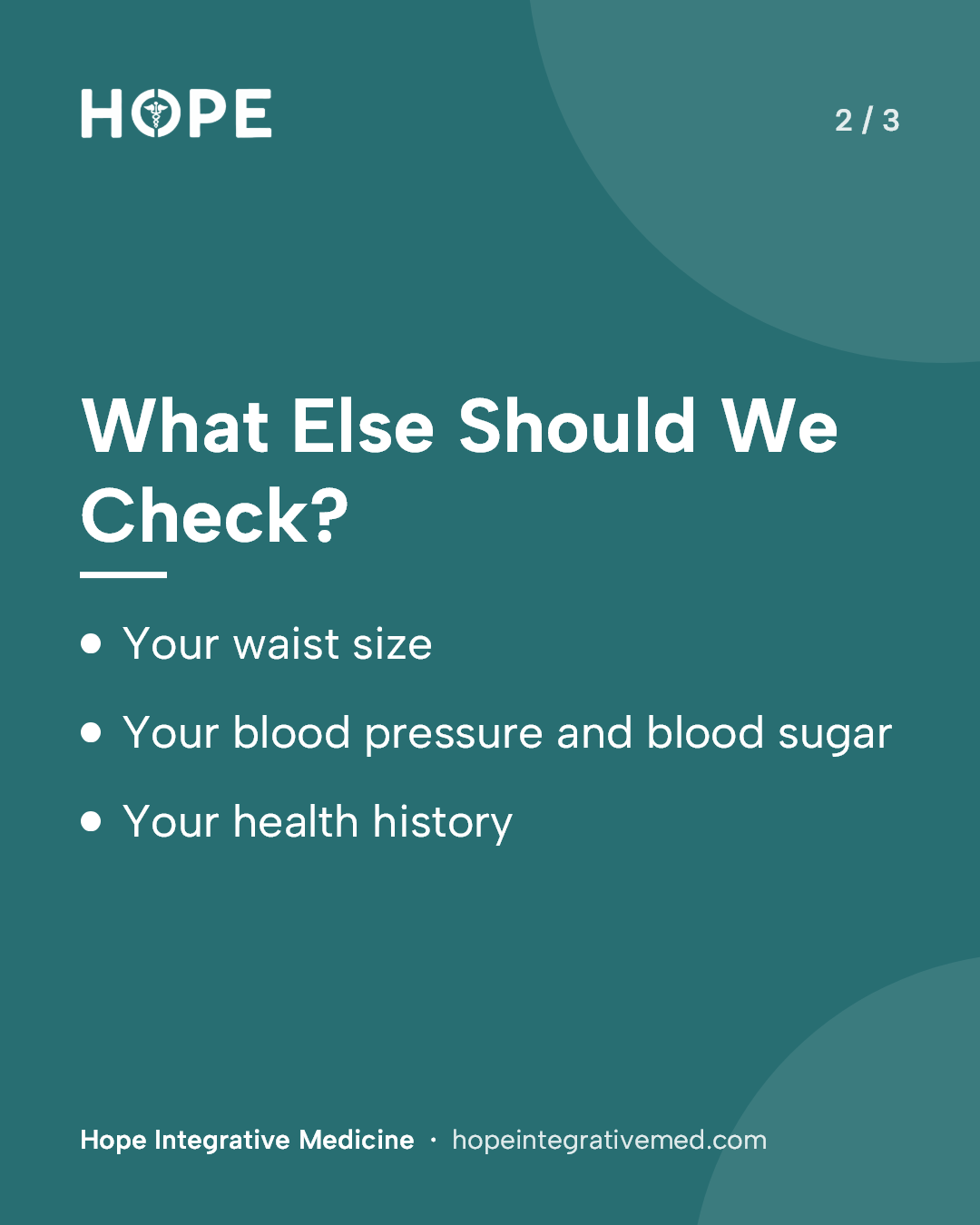
What Else Should We Check?
- Your waist size
- Your blood pressure and blood sugar
- Your health history
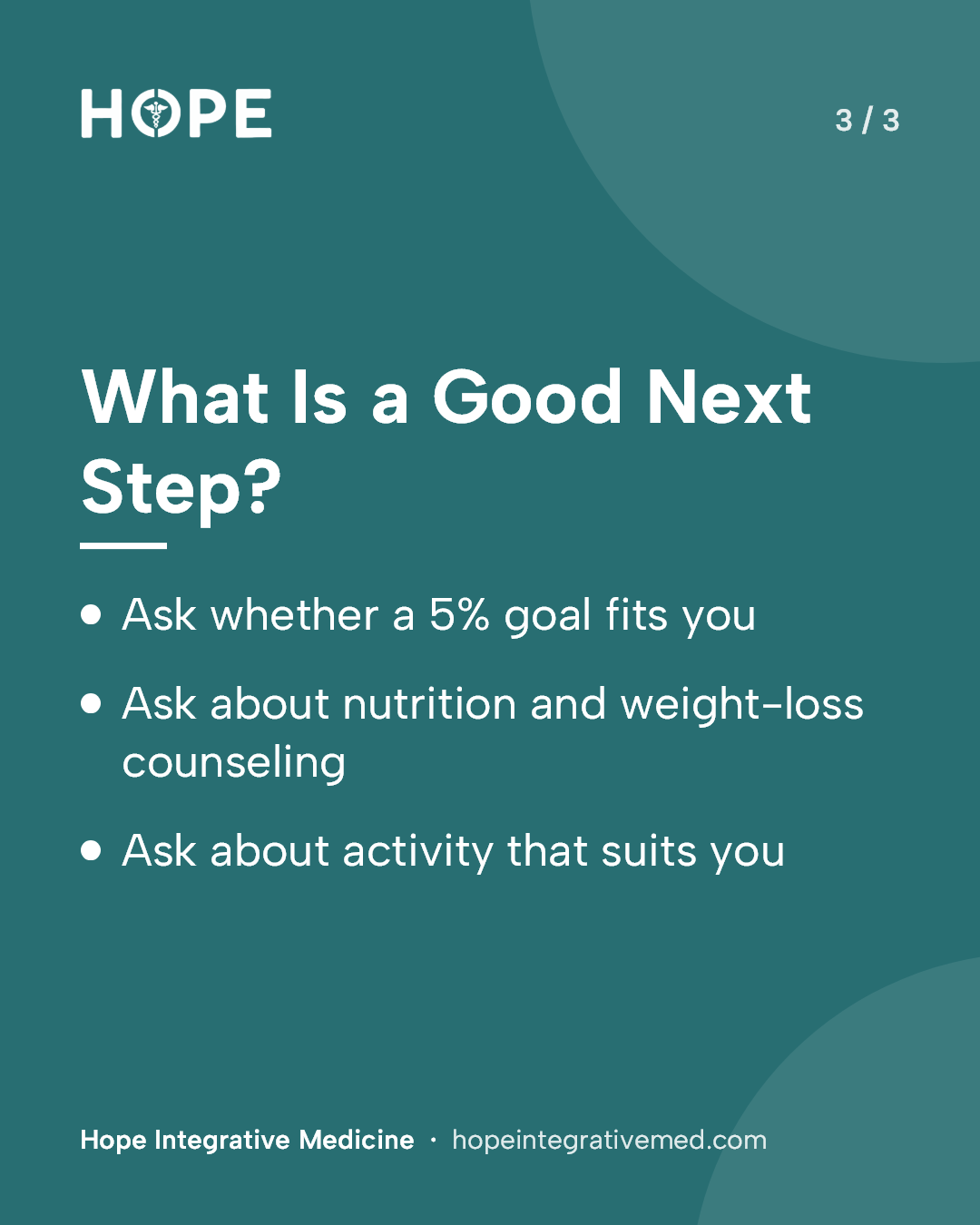
What Is a Good Next Step?
- Ask whether a 5% goal fits you
- Ask about nutrition and weight-loss counseling
- Ask about activity that suits you
What the guideline says
- BMI, or body mass index, measures weight relative to height; CDC's Adult BMI Calculator works it out for adults 20 and older.
- CDC's adult categories are underweight below 18.5, healthy weight 18.5 to 24.9, overweight 25 to 29.9 and obesity 30 or higher.
- CDC calls BMI a quick, safe and reliable screening measure that is not meant to diagnose disease and should be considered with other factors.
- BMI does not tell fat apart from muscle and bone or show where fat sits; NHLBI says a waist over 40 inches for men or 35 inches for women raises risk.
- NHLBI says health professionals recommend losing 5% to 10% of starting weight over about 6 months, and losing even 3% to 5% can lower triglycerides and blood sugar.
Source: CDC, About Body Mass Index (2025)
Read the full article: BMI: What It Is, What the Numbers Mean and Why It Matters →
This guide is general health information and does not replace advice from your own provider.
Frequently Asked Questions
NIDDK links overweight and obesity to type 2 diabetes, high blood pressure, heart disease, stroke, sleep apnea, osteoarthritis, gout, kidney disease, certain cancers and fatty liver disease.
MASLD stands for metabolic dysfunction-associated steatotic liver disease, also called nonalcoholic fatty liver disease. NIDDK says it means extra fat builds up in the liver, and that it is more common in people with obesity.
Talk with your provider about your other risks, such as blood pressure, blood sugar and waist size, to decide on next steps.