
If you or someone you care about is struggling, help is available right now. Call or text 988 to reach the 988 Suicide & Crisis Lifeline. It is available 24/7/365, and your conversations are free and confidential. You are not alone. This article explains what the evidence says about suicide risk screening, and why it is never a reason to wait to reach out.
What the Task Force recommends
In its 2023 recommendation, the U.S. Preventive Services Task Force (USPSTF) recommends screening for depression in adults, a grade B recommendation. For suicide risk, it issued an I statement: it concluded that the current evidence is insufficient to assess the balance of benefits and harms of screening for suicide risk in adults. Both apply to adults 19 and older, including pregnant and postpartum people and adults 65 and older, who do not have a diagnosed mental health condition and are not showing recognized signs or symptoms of depression or suicide risk.
What an I statement means, and what it does not
An I statement means the evidence is not enough to tell whether the benefits of routinely screening adults who have no signs outweigh the harms, so the balance of benefits and harms cannot be determined. It is not a finding that asking about suicide is harmful, and it does not apply to people who are showing signs or symptoms of depression or suicide risk. Anyone who is worried about themselves or someone else should reach out. The Task Force notes that evidence on the harms of suicide risk screening is limited, and that possible harms include false-positive results that may lead to unnecessary referrals, along with labeling, anxiety and stigma. It says clinicians should be aware of the risk factors, signs and symptoms of depression and suicide, listen to any patient concerns and make sure that people who need help get it. In the absence of evidence, it asks health care professionals to use their judgment, based on each person's circumstances, when deciding whether to screen adults who are not showing signs or symptoms.
Depression screening can include questions about suicide
Depression screening is recommended for adults, and some depression questionnaires, such as the PHQ-9, include questions about thoughts of suicide. If you are due for a depression screening, ask about it at your next visit.
Ready to Get Started?
Primary care, mental health, and addiction medicine in one practice. New patients are often able to be scheduled within a week of requesting an appointment.
5 cards. Swipe or tap to see the next one.


If you are worried about yourself
You do not need a screening to ask for help. The 988 Lifeline says it is for everyone, whether you are facing mental health struggles, emotional distress, alcohol or drug use concerns, or just need someone to talk to. You can call or text 988, or chat online, and to start a text conversation you can send any message to 988. Text and chat are available in Spanish, and when calling 988 you can press 2 to connect to a trained Spanish-speaking crisis counselor. You can also talk with your own provider about how you have been feeling.
If you are worried about someone else
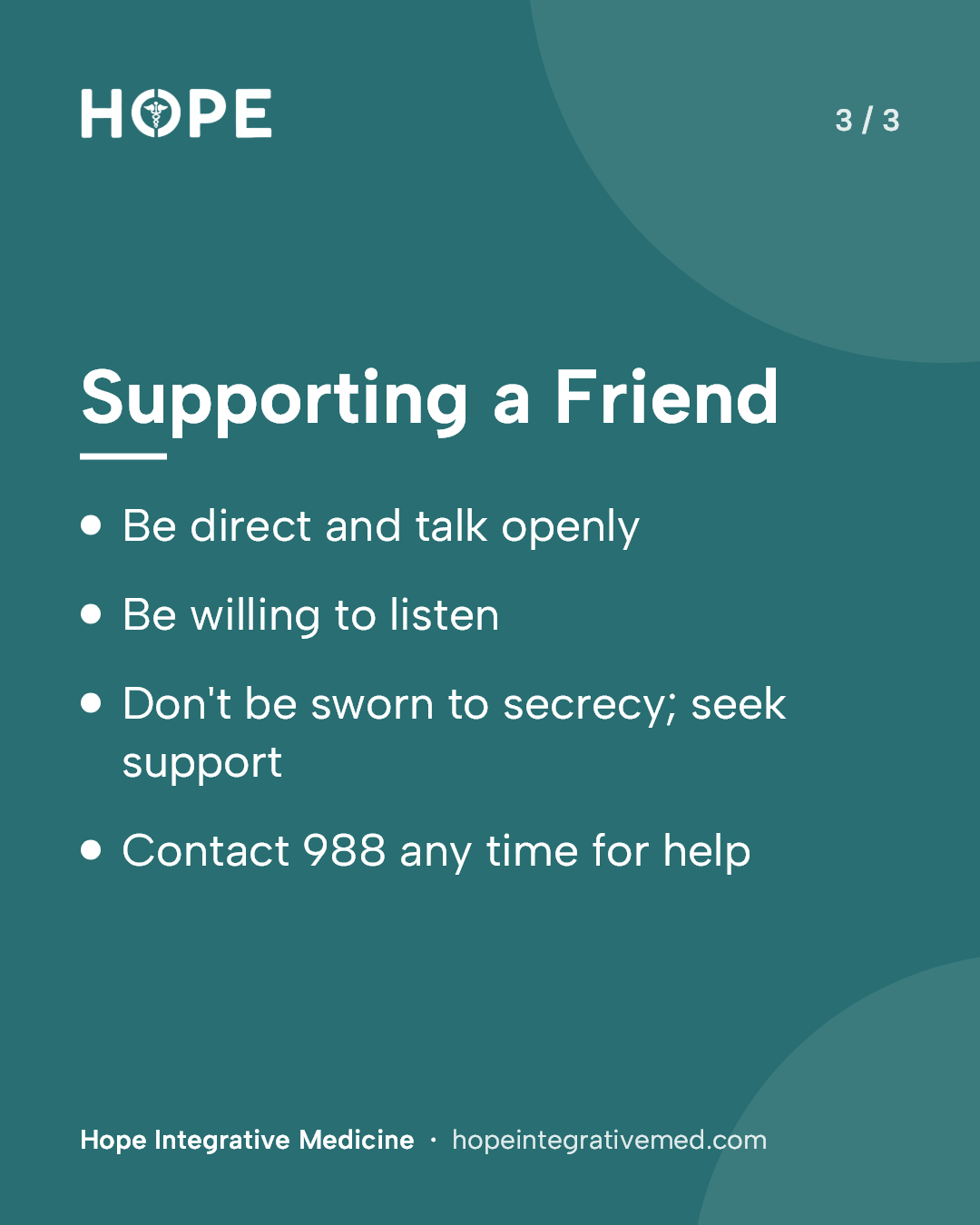
You can contact 988 at any time for help if a friend is struggling, and the Lifeline notes that you can be the difference in getting them the help they need. Its guidance includes being direct and talking openly about suicide, being willing to listen, accepting their feelings, showing interest and support, and offering hope that alternatives are available. It also says: don't be sworn to secrecy; seek support.
A question to bring to your next visit
"Should I be screened for depression, and who can I reach if I am struggling between visits?"
Mental health care at Hope Integrative Medicine
Our mental health team provides psychiatric medication management and counseling for depression and other conditions, in person in West Ashley or by telehealth across South Carolina. Hope Integrative Medicine is not an emergency service; in a crisis, call or text 988. New patients are often able to be scheduled within a week of requesting an appointment. Request an appointment.
Sources: U.S. Preventive Services Task Force, Depression and Suicide Risk in Adults: Screening (2023); 988 Suicide & Crisis Lifeline; 988 Lifeline, Help Someone Else; 988 Lifeline, FAQ.
This article is general information, not medical advice, and does not create a patient–provider relationship. Every situation is different, so see a provider who can evaluate yours and develop a plan of care. Any medication discussed here may not be right for you: the right choice depends on your diagnoses, other health conditions and current medicines, so take medication only as directed by the provider managing your care. If you are ever in doubt about an emergency, call 911 or go to the nearest emergency room. If you are having thoughts of suicide, call or text 988, or call 911 if you are in immediate danger.
Frequently Asked Questions
It means the USPSTF found the current evidence insufficient to assess the balance of benefits and harms of screening adults who show no signs or symptoms. It is not a finding that asking about suicide is harmful.
Call or text 988, or chat online at 988lifeline.org. The Lifeline is available 24/7/365, and conversations are free and confidential.
Yes. The 988 Lifeline says you can contact 988 at any time for help if a friend is struggling.
No. You do not need a screening to ask for help. You can call or text 988, or chat online, and you can also talk with your own provider about how you have been feeling.
Call 911. For support any time, you can also call or text 988 to reach the 988 Suicide & Crisis Lifeline.