

Medication-Assisted Treatment (MAT) is a comprehensive approach to treating substance use disorders (SUD), particularly opioid and alcohol addiction. It combines the use of FDA-approved medications with counseling and behavioral therapies, addressing both the physical and psychological aspects of addiction.
What is MAT?
MAT is not a "one-size-fits-all" solution. Instead, it tailors treatment to each individual’s needs, focusing on reducing withdrawal symptoms, cravings, and the risk of relapse. The ultimate goal of MAT is to support individuals in achieving and maintaining recovery while improving their overall quality of life.
Medications Used in MAT
MAT includes several medications that work differently depending on the substance use being treated:
1. Opioid Addiction
- Buprenorphine (Suboxone, Sublocade, Brixadi): Reduces cravings and withdrawal symptoms without producing the euphoric effects of opioids.
- Methadone: Alleviates withdrawal symptoms and cravings while blocking the effects of other opioids.
- Naltrexone (Vivitrol): Prevents the euphoric effects of opioids and can also be used for alcohol dependence.
2. Alcohol Use Disorder
- Disulfiram (Antabuse): Causes unpleasant effects when alcohol is consumed, deterring use.
- Acamprosate (Campral): Helps people who have already stopped drinking stay abstinent. It does not treat acute alcohol withdrawal, which needs medical care.
- Naltrexone: Also effective in reducing the reinforcing effects of alcohol.
How MAT Works
MAT operates on the principle of harm reduction, aiming to stabilize the individual and give them the foundation to focus on long-term recovery. It provides:
- Physical Stability: The medications alleviate severe withdrawal symptoms and reduce cravings.
- Mental and Emotional Support: Counseling sessions, often paired with MAT, help address underlying psychological issues and develop coping mechanisms.
- Improved Health Outcomes: MAT reduces the risk of infectious diseases, such as HIV and Hepatitis C, often associated with substance use.
Ready to Get Started?
Primary care, mental health, and addiction medicine in one practice. New patients are often able to be scheduled within a week of requesting an appointment.
5 cards. Swipe or tap to see the next one.
Common Myths About MAT
Despite its effectiveness, MAT is often misunderstood. Let’s debunk some common myths:
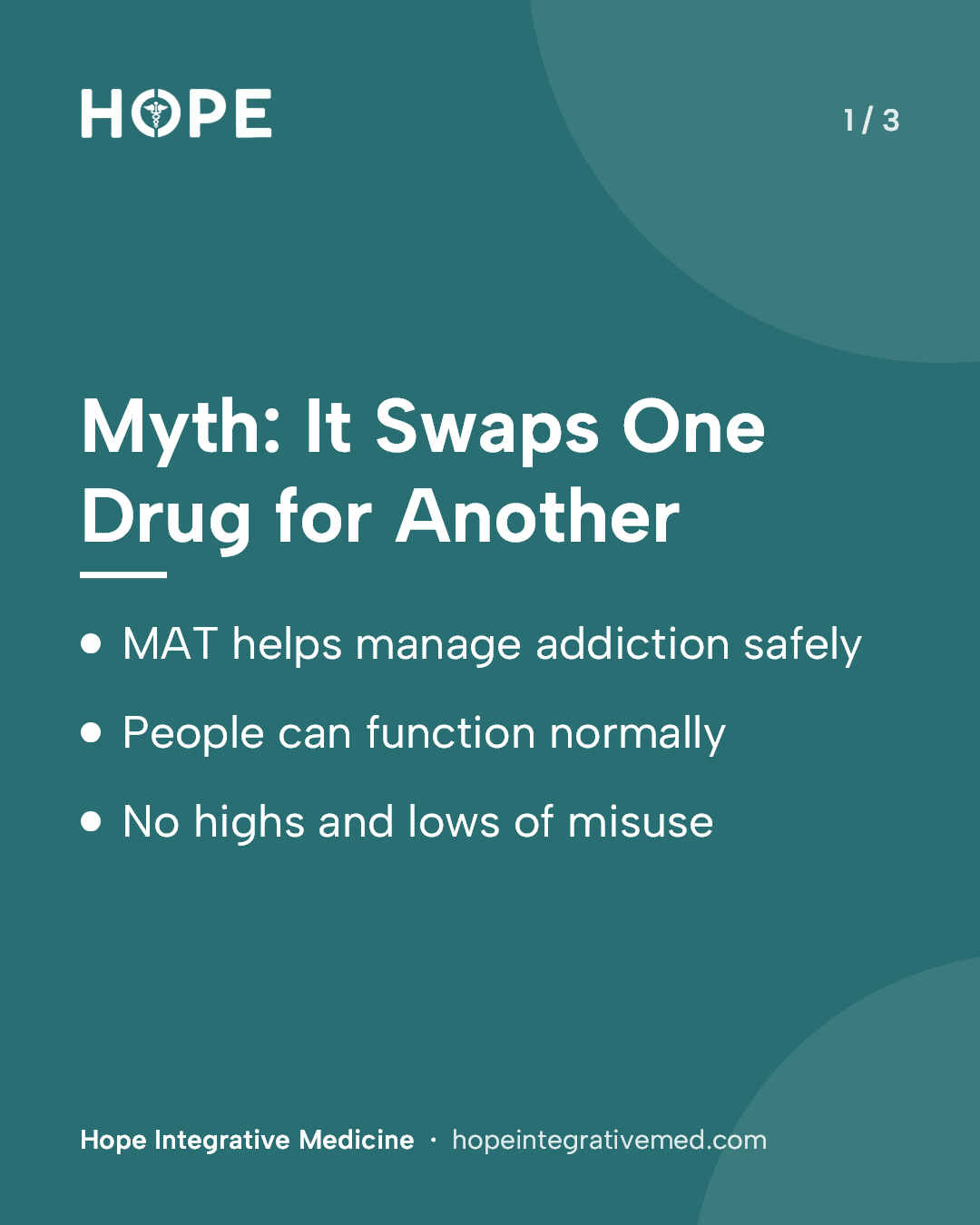
- Myth #1: MAT is just substituting one addiction for another.
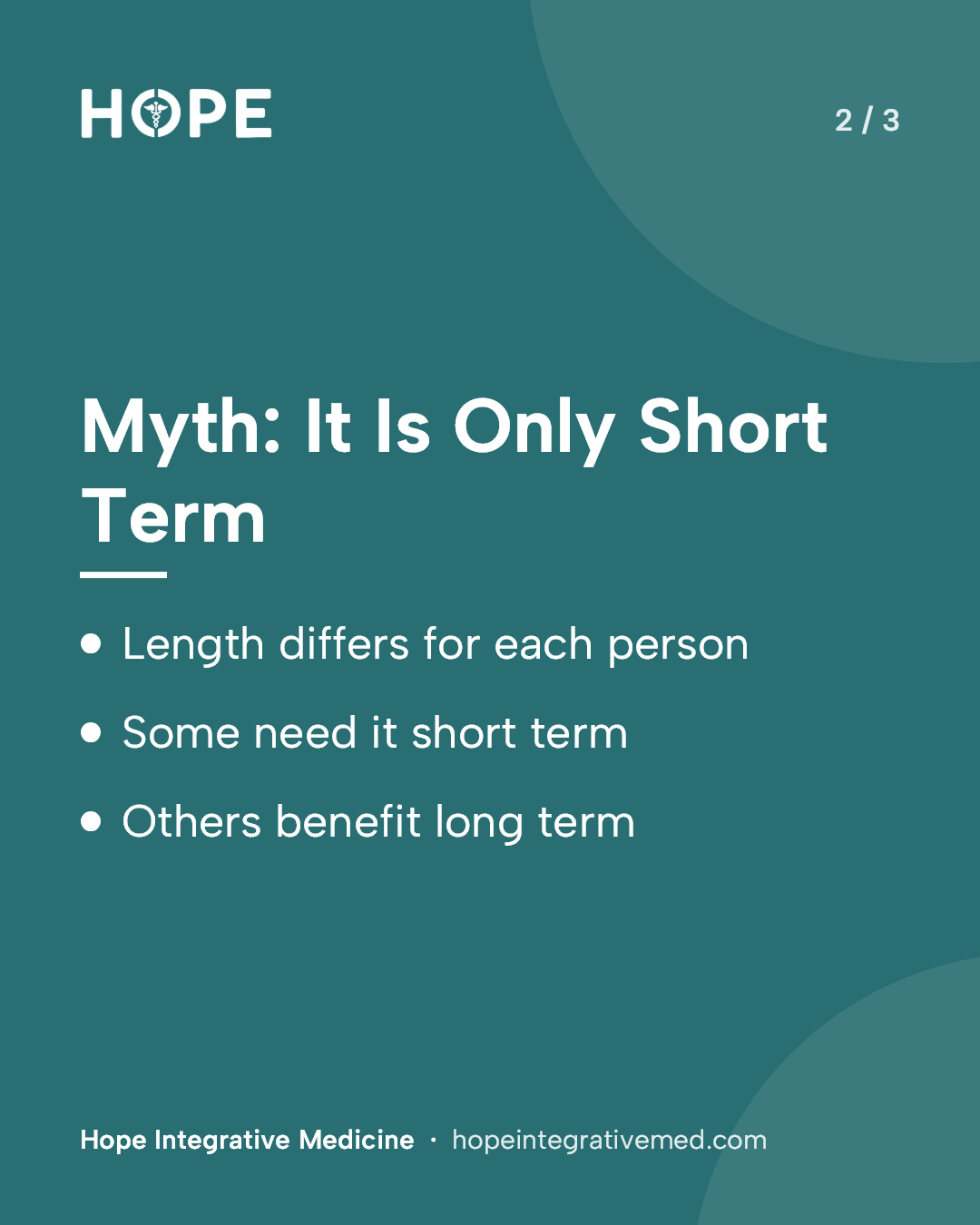
Reality: MAT helps manage addiction safely and allows individuals to function normally without the highs and lows of misuse. - Myth #2: MAT is only for short-term use.
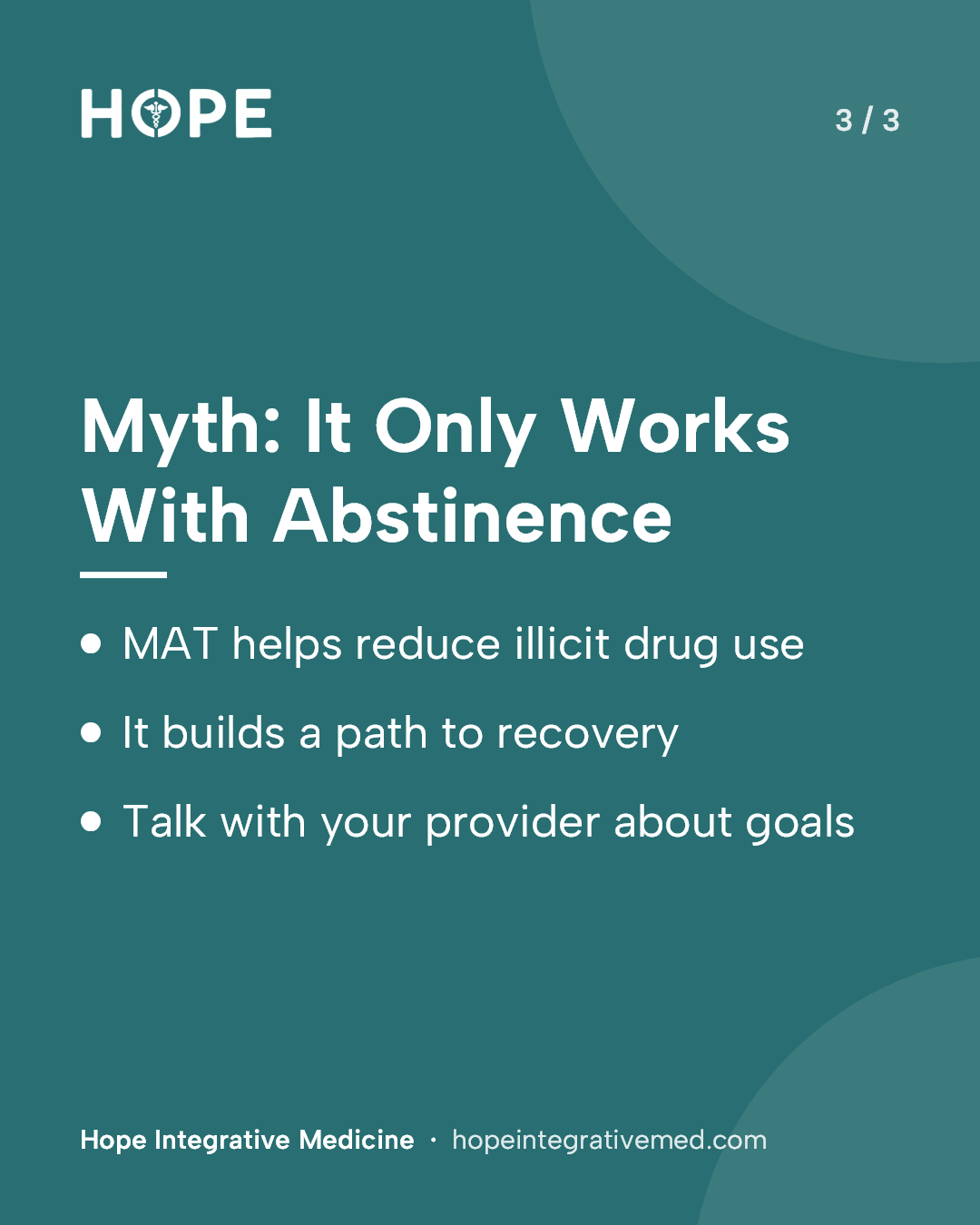
Reality: The duration of MAT varies for each individual. Some may need it short-term, while others may benefit from long-term treatment. - Myth #3: MAT isn’t effective without complete abstinence.
Reality: MAT supports individuals in reducing or eliminating illicit drug use while building a path to sobriety.
Benefits of MAT
- Increased Retention in Treatment: MAT patients are more likely to stay engaged in their recovery journey.
- Reduced Risk of Overdose: MAT significantly lowers the risk of fatal overdoses, especially in opioid use disorder.
- Better Social and Occupational Functioning: Individuals on MAT often report improved relationships and job performance.
Who is MAT For?
MAT is suitable for individuals struggling with addiction who are committed to recovery but need support to manage cravings and withdrawal. It’s particularly effective for those who have relapsed after traditional detox or abstinence-based treatments.
Conclusion
Medication-Assisted Treatment offers a holistic and compassionate approach to addiction recovery. It combines the best of medical science with individualized care, helping patients regain control of their lives. If you or a loved one is struggling with addiction, MAT could be the first step towards a healthier, more fulfilling future.
Are you interested in learning more about how MAT can help you?
Schedule a consultation with our team at Hope Integrative Medicine (contact us) today. We’re here to support you every step of the way.
This article is general information, not medical advice, and does not create a patient–provider relationship. Every situation is different, so see a provider who can evaluate yours and develop a plan of care. Any medication discussed here may not be right for you: the right choice depends on your diagnoses, other health conditions and current medicines, so take medication only as directed by the provider managing your care. If you are ever in doubt about an emergency, call 911 or go to the nearest emergency room.