MAT Myths and Facts: 3 to Know
Based on DailyMed: acamprosate calcium delayed-release tablets label
Medication-assisted treatment is a comprehensive approach to treating substance use disorders, particularly opioid and alcohol addiction, combining FDA-approved medications with counseling and behavioral therapies.
Looking for a Primary Care Provider?
Checkups, preventive care and ongoing care for chronic conditions in West Ashley, Charleston. New patients are often able to be scheduled within a week of requesting an appointment. Schedule an appointment today.
In this guide
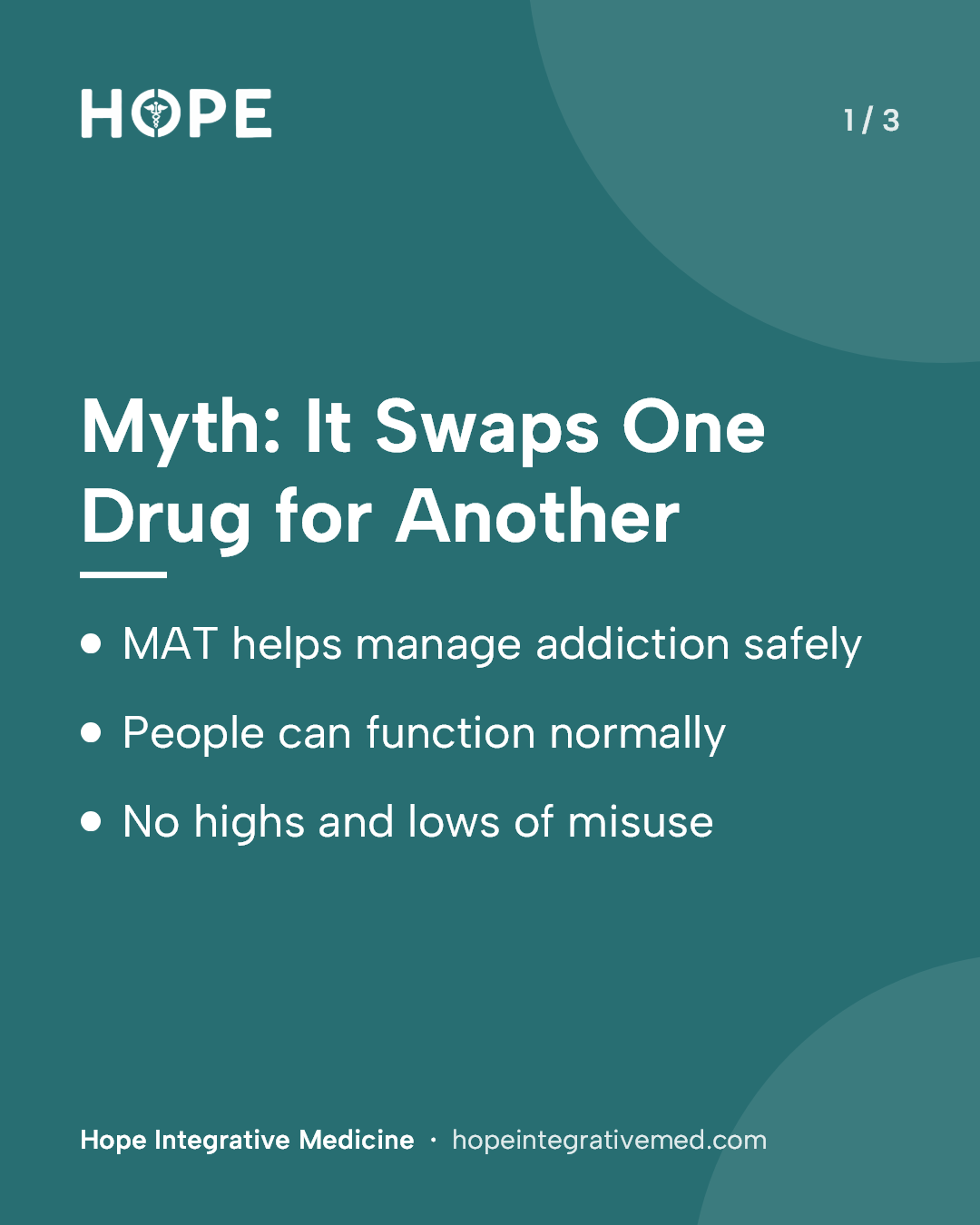
Myth: It Swaps One Drug for Another
- MAT helps manage addiction safely
- People can function normally
- No highs and lows of misuse
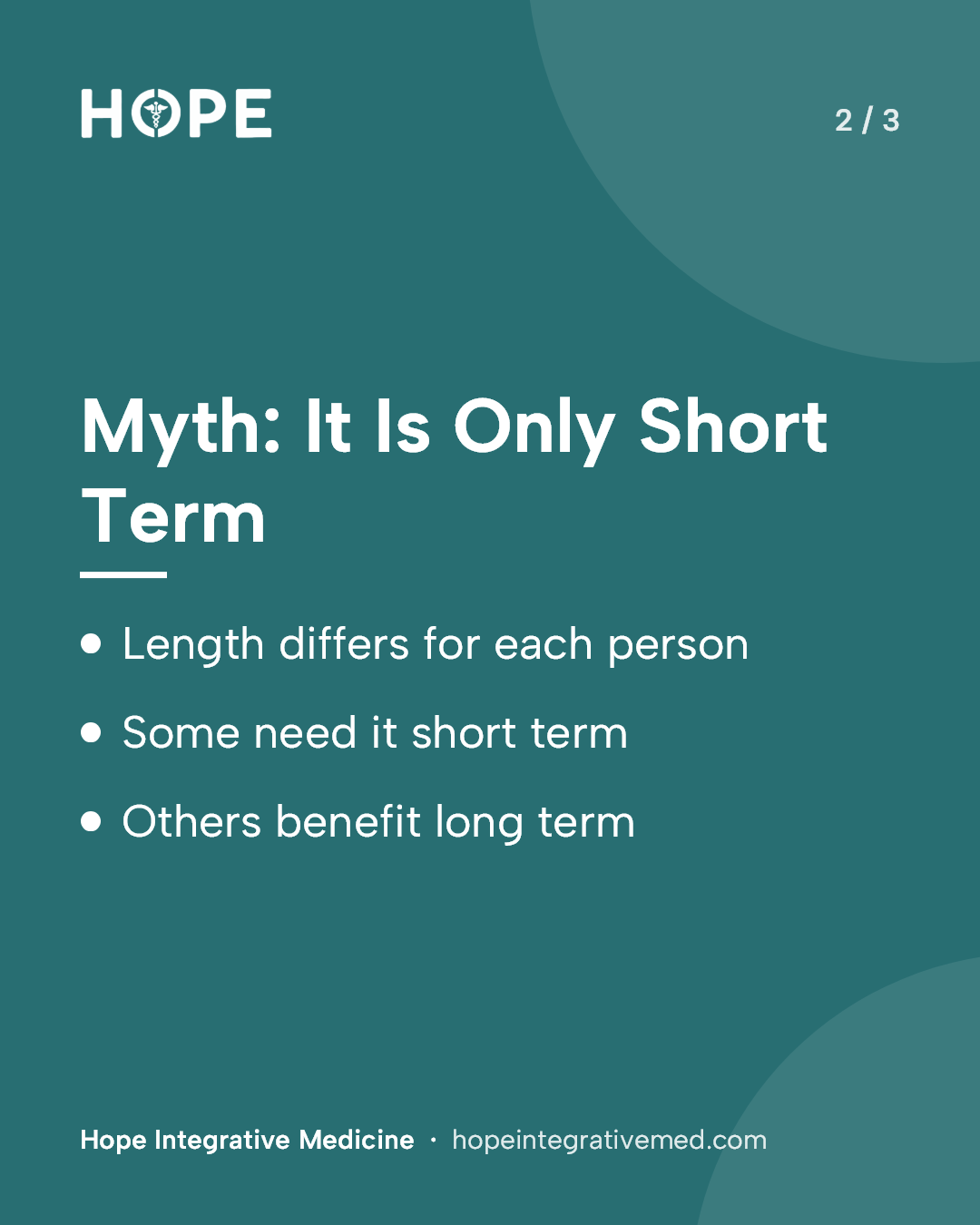
Myth: It Is Only Short Term
- Length differs for each person
- Some need it short term
- Others benefit long term
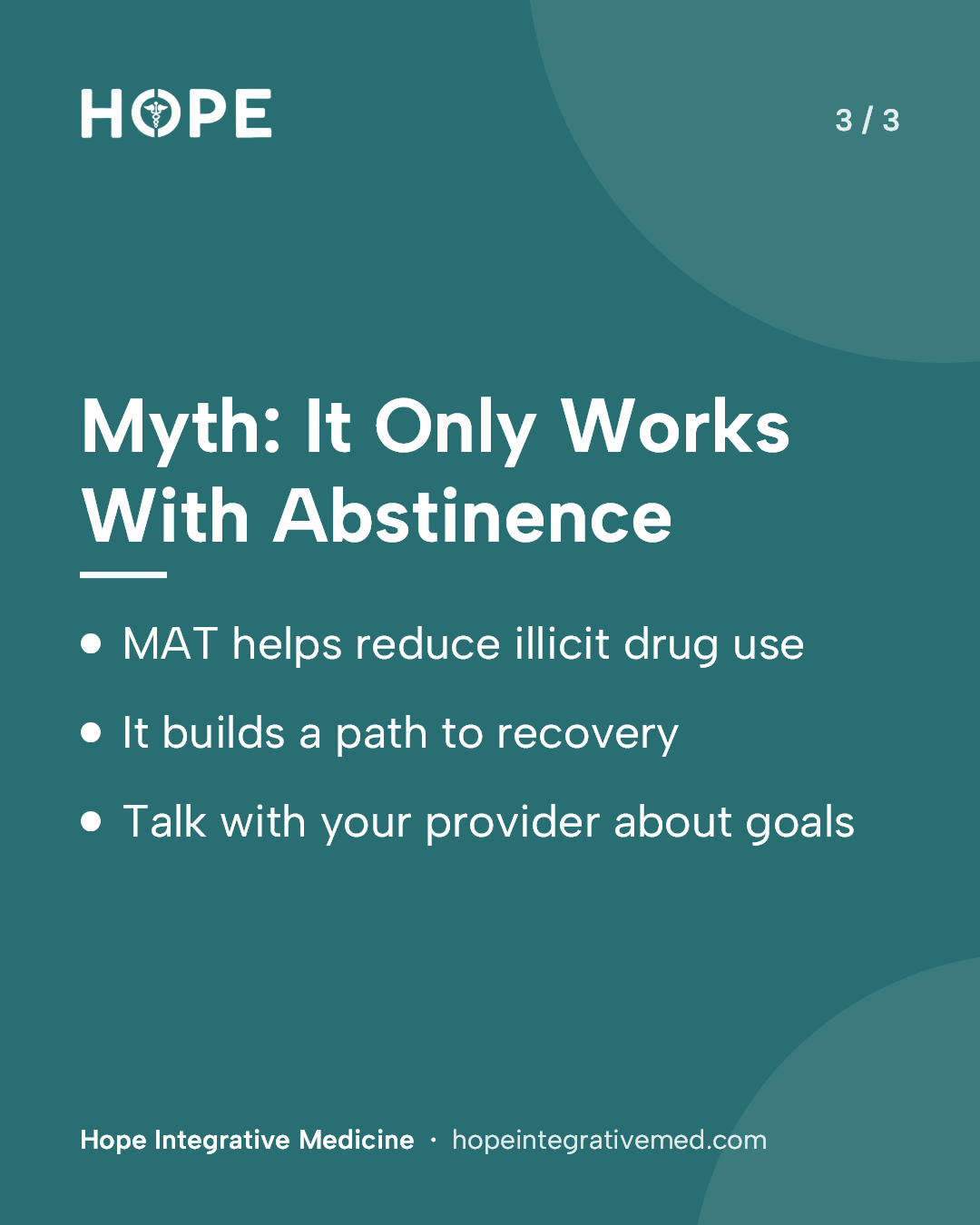
Myth: It Only Works With Abstinence
- MAT helps reduce illicit drug use
- It builds a path to recovery
- Talk with your provider about goals
What the guideline says
- Medication-assisted treatment combines FDA-approved medications with counseling and behavioral therapies, addressing both the physical and psychological sides of addiction.
- MAT is not one-size-fits-all; it is tailored to each person and focuses on reducing withdrawal symptoms, cravings and the risk of relapse.
- For opioid use disorder, medicines include buprenorphine, found in Suboxone, Sublocade and Brixadi, as well as methadone and naltrexone, given as Vivitrol.
- For alcohol use disorder, medicines include naltrexone, acamprosate and disulfiram.
- MAT significantly lowers the risk of fatal overdose, especially in opioid use disorder, and reduces the risk of infectious diseases such as HIV and hepatitis C.
- How long MAT lasts varies; some people need it short term, while others benefit from long-term treatment.
Source: DailyMed: acamprosate calcium delayed-release tablets label
Read the full article: Understanding Medication-Assisted Treatment →
This guide is general health information and does not replace advice from your own provider.
Frequently Asked Questions
Counseling, often paired with MAT, helps address underlying psychological issues and build coping skills.
No. MAT supports people in reducing or eliminating illicit drug use while they build a path to recovery.
People in MAT are more likely to stay in treatment, have a lower risk of fatal overdose, and often report better relationships and job performance.