
If you live with two or more long-term conditions, you may take several medicines every day, often prescribed by more than one provider. Keeping them straight takes real work. Here is why taking several medicines calls for extra care, simple habits that help, and how Medicare's Chronic Care Management service builds a medicine review into your care between visits.
Why several medicines call for extra care
MedlinePlus, from the National Library of Medicine, points out that a medicine can be safe and still cause side effects you do not want, or interact with food, alcohol or other medicines you take. Each medicine you add is one more to check against the rest of your list. MedlinePlus also notes that medication errors can happen in the hospital, at a provider's office, at the pharmacy or at home.
The Centers for Disease Control and Prevention (CDC) says an adverse drug event is when a medication causes harm to someone, and that each year in the United States these events cause more than one and a half million visits to hospital emergency departments. CDC adds that the number of these events can rise as more medicines are used to treat and prevent disease and as the American population ages.
Habits that help
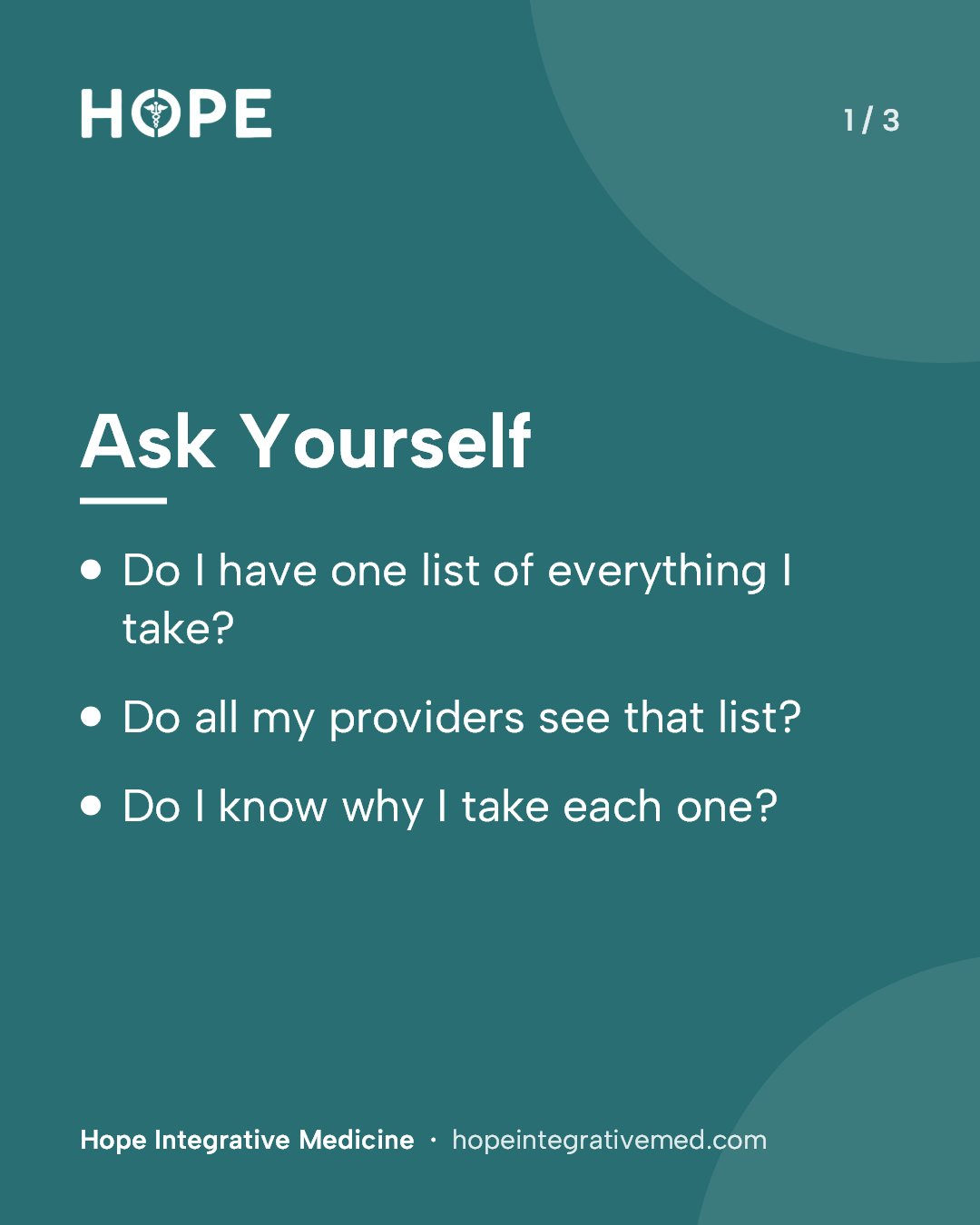
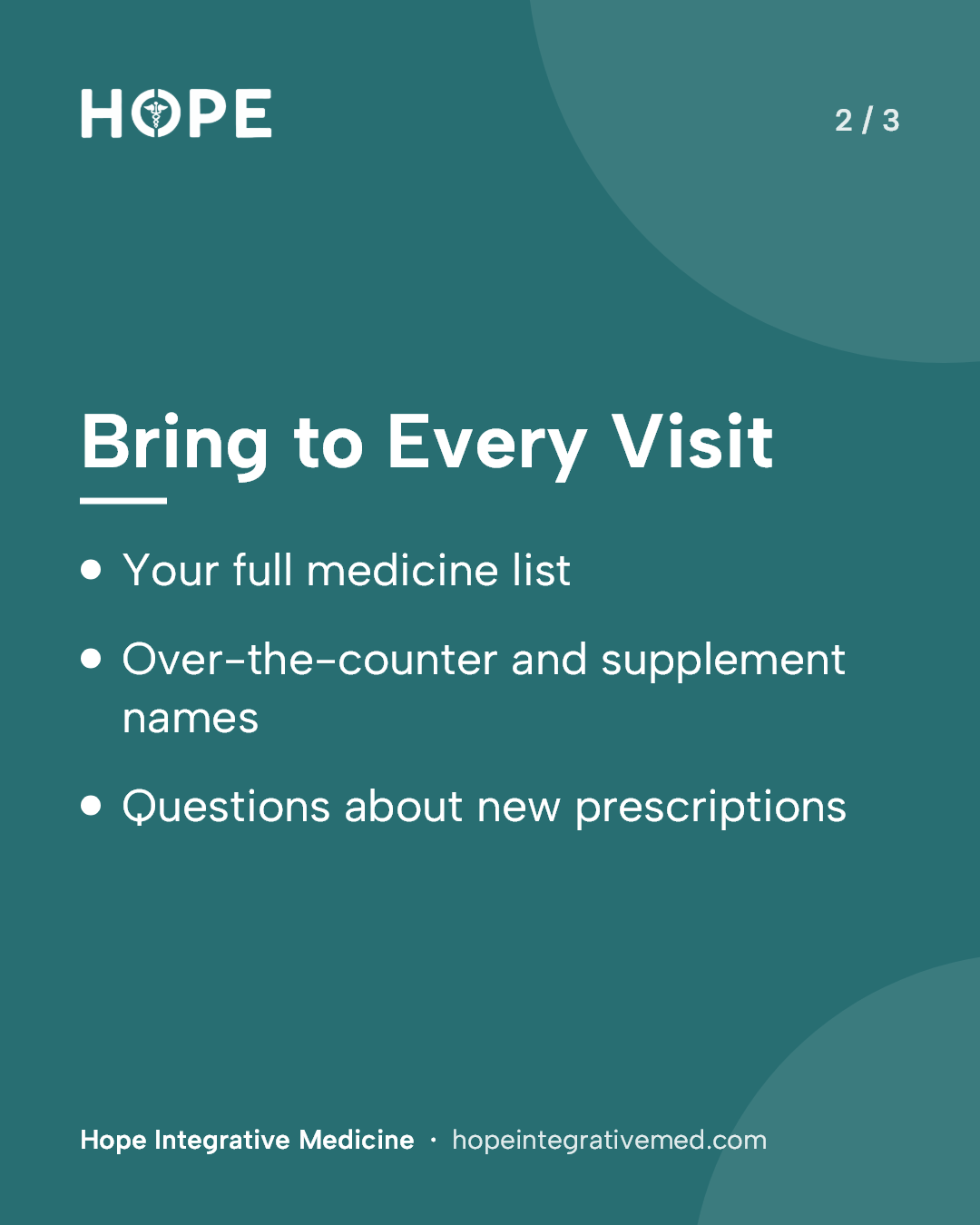
- Keep one up-to-date list of everything you take: prescription and over-the-counter medicines, vitamins, supplements and herbal products. MedlinePlus suggests noting the name, dose and timing of each, and any medicine that has caused an allergy or a problem. The U.S. Food and Drug Administration (FDA) suggests keeping one copy at home and another with you.
- Bring the list to every appointment, as MedlinePlus advises, so your providers and pharmacist can see everything you take.
- When a medicine is new, ask your provider or pharmacist why you are taking it, which side effects are common and what to do about them, when to stop it, whether it mixes safely with the rest of your list, and whether to avoid any foods or alcohol.
- Read the label each time you take a medicine rather than relying on memory.
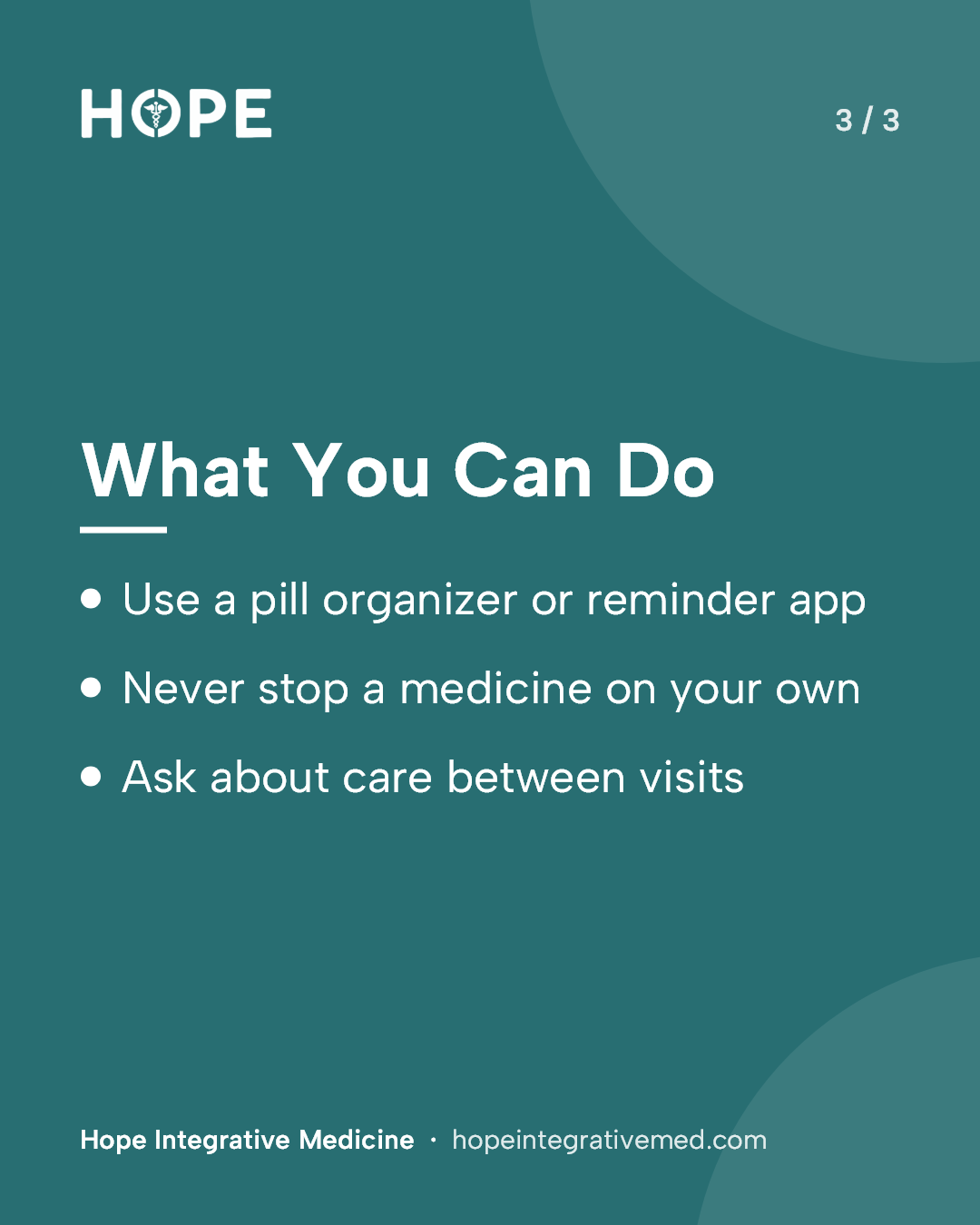
- Take your medicines as directed. Do not skip doses or stop a medicine on your own; talk with your provider first.
- CDC suggests setting timers or reminders to help you remember your medicines; a reminder app may help.
How Chronic Care Management helps with medicines
Chronic Care Management (CCM) is a Medicare service for people with two or more serious chronic conditions that are expected to last at least a year. Under Medicare's rules, CCM includes a comprehensive care plan that lists your health problems and goals, your other providers and your medicines, along with a review of your medicines and how you take them. It also includes support when you move from one care setting to another, such as after a hospital stay, which is often when medicines change.
At Hope Integrative Medicine, your care coordinators work closely with your provider between visits. They keep your care plan, including your medicine list, up to date, and keep your full care team, here at Hope and among your outside specialists, informed about your care events. You can reach your care coordination team with questions, including through secure SMS messaging.
Medicare Part B may pay for CCM if you are eligible. After the Part B deductible, you generally pay 20% of the Medicare-approved amount. Medicare Advantage plans must cover everything Original Medicare covers, but costs and rules vary, so check with your plan. CCM starts only with your consent, and you can stop at any time.
Ready to Get Started?
Primary care, mental health, and addiction medicine in one practice. New patients are often able to be scheduled within a week of requesting an appointment.
5 cards. Swipe or tap to see the next one.
A question to bring to your next visit
"Could we go through my medicine list together, and would Chronic Care Management help me keep it up to date between visits?"
Care coordination at Hope Integrative Medicine
Hope Integrative Medicine brings primary care, mental health and addiction medicine together, in person in West Ashley and through hybrid care across South Carolina. Our Chronic Care Management and Behavioral Health Integration programs connect that care between visits, so your plan keeps moving forward. Hope Integrative Medicine is not an emergency service; in an emergency, call 911.
Want a care team member focused on your care between visits? Ask us about enrolling. Bring it up at your next visit, send us a message or call (843) 737-0312, and we'll check whether Chronic Care Management or Behavioral Health Integration is right for you. New to Hope? Request an appointment.
Sources: MedlinePlus, Medicines (2025); MedlinePlus, Medication Errors (2023); Centers for Disease Control and Prevention, Medication Safety and Your Health (2024); U.S. Food and Drug Administration, 5 Medication Safety Tips for Older Adults (2024); Medicare.gov, Chronic Care Management Services; CMS Medicare Learning Network, Chronic Care Management Services (MLN909188, June 2025); Medicare.gov, Compare Original Medicare & Medicare Advantage.
This article is general information, not medical advice, and does not create a patient–provider relationship. Every situation is different, so see a provider who can evaluate yours and develop a plan of care. Any medication discussed here may not be right for you: the right choice depends on your diagnoses, other health conditions and current medicines, so take medication only as directed by the provider managing your care. If you are ever in doubt about an emergency, call 911 or go to the nearest emergency room. Coverage rules can change; check with your plan for your own costs.
Frequently Asked Questions
They can. MedlinePlus points out that even safe medicines can cause unwanted side effects or interact with food, alcohol or other medicines you take.
Everything you take: prescription and over-the-counter medicines, vitamins, supplements and herbal products. FDA suggests keeping one copy at home and another with you.
Do not stop a medicine on your own. Talk with your provider first; they can tell you whether you still need it or whether the dose should change.
CDC says an adverse drug event is when a medication causes harm to someone. These events cause more than one and a half million emergency department visits in the United States each year.
Yes. Under Medicare's rules, CCM includes a care plan that lists your medicines and a review of your medicines and how you take them.
Medicare Part B may pay for CCM if you are eligible. After the Part B deductible, you generally pay 20% of the Medicare-approved amount.