Caring for Your Mind in Recovery: Simple Steps to Try
Based on Hope Integrative Medicine, Managing Mental Health During Recovery
5 cards. Swipe or tap to see the next one.
Recovery from substance use disorders is a journey that extends beyond addressing the body's physical dependence. One of the most critical, yet often overlooked, components of recovery is mental health.
Ready to Talk With Someone?
We care for anxiety, depression and stress in West Ashley and by telehealth across South Carolina. Schedule an appointment today.
In this guide
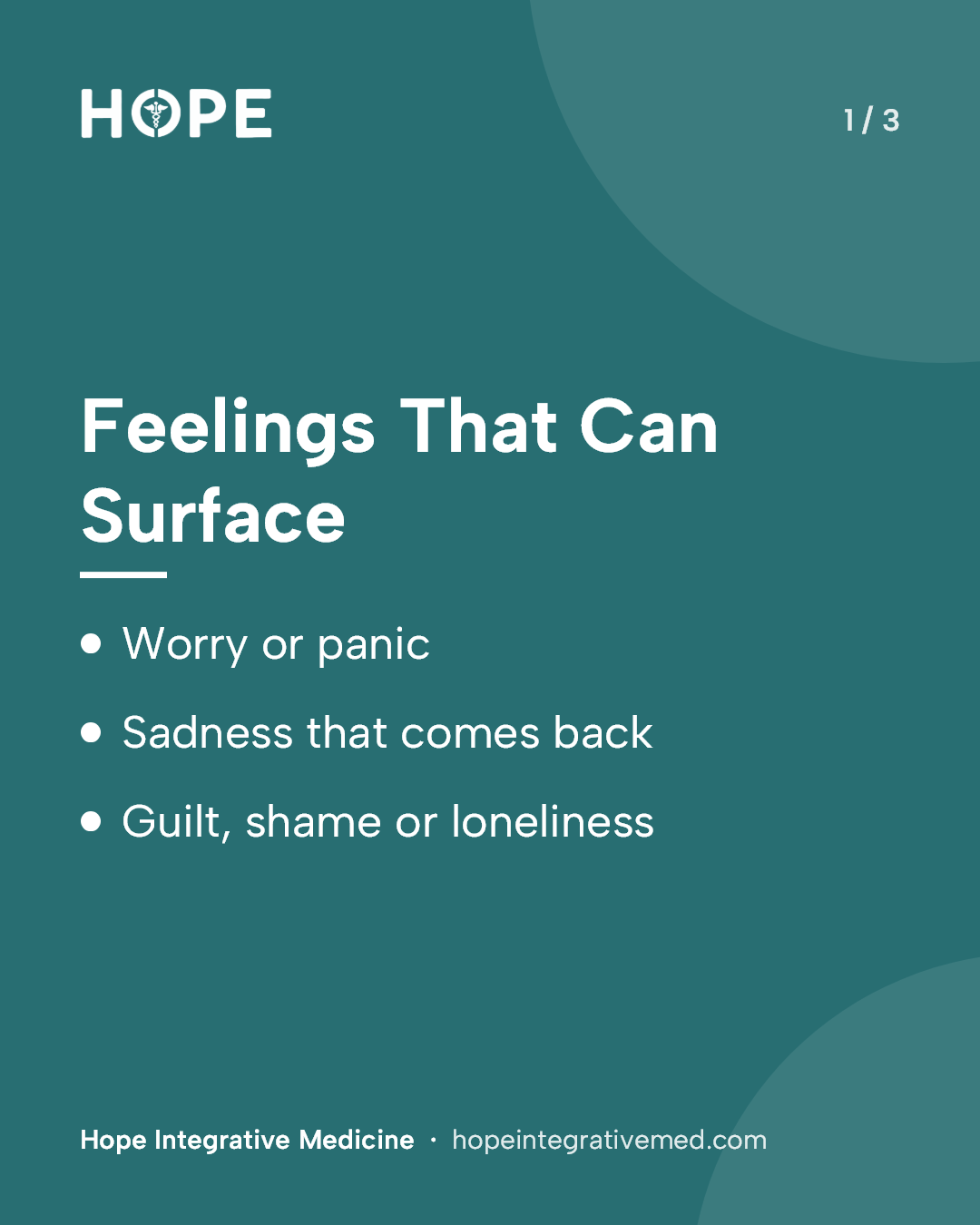
Feelings That Can Surface
- Worry or panic
- Sadness that comes back
- Guilt, shame or loneliness
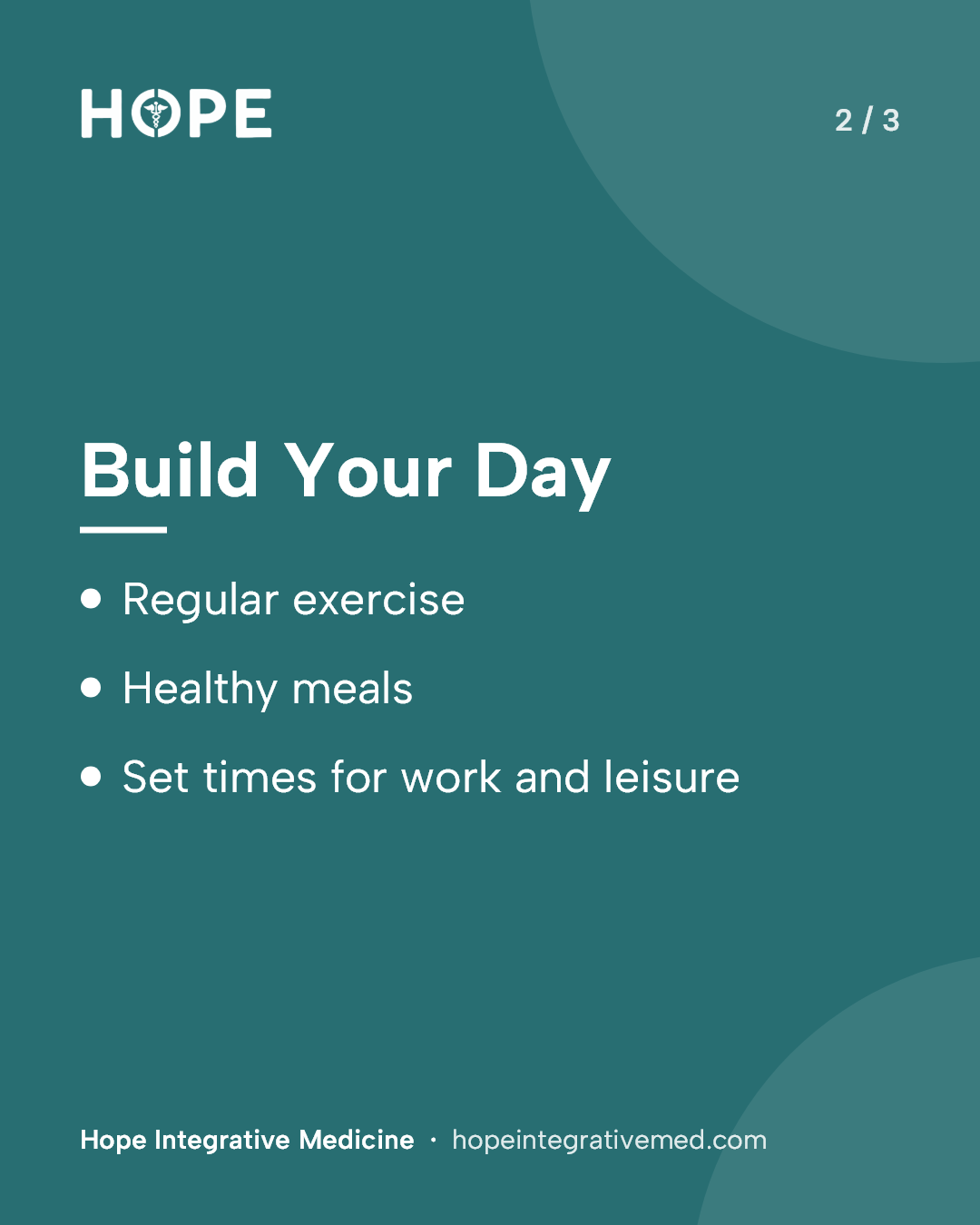
Build Your Day
- Regular exercise
- Healthy meals
- Set times for work and leisure
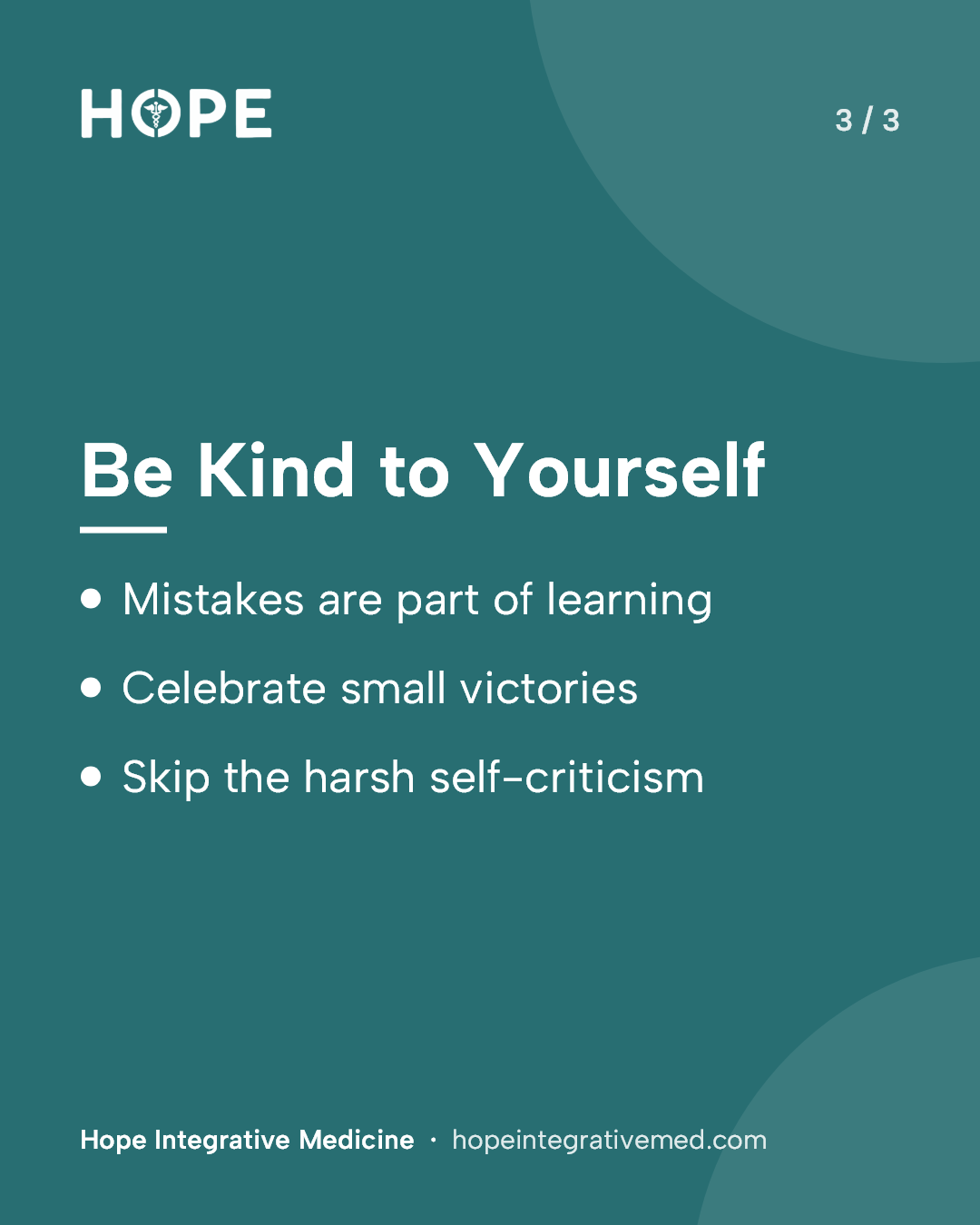
Be Kind to Yourself
- Mistakes are part of learning
- Celebrate small victories
- Skip the harsh self-criticism
What the guideline says
- Mental health is one of the most critical, yet often overlooked, parts of recovery from a substance use disorder.
- Many people with a substance use disorder also have anxiety, depression or PTSD, and untreated mental health challenges can increase the risk of relapse.
- Common challenges during recovery include anxiety and stress, depression, guilt and shame, and loneliness.
- Helpful strategies include therapy such as cognitive behavioral therapy and dialectical behavior therapy, a support network, mindfulness, a daily routine and, for some people, medication.
- Persistent sadness or hopelessness, severe anxiety or panic attacks, thoughts of self-harm and trouble functioning day to day are signs it is time to get professional help.
- After time without using, a relapse carries a high risk of overdose, so keep naloxone on hand.
Source: Hope Integrative Medicine, Managing Mental Health During Recovery
Read the full article: Managing Mental Health During Recovery →
This guide is general health information and does not replace advice from your own provider.
Frequently Asked Questions
A daily routine provides a sense of normalcy and purpose. It can include regular exercise, healthy meals and set times for work or leisure.
For some people, medicines prescribed by a healthcare professional can help manage symptoms of depression, anxiety or other mental health conditions.
If you have thoughts of suicide, call or text 988 now, or call 911 if you are in immediate danger. After time without using, a relapse carries a high risk of overdose; keep naloxone on hand.