
At a primary care visit, you may be asked a few questions about alcohol, tobacco, prescription medicines and other drugs. The U.S. Preventive Services Task Force (USPSTF) recommends screening by asking questions about unhealthy drug use in adults 18 and older, a grade B recommendation published in 2020. Here is what those questions cover, why they are asked and what can happen next.
What the recommendation says
In its June 9, 2020 recommendation, the Task Force recommends screening by asking questions about unhealthy drug use in adults age 18 years or older, including pregnant and postpartum persons. It concluded with moderate certainty that this screening has a moderate net benefit when services for accurate diagnosis, effective treatment and appropriate care can be offered or referred. The recommendation does not apply to people who already have a diagnosed drug use disorder. For adolescents, the Task Force found the evidence insufficient to assess the balance of benefits and harms, and it says clinicians should use their judgment about asking questions about drug use.
What counts as unhealthy drug use
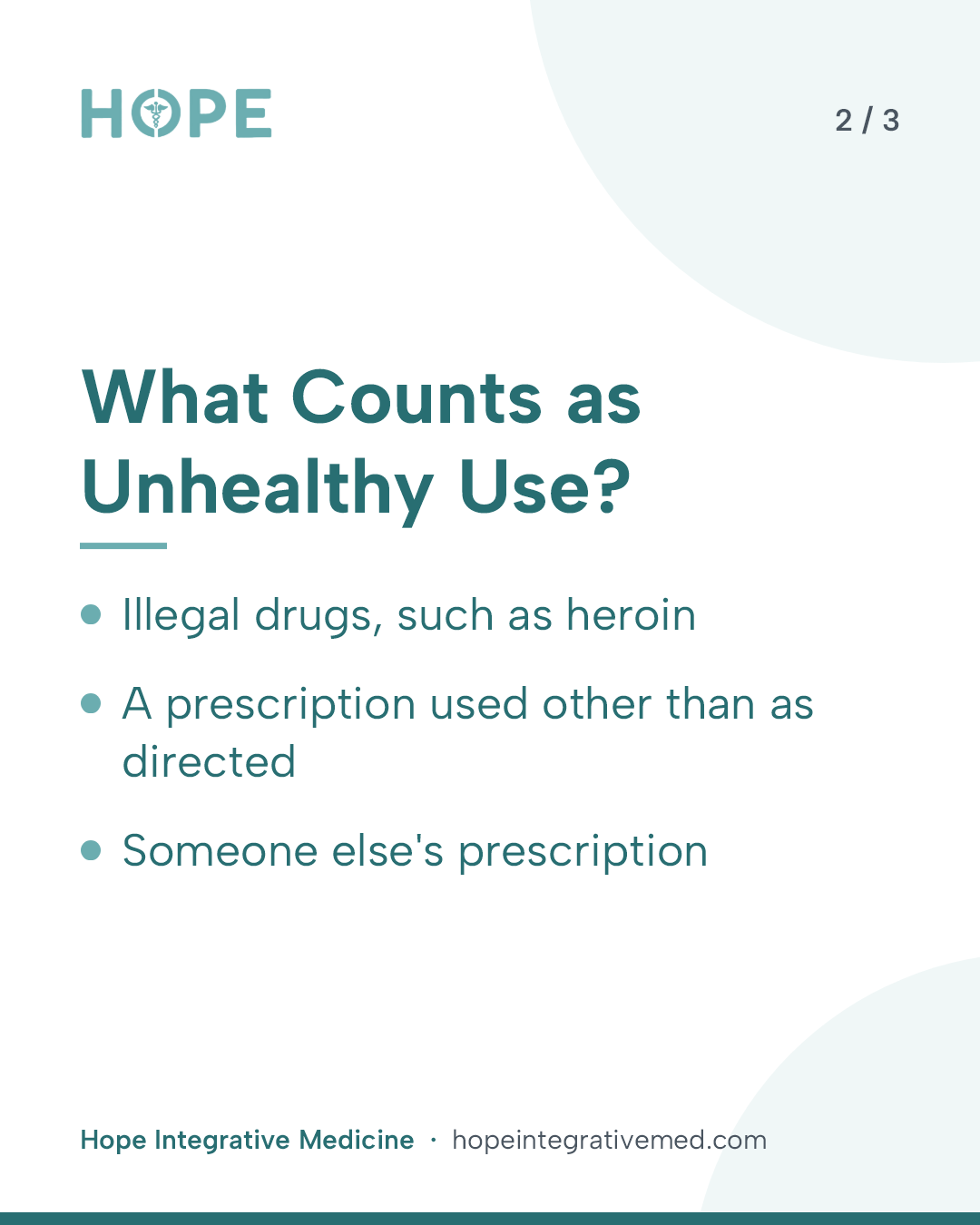
The Task Force describes unhealthy drug use as using illegal drugs, such as heroin, or using a prescription drug in ways that are not recommended by a doctor: for other reasons, for longer, in larger amounts or more often than prescribed, or using medication prescribed for someone else. Its definition does not include alcohol or tobacco.
Screening means questions, not a drug test
In this recommendation, screening means asking questions. It does not refer to testing urine, saliva, blood or other samples for drugs. Several short questionnaires are available. The NIDA Quick Screen asks four questions about past-year use of alcohol, tobacco, prescription drugs for nonmedical reasons and illegal drugs, and the Task Force notes that it may be more feasible in busy primary care settings. Longer tools include the 8-item ASSIST, some tools such as TAPS include questions about nonmedical use of prescription drugs, and the Task Force names the Prenatal Risk Overview for pregnant people.
Why your provider asks
The Task Force calls drug use one of the most common causes of preventable death, injuries and disability. In the Substance Abuse and Mental Health Services Administration's (SAMHSA) 2025 national survey, 16.4% of people aged 12 or older, or 47.5 million people, used an illicit drug in the past month. Your answers help you and your provider decide whether a fuller assessment makes sense.
A screening question is not a diagnosis
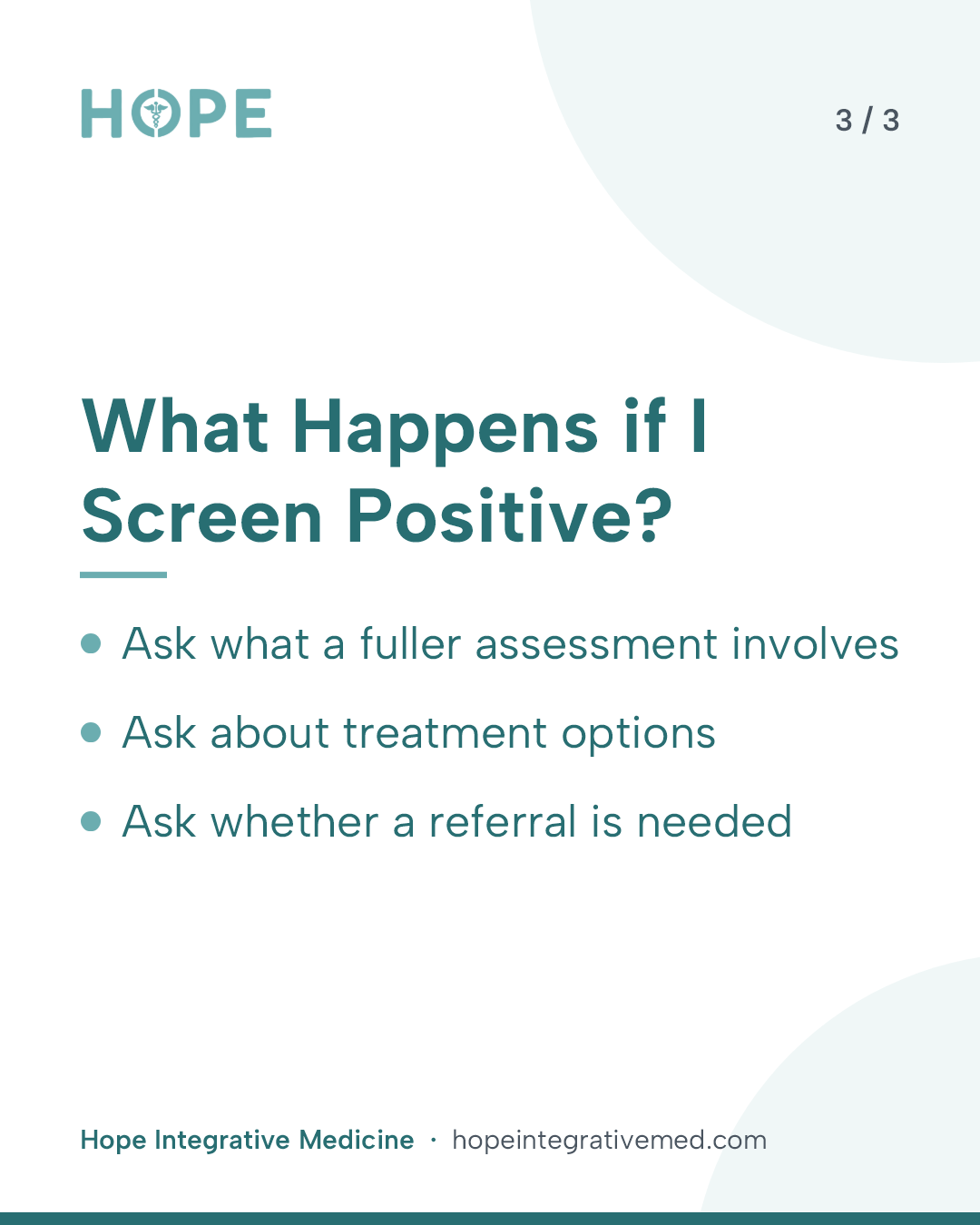
The Task Force says screening tools are not meant to diagnose drug use disorders. If your answers suggest a concern, the next step may be a diagnostic assessment, offered by your provider or through a referral. For opioid use disorder, the Task Force notes that medication, often provided with individual or group counseling, is the standard treatment for adults, including pregnant and postpartum persons, and the medicines studied include buprenorphine, methadone and naltrexone. For other drug use, the counseling approaches studied commonly included cognitive behavioral therapy, motivational interviewing and contingency management, and these psychosocial interventions were associated with an increased likelihood of not using drugs.
Ready to Get Started?
Primary care, mental health, and addiction medicine in one practice. New patients are often able to be scheduled within a week of requesting an appointment.
5 cards. Swipe or tap to see the next one.
Your answers and your privacy
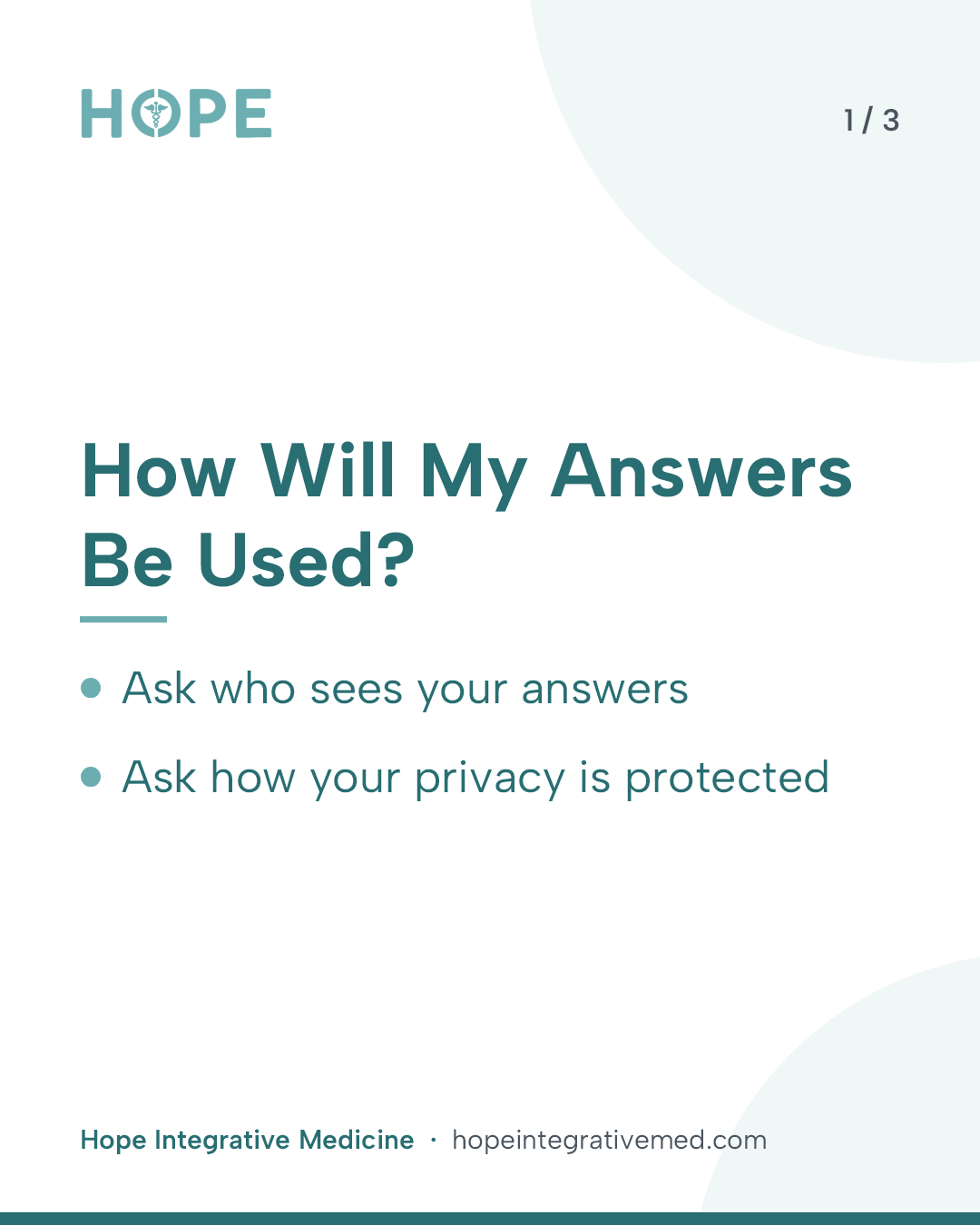
The Task Force notes possible concerns such as stigma, labeling and legal consequences, and says providers should be aware of state requirements and best practices on informed consent for screening, reporting of screening results and confidentiality protections. If you have questions about how your answers are recorded or shared, ask before you answer.
A question to bring to your next visit
"Which questions about drug use are part of my checkup, and how are my answers kept private?"
In an emergency, including a possible overdose, call 911. If you or someone you know is struggling, call or text 988 to reach the 988 Suicide & Crisis Lifeline, which is also there for alcohol or drug use concerns.
Addiction medicine care at Hope Integrative Medicine
Our primary care and addiction medicine teams can talk with you about any concerns about drug use. For opioid use disorder, we offer medication-assisted treatment that combines FDA-approved medication with counseling and regular follow-up. Hope provides hybrid in-person and virtual MAT care, with local labs for urine drug screens and periodic vitals checks close to home. Treatment typically begins with an in-person assessment in West Ashley, followed by weekly in-person or virtual visits before moving to a monthly schedule. Each plan is tailored to the patient and their situation. New patients are often able to be scheduled within a week of requesting an appointment. Request an appointment.
Sources: U.S. Preventive Services Task Force, Unhealthy Drug Use: Screening (2020); CDC National Center for Health Statistics, provisional drug overdose deaths in 2025 (May 13, 2026); SAMHSA, 2025 National Survey on Drug Use and Health: Annual National Report; CDC, Lifesaving Naloxone; 988 Suicide & Crisis Lifeline.
This article is general information, not medical advice, and does not create a patient–provider relationship. Every situation is different, so see a provider who can evaluate yours and develop a plan of care. Any medication discussed here may not be right for you: the right choice depends on your diagnoses, other health conditions and current medicines, so take medication only as directed by the provider managing your care. If you are ever in doubt about an emergency, call 911 or go to the nearest emergency room.
Frequently Asked Questions
The USPSTF recommendation is about asking questions. It does not refer to testing urine, saliva, blood or other samples for drugs. If a test is ever suggested, ask your provider why and how the result will be used.
Adults 18 and older, including pregnant and postpartum persons. It does not apply to people who already have a diagnosed drug use disorder, and for adolescents the USPSTF found the evidence insufficient to assess the balance of benefits and harms of screening.
Screening tools are not meant to diagnose. The USPSTF says people with positive results may need to be offered or referred for a diagnostic assessment, and treatment can follow if it is needed.
The Task Force calls drug use one of the most common causes of preventable death, injuries and disability. Your answers help you and your provider decide whether a fuller assessment makes sense.
It is a short questionnaire that asks four questions about past-year use of alcohol, tobacco, prescription drugs for nonmedical reasons and illegal drugs. The Task Force notes that it may be more feasible in busy primary care settings.