What Your Primary Care Doctor Does for You: 3 Roles
Based on Hope Integrative Medicine, Why a Primary Care Doctor Should Be Your Health MVP
5 cards. Swipe or tap to see the next one.


Discover why having a dedicated primary care doctor in West Ashley is essential for your health. Learn about preventive care, chronic disease management and coordinated adult primary care at Hope Integrative Medicine.
Looking for a Primary Care Provider?
Checkups, preventive care and ongoing care for chronic conditions in West Ashley, Charleston. New patients are often able to be scheduled within a week of requesting an appointment. Schedule an appointment today.
In this guide
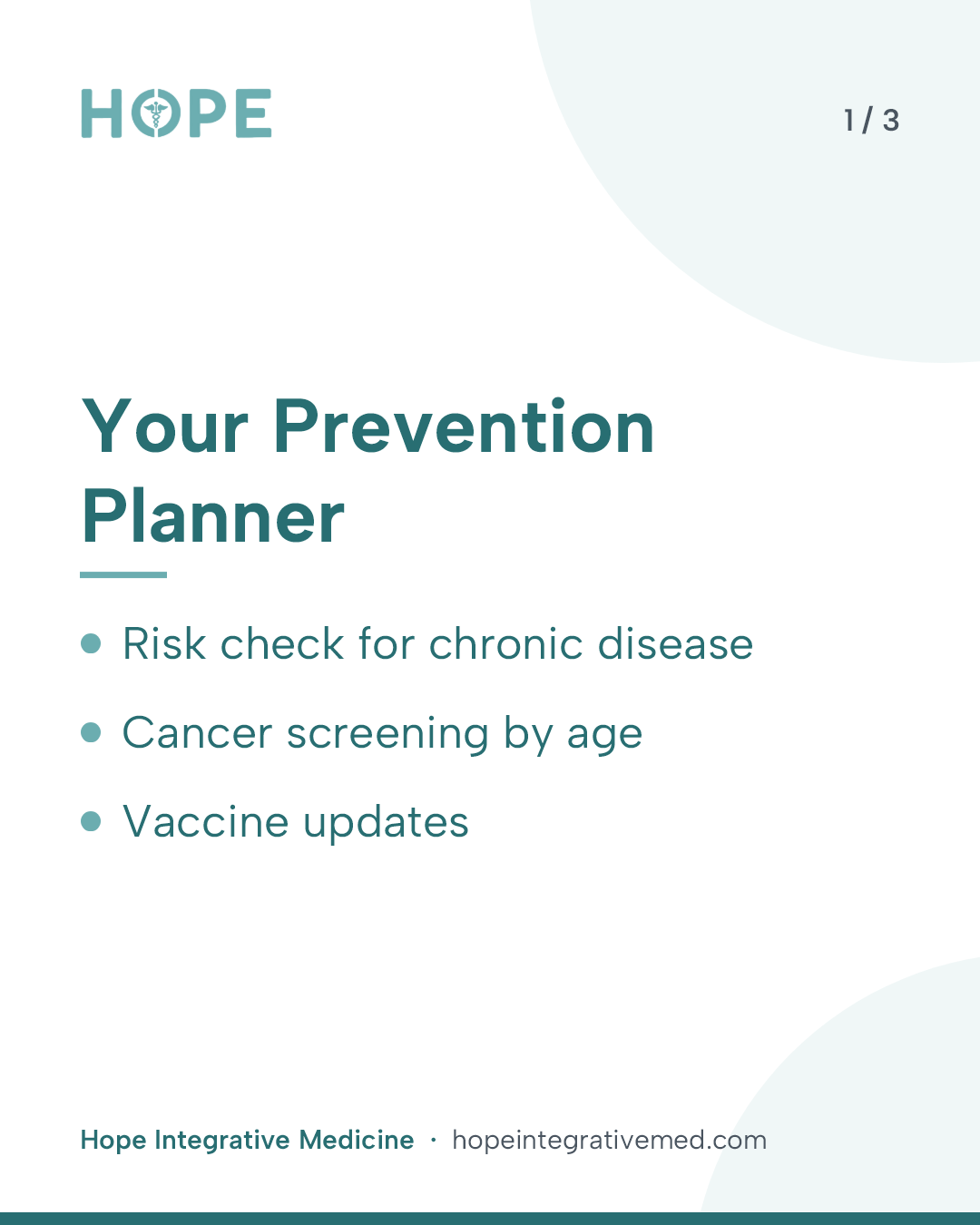
Your Prevention Planner
- Risk check for chronic disease
- Cancer screening by age
- Vaccine updates
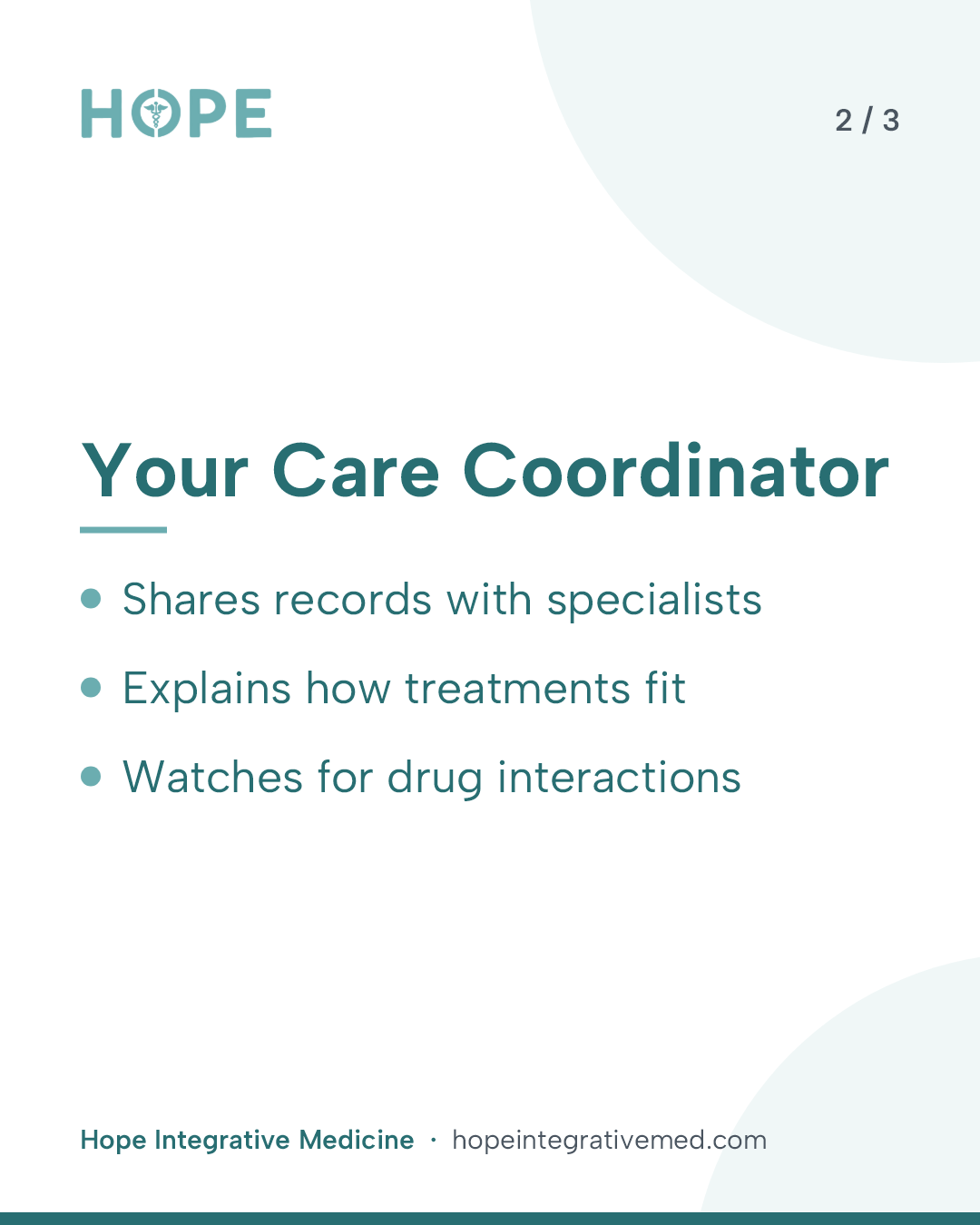
Your Care Coordinator
- Shares records with specialists
- Explains how treatments fit
- Watches for drug interactions
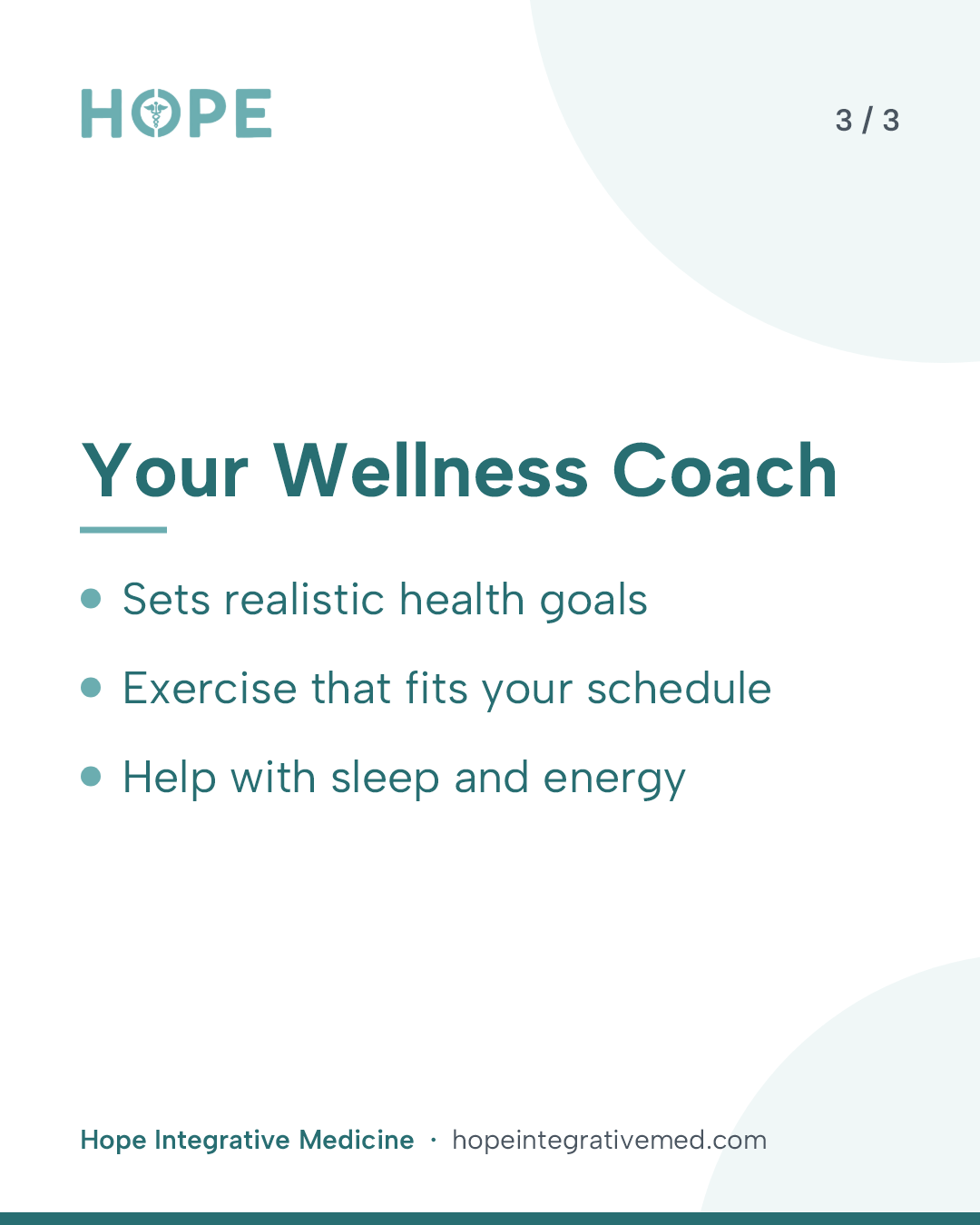
Your Wellness Coach
- Sets realistic health goals
- Exercise that fits your schedule
- Help with sleep and energy
What the guideline says
- Your primary care doctor acts like the quarterback of your health care team, coordinating preventive care, chronic conditions and specialist care.
- A wellness visit includes a risk check for chronic diseases, cancer screenings suited to your age and sex, vaccine updates and lifestyle counseling.
- Screenings are timed to your age, risk factors and family history, so you are neither over-tested nor under-screened.
- A provider who knows all your conditions and medicines can help prevent harmful drug interactions and spot early signs of complications.
- Mental and physical health are linked: stress, anxiety or depression can worsen chronic conditions, and anxiety can affect blood pressure.
- Your primary care records of medicines, allergies and past procedures give emergency doctors what they need to treat you safely.
Source: Hope Integrative Medicine, Why a Primary Care Doctor Should Be Your Health MVP
Read the full article: Why a Primary Care Doctor Should Be Your Health MVP in West Ashley →
This guide is general health information and does not replace advice from your own provider.
Frequently Asked Questions
Your primary care provider can monitor conditions such as diabetes, high blood pressure and heart disease, adjust medicines and support lifestyle changes, coordinating with specialists when needed.
Yes. Your provider can help you set realistic goals, plan exercise that fits your schedule, shape a nutrition plan that fits your budget and address sleep problems that drain your energy.
Look for someone who takes time to understand your situation, explains options clearly, involves you in decisions, is reachable with questions and cares for both physical and mental health.