Quit-Smoking Medicines: 3 Things to Know
Based on U.S. Food and Drug Administration, Chantix Prescribing Information (2016)
5 cards. Swipe or tap to see the next one.
How varenicline, nicotine replacement and bupropion compare for quitting smoking, how to use each, their side effects, and which combinations work best.
Looking for a Primary Care Provider?
Checkups, preventive care and ongoing care for chronic conditions in West Ashley, Charleston. New patients are often able to be scheduled within a week of requesting an appointment. Schedule an appointment today.
In this guide
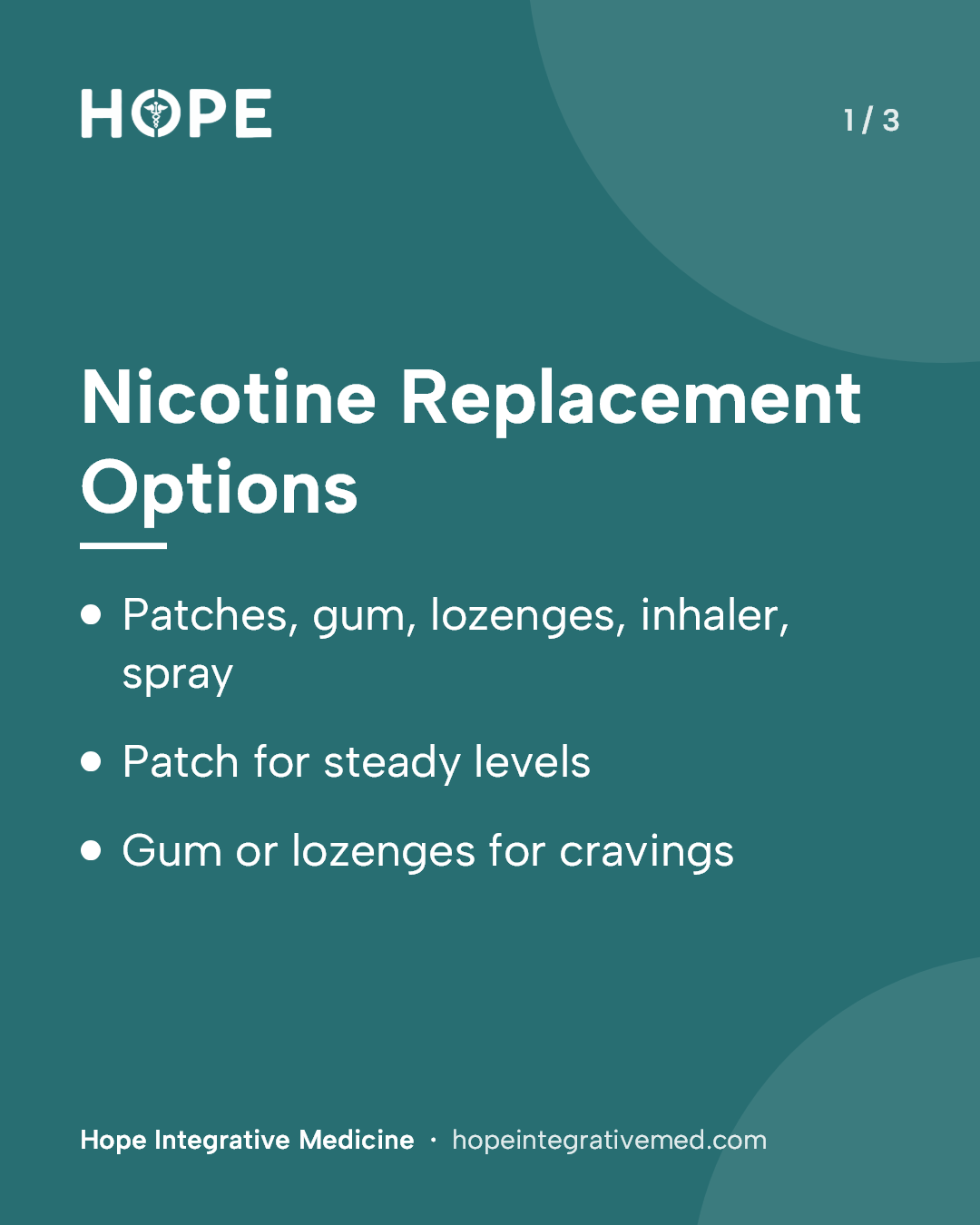
Nicotine Replacement Options
- Patches, gum, lozenges, inhaler, spray
- Patch for steady levels
- Gum or lozenges for cravings
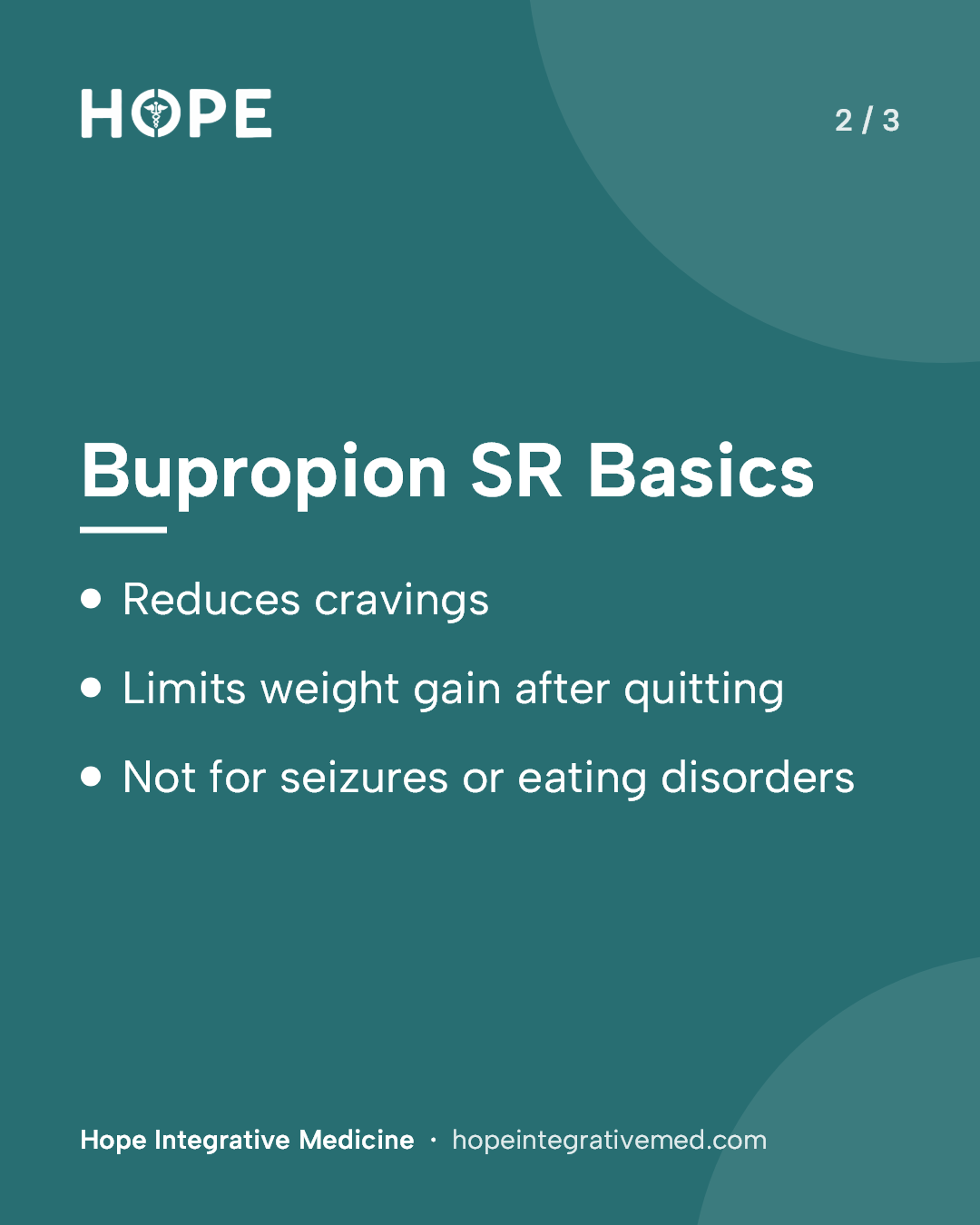
Bupropion SR Basics
- Reduces cravings
- Limits weight gain after quitting
- Not for seizures or eating disorders
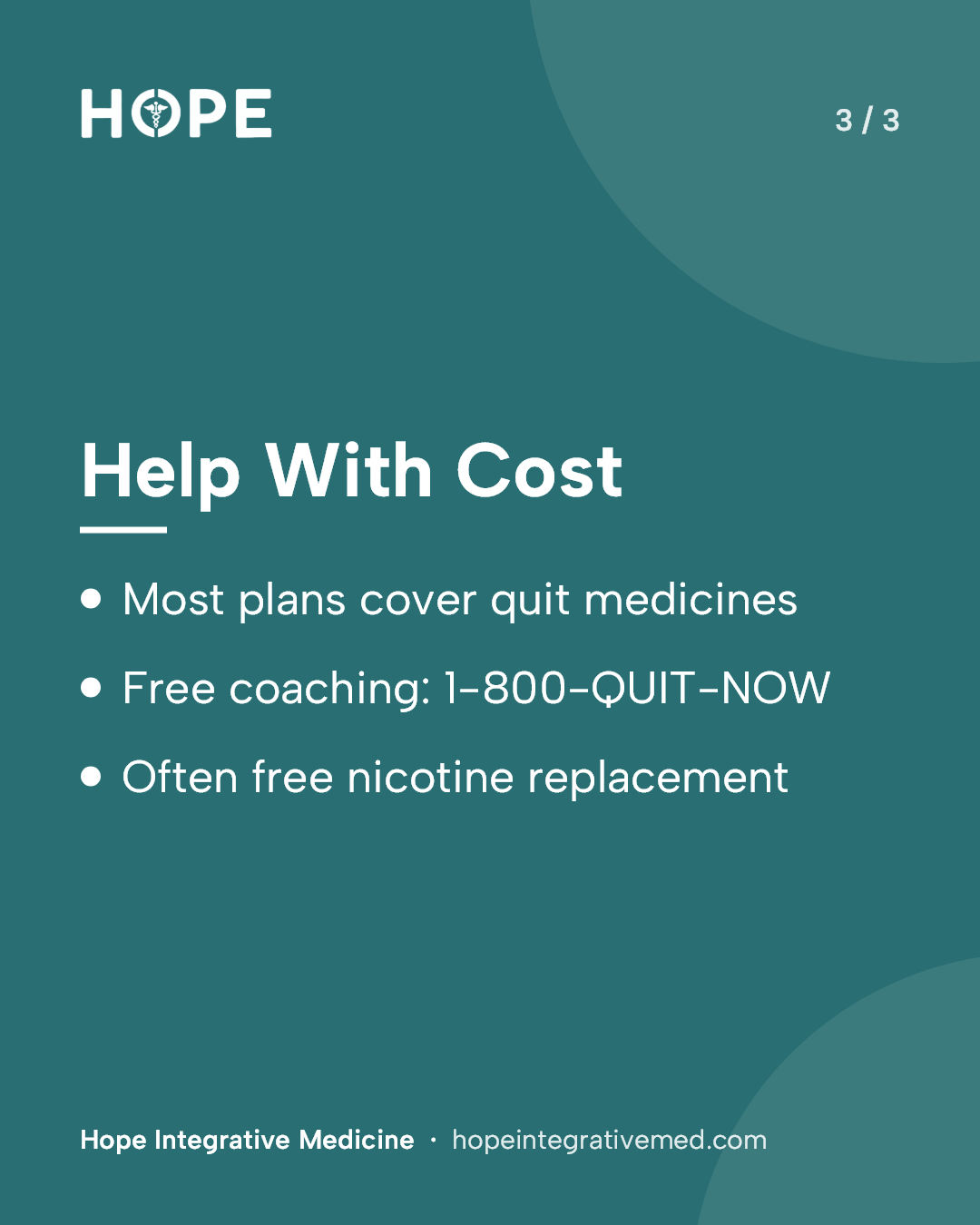
Help With Cost
- Most plans cover quit medicines
- Free coaching: 1-800-QUIT-NOW
- Often free nicotine replacement
What the guideline says
- Quit-smoking medicines roughly double or triple your chances of quitting for good, yet most people who try to quit use none.
- Varenicline partly activates nicotine receptors to ease cravings and blocks nicotine from them, so smoking feels less rewarding.
- The brand Chantix was pulled in 2021 over an impurity, but generic varenicline is widely available.
- The FDA removed varenicline's boxed warning about psychiatric side effects in 2016 after a large safety study.
- Combination nicotine replacement pairs a daily patch for steady levels with gum or lozenges for breakthrough cravings.
- Bupropion SR also reduces cravings and limits weight gain after quitting, but it is not for people with seizures or eating disorders.
Source: U.S. Food and Drug Administration, Chantix Prescribing Information (2016)
Read the full article: Chantix (Varenicline), Wellbutrin and Nicotine Patches for Quitting Smoking →
This guide is general health information and does not replace advice from your own provider.
Frequently Asked Questions
Yes. Varenicline with nicotine replacement, or bupropion with nicotine replacement, can help people who smoke heavily or who have tried to quit before. Your provider can check for interactions.
Most insurance plans cover quit medicines as preventive care.
The South Carolina Tobacco Quitline, 1-800-QUIT-NOW, offers free coaching and often free nicotine replacement.