Panic Attack or Panic Disorder? Signs to Know
Based on National Institute of Mental Health, Panic Disorder: When Fear Overwhelms (2025)
What a panic attack feels like, how panic disorder differs from a single attack, how it is diagnosed, and what treatment can include, from cognitive behavioral therapy to medication.
Ready to Talk With Someone?
We care for anxiety, depression and stress in West Ashley and by telehealth across South Carolina. Schedule an appointment today.
In this guide
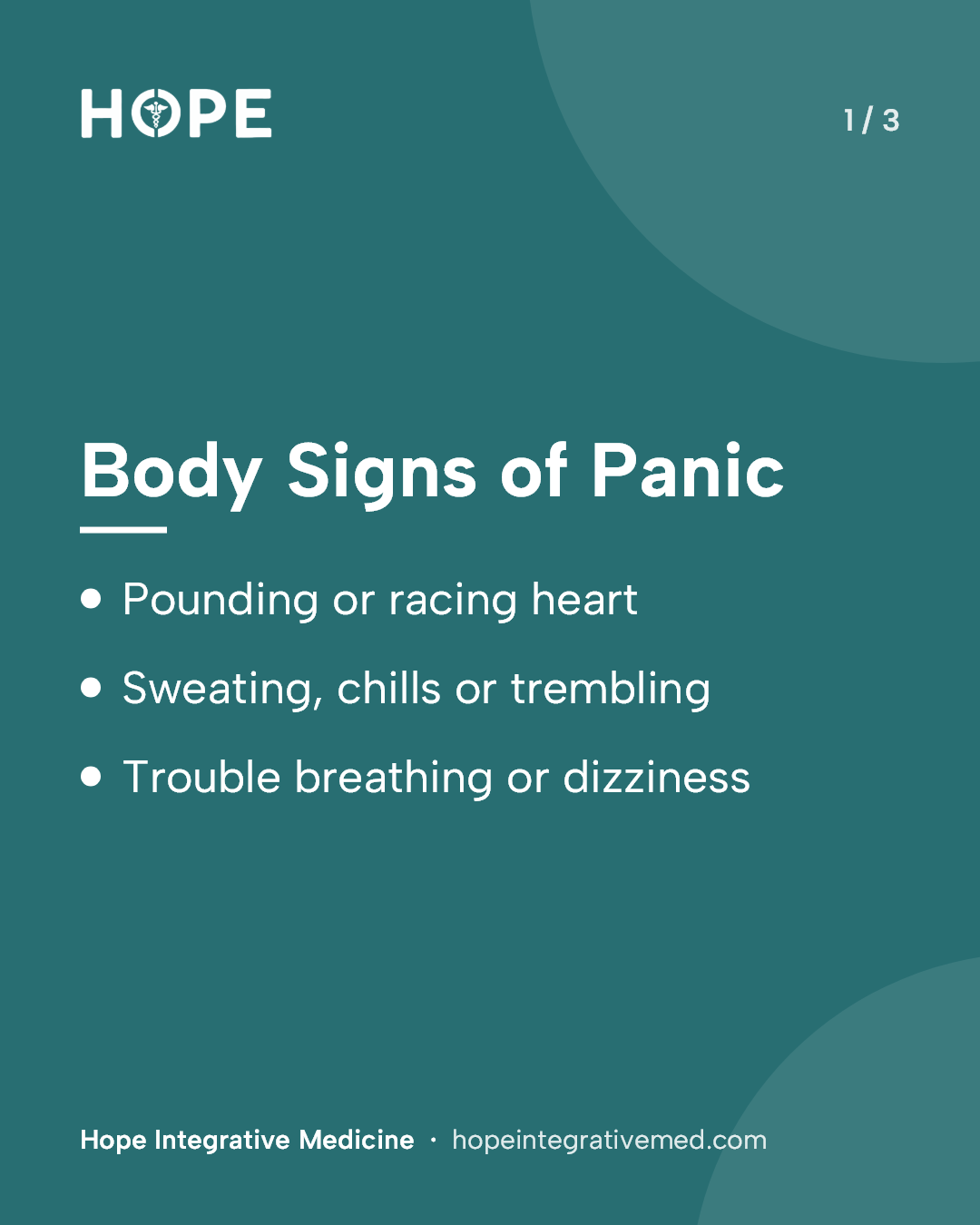
Body Signs of Panic
- Pounding or racing heart
- Sweating, chills or trembling
- Trouble breathing or dizziness
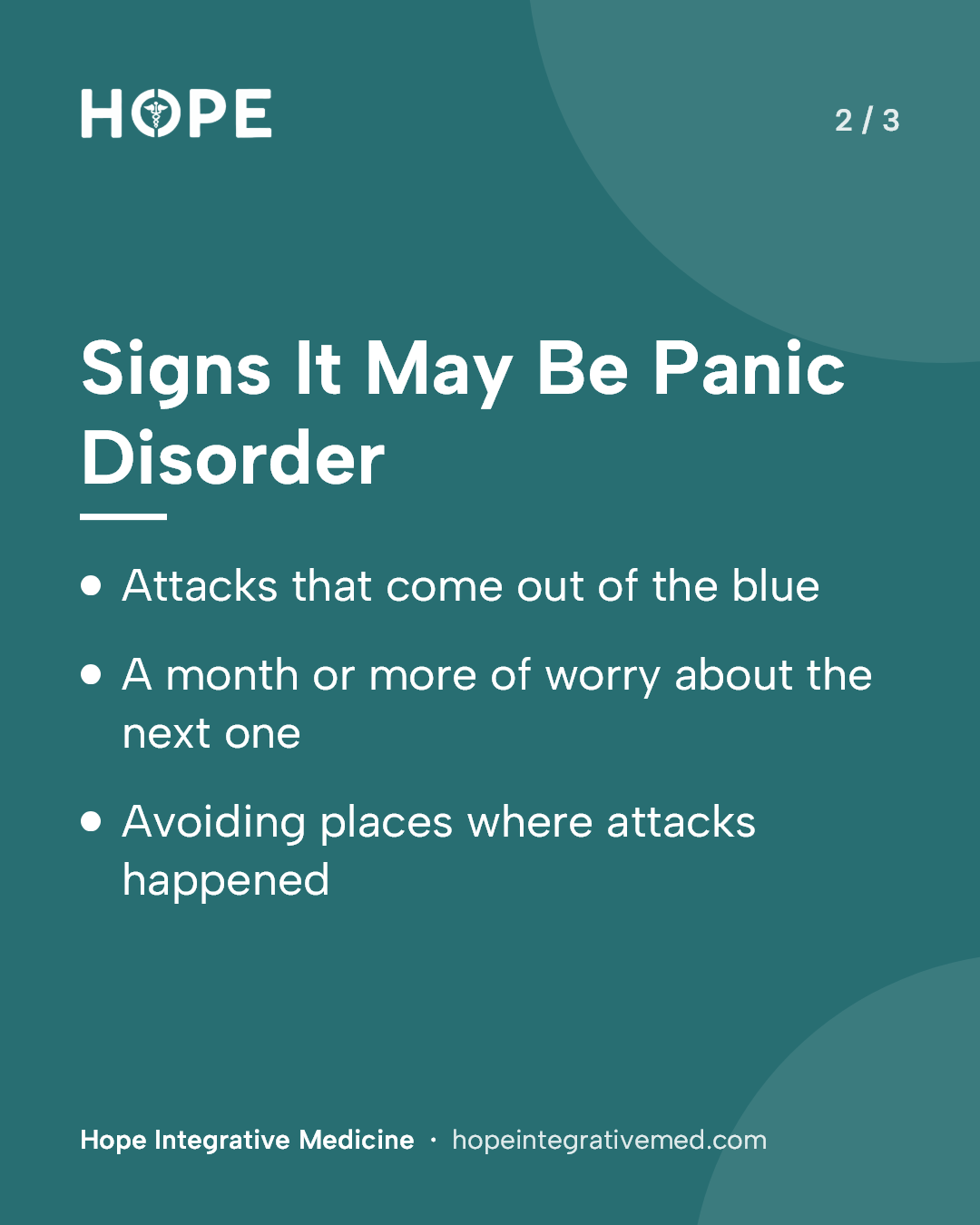
Signs It May Be Panic Disorder
- Attacks that come out of the blue
- A month or more of worry about the next one
- Avoiding places where attacks happened
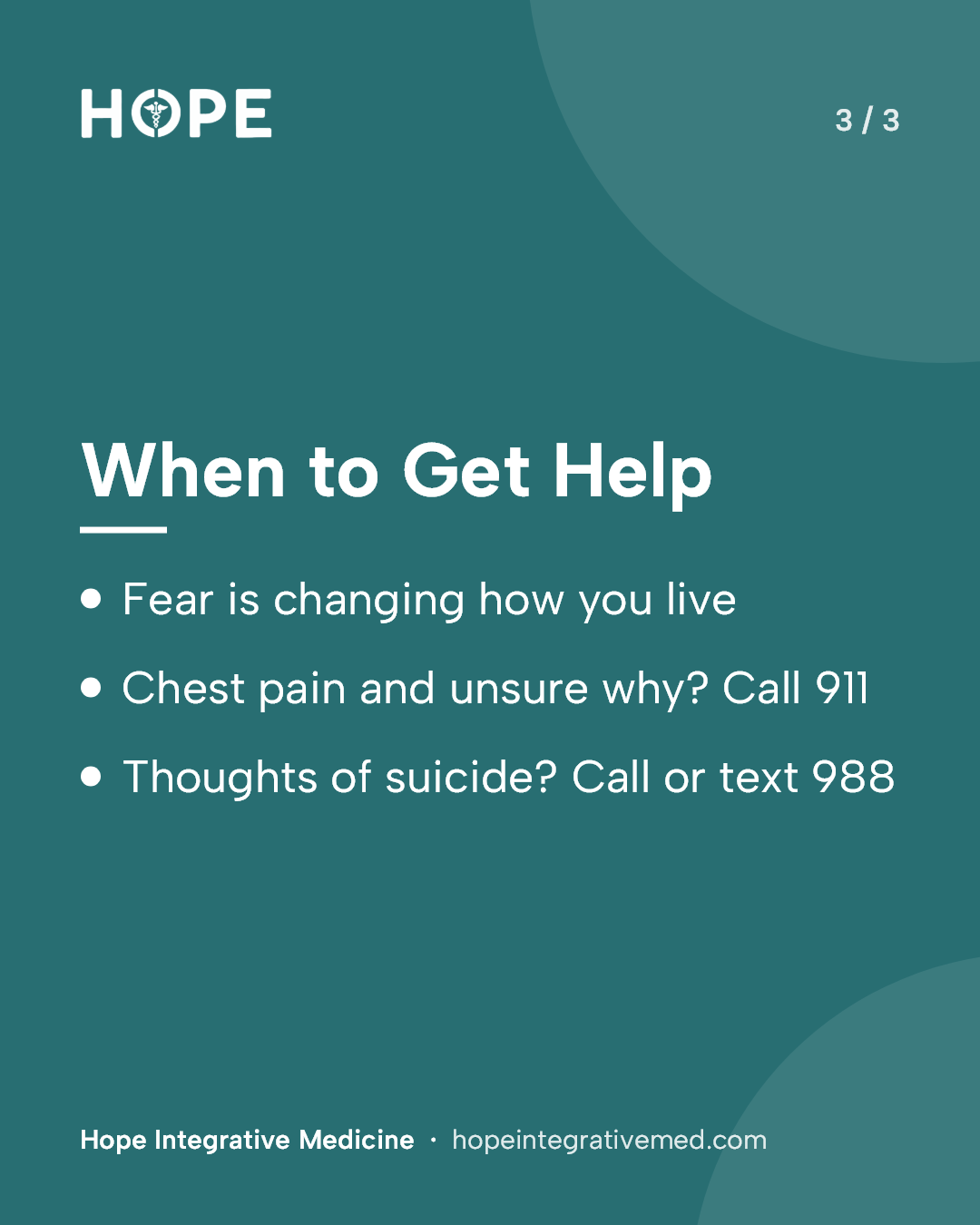
When to Get Help
- Fear is changing how you live
- Chest pain and unsure why? Call 911
- Thoughts of suicide? Call or text 988
What the guideline says
- A panic attack is a one-time or occasional episode of intense fear with physical and emotional symptoms; not everyone who has one develops panic disorder.
- Physical symptoms can include a pounding or racing heart, sweating, chills, trembling, trouble breathing, dizziness, numb or tingly hands, chest pain and nausea.
- Panic attacks can feel like a heart attack, but NIMH says panic attacks themselves are not life-threatening; unexplained chest pain still needs emergency care.
- A panic disorder diagnosis means repeated, unexpected panic attacks and at least 1 month of worry about more attacks or behavior changes because of them.
- Treatment can include cognitive behavioral therapy, the gold standard talk therapy for panic disorder, and SSRI or SNRI antidepressants, which may take several weeks to work.
Source: National Institute of Mental Health, Panic Disorder: When Fear Overwhelms (2025)
Read the full article: Panic Attacks and Panic Disorder: What They Feel Like and What Helps →
This guide is general health information and does not replace advice from your own provider.
Frequently Asked Questions
It is a cognitive behavioral therapy technique that brings on the body sensations that come with panic, such as a racing heart, in a safe setting, so they feel less frightening over time, NIMH explains.
NIMH says SSRI and SNRI antidepressants may take several weeks to start working. Side effects such as headaches, nausea or trouble sleeping are usually not severe, especially when the dose starts low.
NIMH says benzodiazepines can ease panic symptoms quickly, but some people build up a tolerance or become dependent on them, so they are usually prescribed only for brief periods.