3 Sleep Apnea Questions for Your Next Checkup
Based on National Heart, Lung, and Blood Institute, What Is Sleep Apnea? (2025)
5 cards. Swipe or tap to see the next one.
The signs of sleep apnea, who is more likely to have it, how a sleep study diagnoses it, and treatments from lifestyle changes and CPAP to mouthpieces, Zepbound and surgery.
Looking for a Primary Care Provider?
Checkups, preventive care and ongoing care for chronic conditions in West Ashley, Charleston. New patients are often able to be scheduled within a week of requesting an appointment. Schedule an appointment today.
In this guide
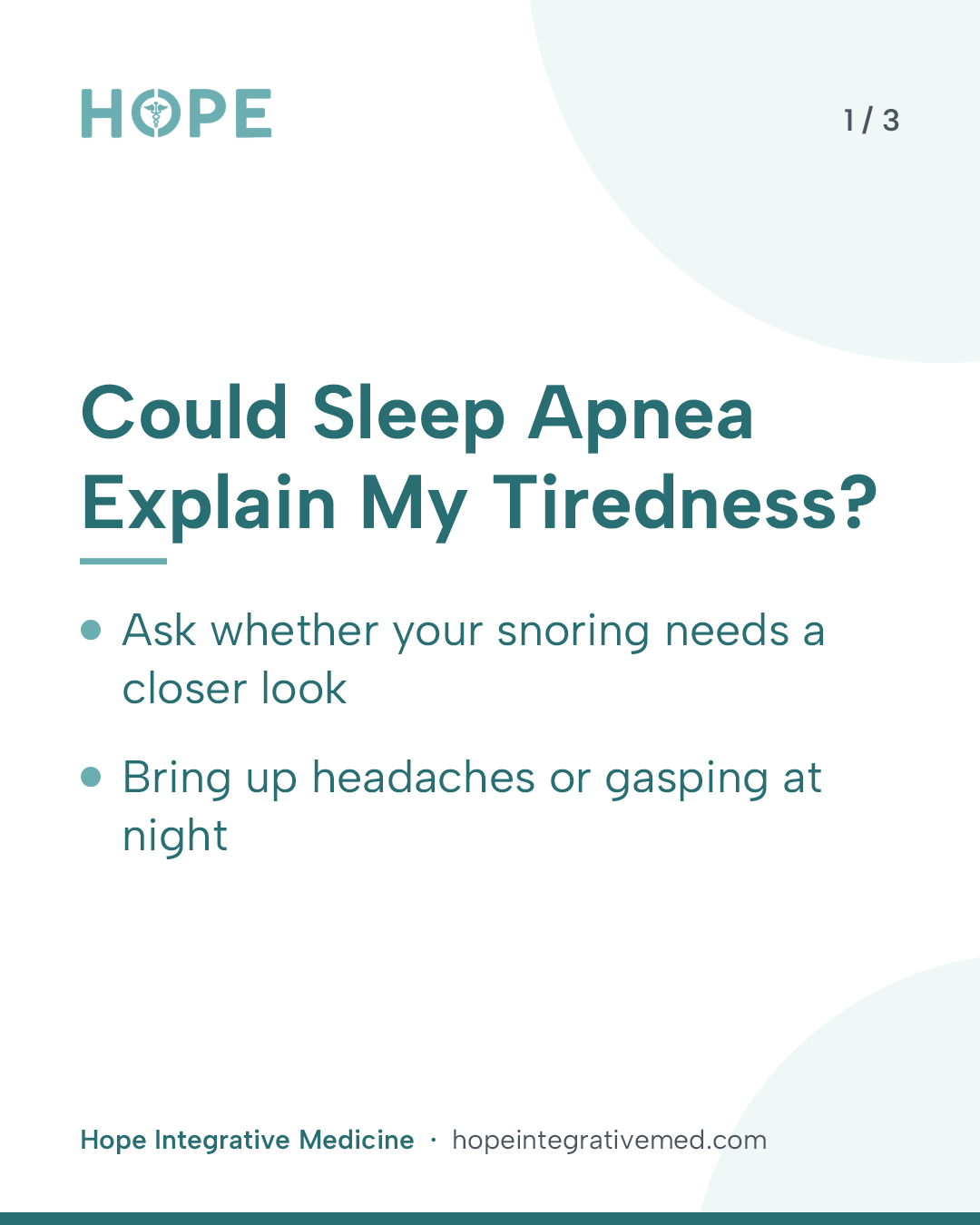
Could Sleep Apnea Explain My Tiredness?
- Ask whether your snoring needs a closer look
- Bring up headaches or gasping at night
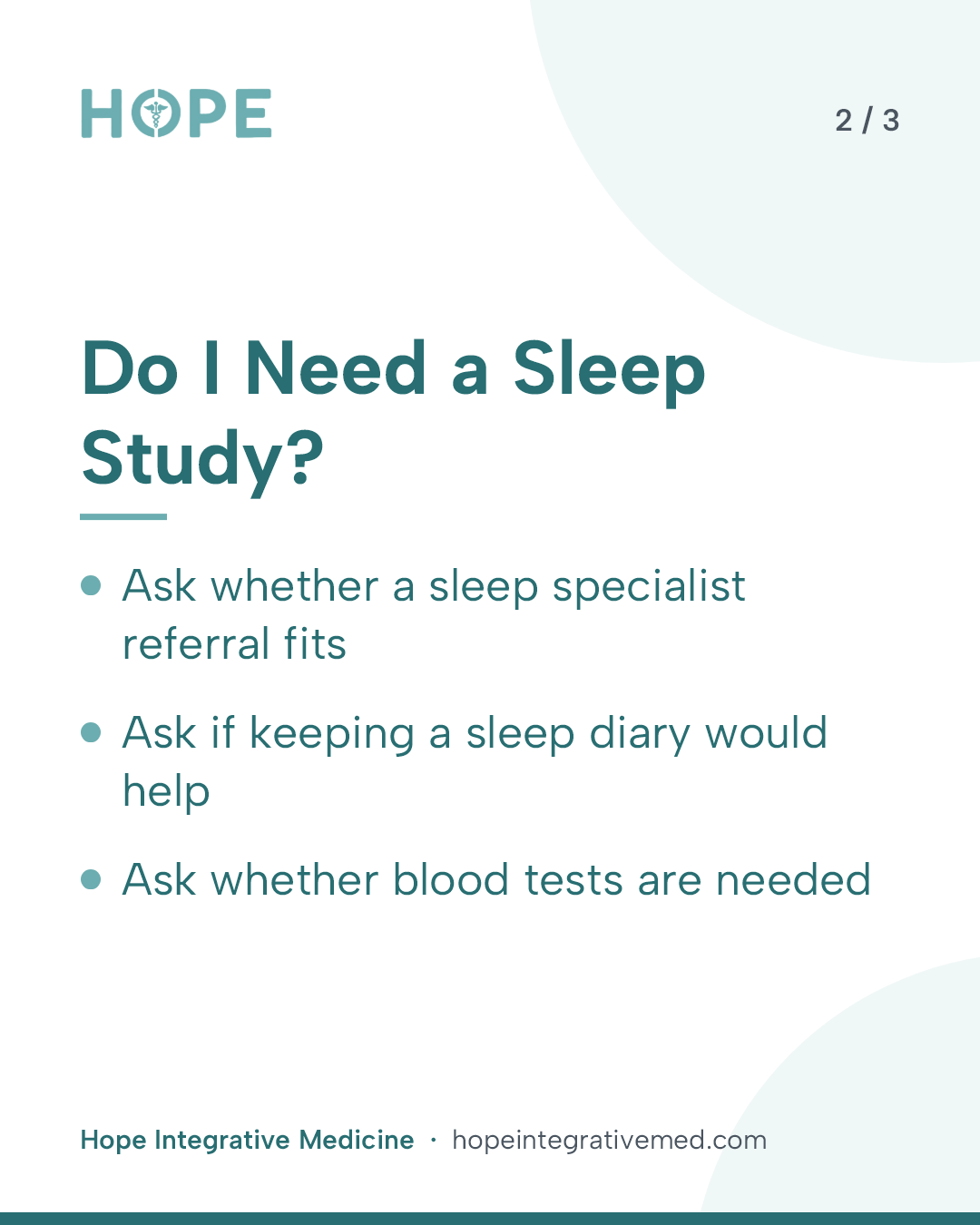
Do I Need a Sleep Study?
- Ask whether a sleep specialist referral fits
- Ask if keeping a sleep diary would help
- Ask whether blood tests are needed
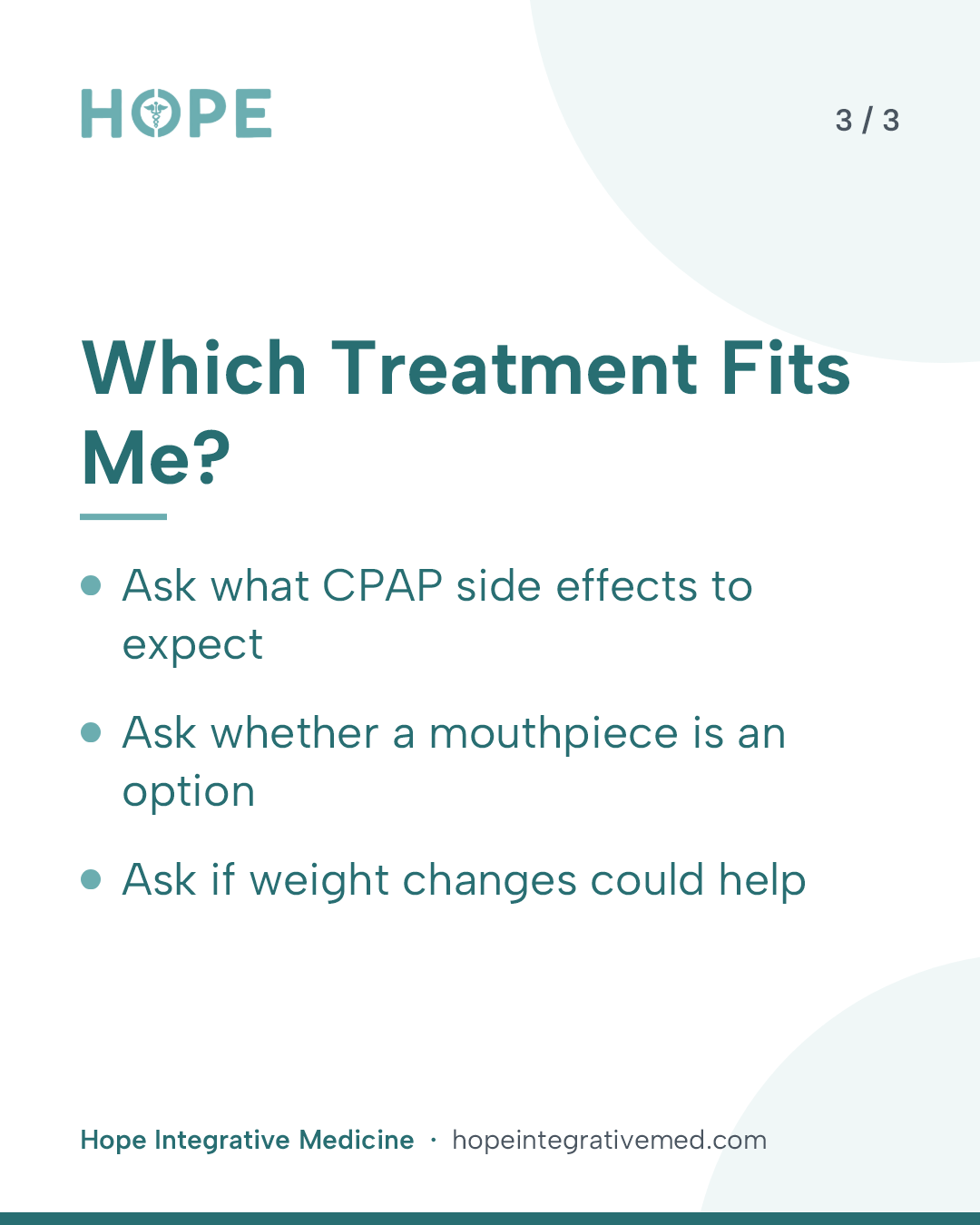
Which Treatment Fits Me?
- Ask what CPAP side effects to expect
- Ask whether a mouthpiece is an option
- Ask if weight changes could help
What the guideline says
- Sleep apnea is a common condition in which breathing stops and starts again and again during sleep.
- Signs include loud, frequent snoring, gasping for air during sleep and feeling sleepy during the day.
- The risk of obstructive sleep apnea goes up with age and extra weight, and it is more common in men.
- A sleep study, often through a sleep specialist or sleep center, reveals the type of sleep apnea and its severity.
- Treatment depends on the type and severity and can include lifestyle changes, CPAP, mouthpieces, medicine or surgery.
- Tell your provider you have sleep apnea before taking any medicine that makes you sleepy or any pain medicine.
Source: National Heart, Lung, and Blood Institute, What Is Sleep Apnea? (2025)
Read the full article: Sleep Apnea: Signs, Sleep Testing and Treatment →
This guide is general health information and does not replace advice from your own provider.
Frequently Asked Questions
Your provider will ask about your symptoms, whether sleep apnea runs in your family, the medicines you take, such as opioids, and whether you have recently traveled to a high altitude.
A sleep diary is a simple log of how long and how well you sleep and how sleepy you feel during the day. Your provider may ask you to keep one.
Blood tests, such as thyroid hormone levels, can look for conditions that may add to sleep apnea.