3 Questions to Ask About Heartburn and GERD
Based on National Institute of Diabetes and Digestive and Kidney Diseases, Acid Reflux (GER & GERD) in Adults (2020)
5 cards. Swipe or tap to see the next one.
What heartburn and GERD feel like, the warning signs that need a checkup, how GERD is diagnosed, and what helps, from meal timing and trigger foods to antacids, H2 blockers and PPIs.
Looking for a Primary Care Provider?
Checkups, preventive care and ongoing care for chronic conditions in West Ashley, Charleston. New patients are often able to be scheduled within a week of requesting an appointment. Schedule an appointment today.
In this guide
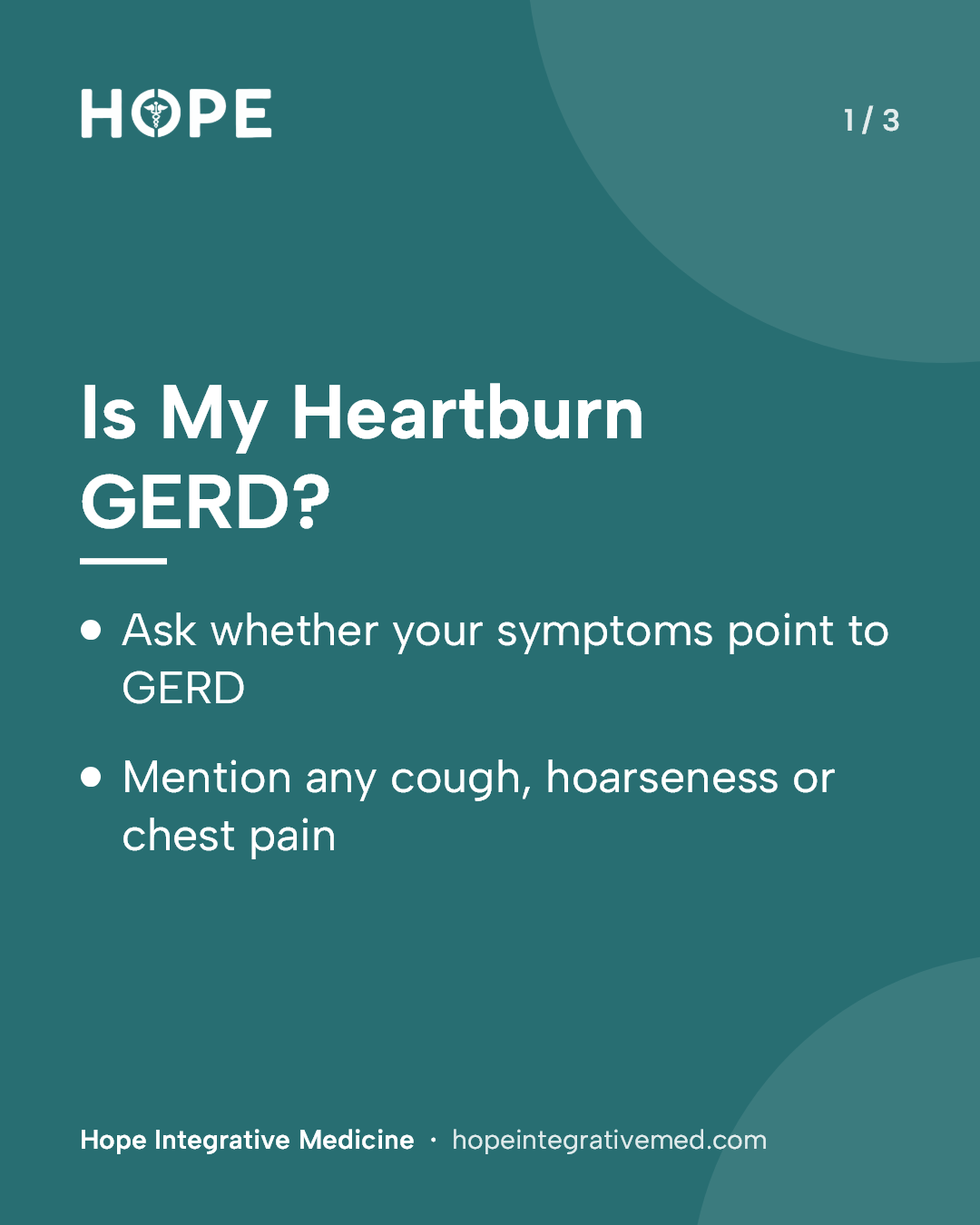
Is My Heartburn GERD?
- Ask whether your symptoms point to GERD
- Mention any cough, hoarseness or chest pain
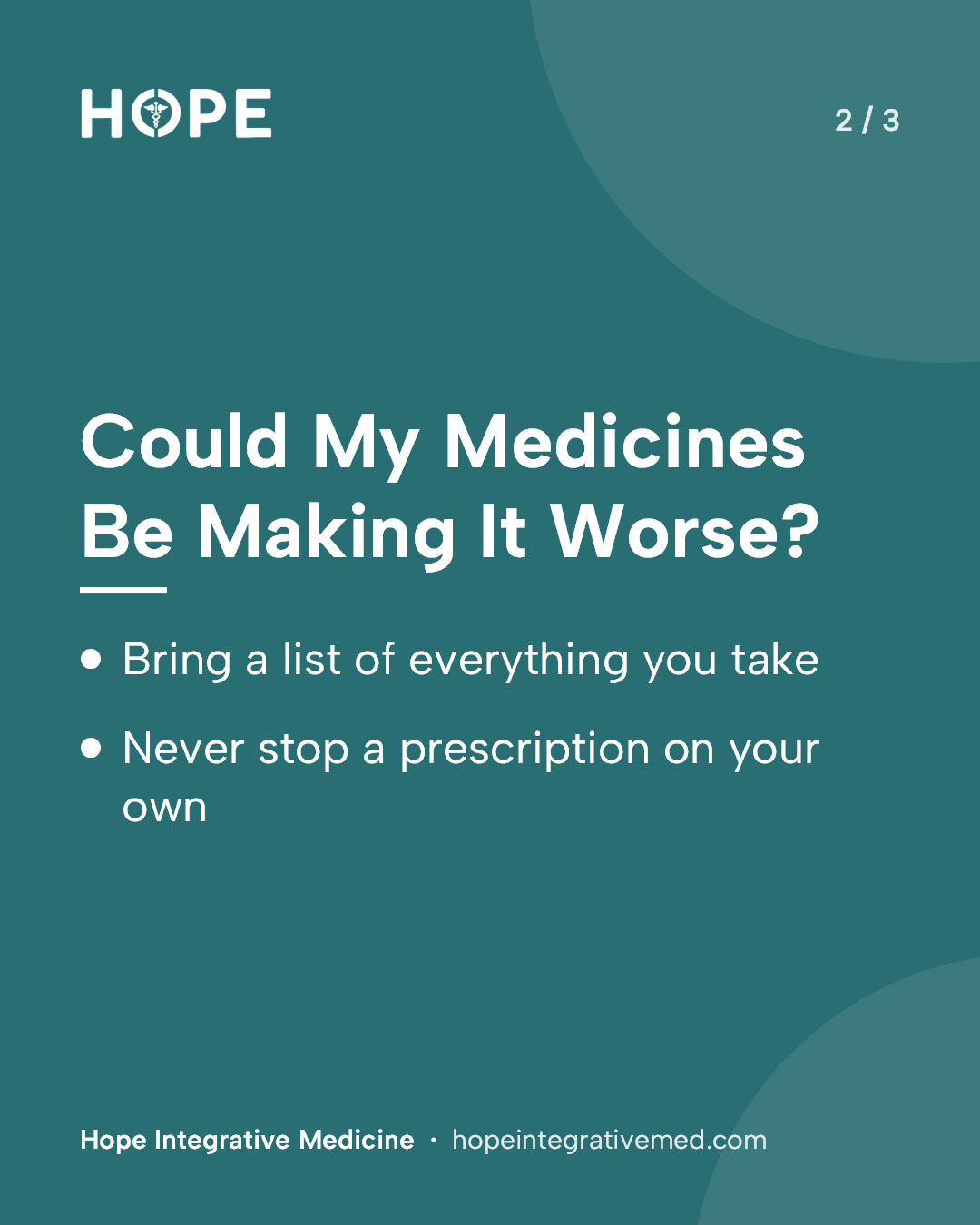
Could My Medicines Be Making It Worse?
- Bring a list of everything you take
- Never stop a prescription on your own
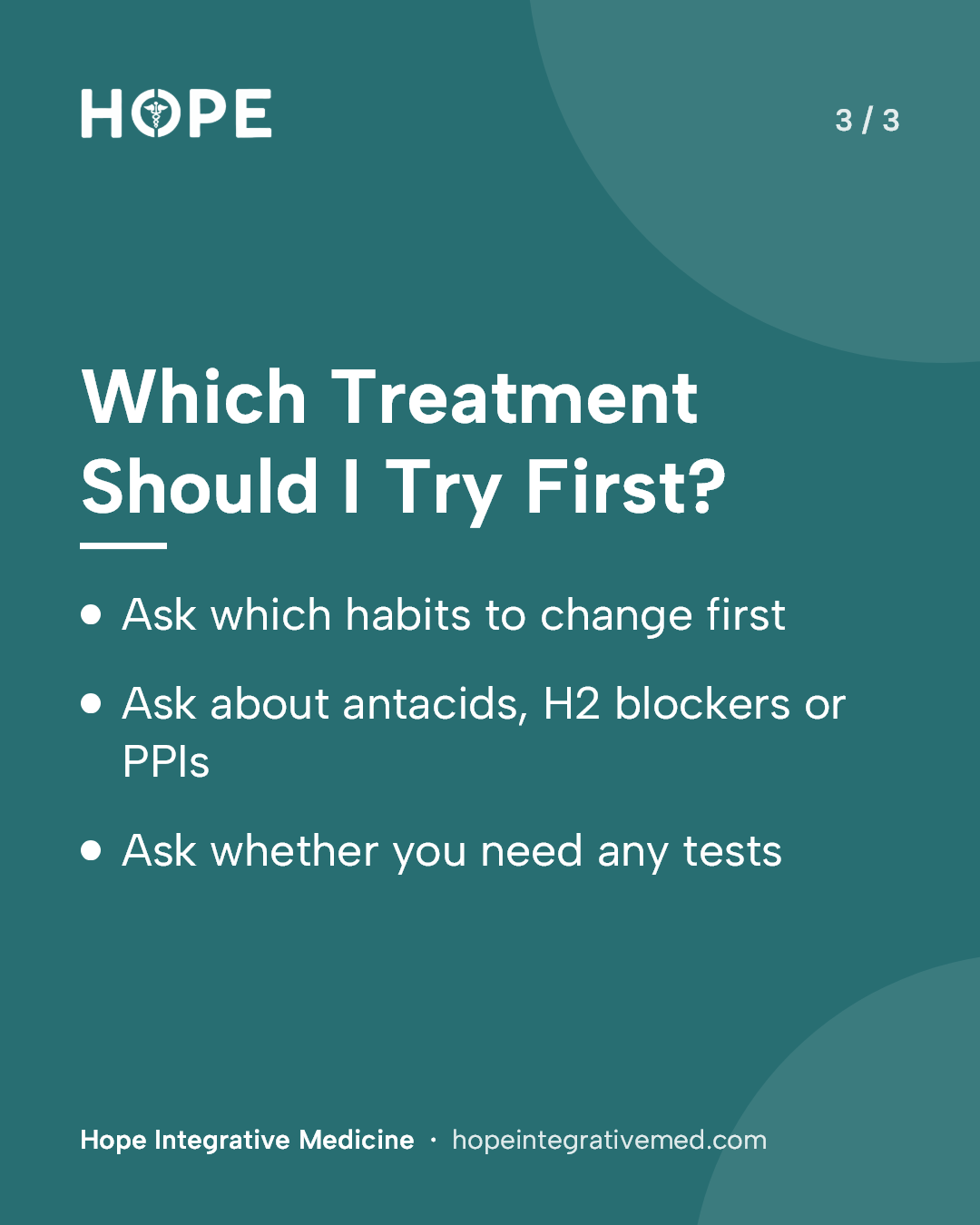
Which Treatment Should I Try First?
- Ask which habits to change first
- Ask about antacids, H2 blockers or PPIs
- Ask whether you need any tests
What the guideline says
- Gastroesophageal reflux disease (GERD) is a more serious, long-lasting form of acid reflux that causes repeated, bothersome symptoms or problems over time.
- Heartburn and regurgitation are the most common symptoms, but not everyone with GERD has heartburn.
- See a provider if heartburn does not improve with over-the-counter medicines or lifestyle changes, or if you have trouble swallowing, signs of bleeding, unexplained weight loss or chest pain.
- Most of the time GERD is diagnosed from symptoms and medical history; tests such as an upper GI endoscopy come in if needed.
- Eating 2 to 3 hours before lying down, raising your head 6 to 8 inches and knowing your triggers can help.
- Antacids, H2 blockers such as famotidine (Pepcid) and PPIs such as omeprazole (Prilosec) treat GERD; surgery is an option for some people.
Read the full article: Heartburn and GERD: Symptoms, When to Get Checked and What Helps →
This guide is general health information and does not replace advice from your own provider.
Frequently Asked Questions
Some medicines can cause GERD or make it worse, including benzodiazepines (sedatives), calcium channel blockers for blood pressure, some asthma medicines, NSAID pain relievers and tricyclic antidepressants. Never stop a prescribed medicine on your own; ask your provider first.
It is a test that uses a thin, flexible tube with a camera to look at your esophagus and stomach. You may be referred to a gastroenterologist, a digestive disease specialist, for it.
It measures acid in the esophagus. It is one of the tests used when symptoms suggest a complication or another health problem, or do not get better with treatment.