Your Mood Check at a Checkup: 3 Things to Know
Based on U.S. Preventive Services Task Force, Screening for Depression in Adults
Why your primary care visit asks about mood, what the PHQ-2 and PHQ-9 questions measure, what a score means and what happens next.
Looking for a Primary Care Provider?
Checkups, preventive care and ongoing care for chronic conditions in West Ashley, Charleston. New patients are often able to be scheduled within a week of requesting an appointment. Schedule an appointment today.
In this guide
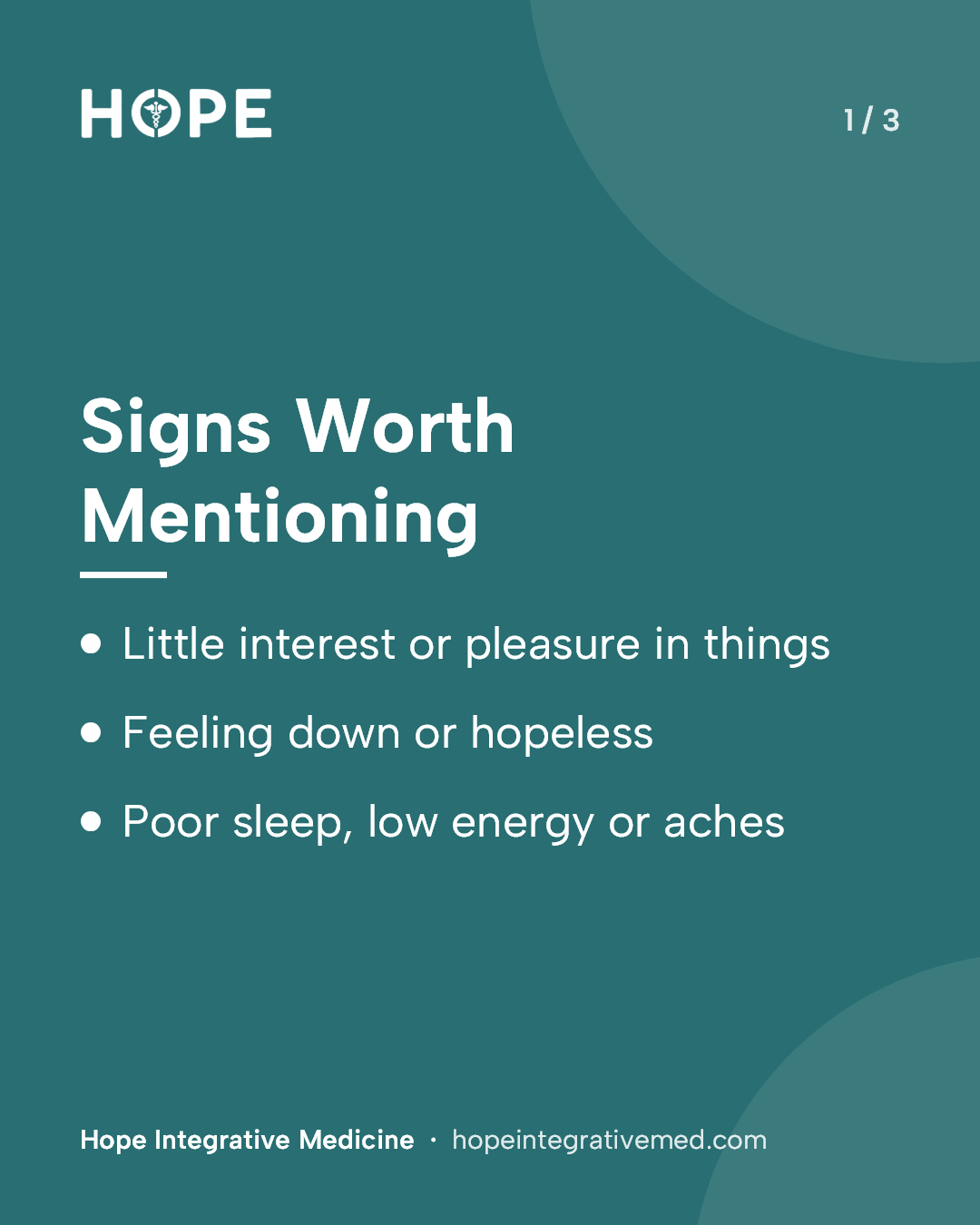
Signs Worth Mentioning
- Little interest or pleasure in things
- Feeling down or hopeless
- Poor sleep, low energy or aches
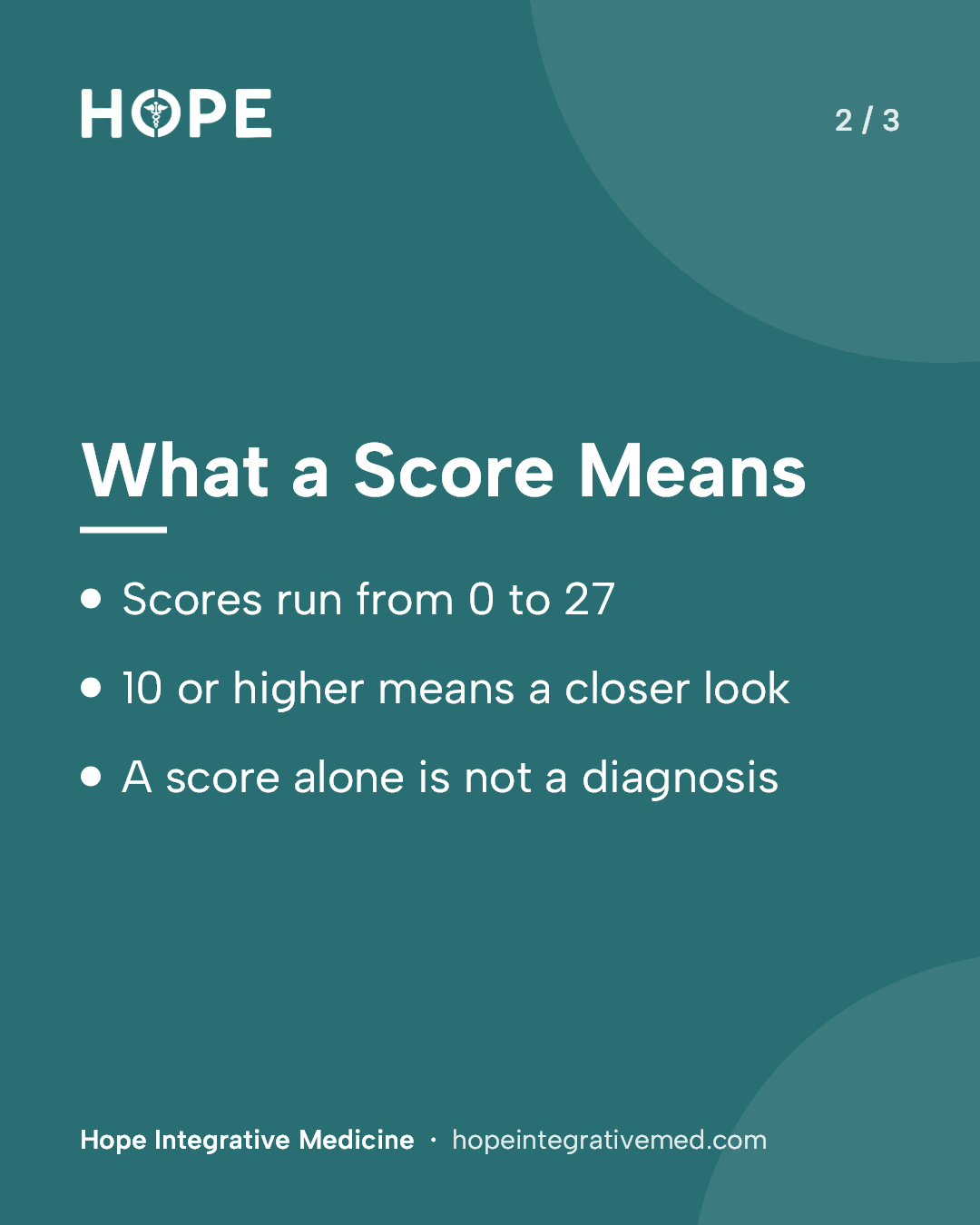
What a Score Means
- Scores run from 0 to 27
- 10 or higher means a closer look
- A score alone is not a diagnosis
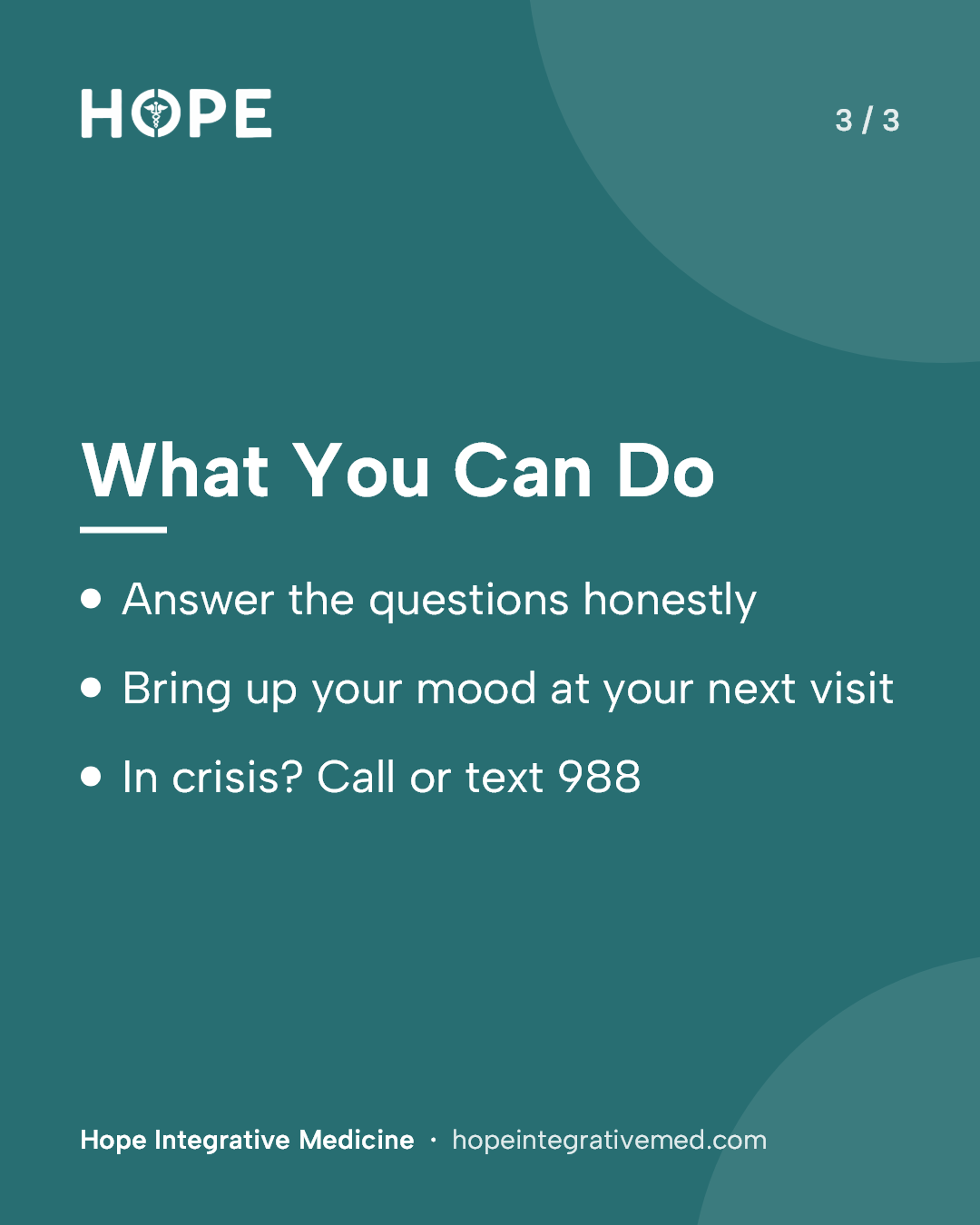
What You Can Do
- Answer the questions honestly
- Bring up your mood at your next visit
- In crisis? Call or text 988
What the guideline says
- The U.S. Preventive Services Task Force recommends screening all adults for depression, including during and after pregnancy and in older adults.
- About 7.4 percent of U.S. adults, roughly 19.7 million people, had a major depressive episode in the past year, according to the national survey.
- The PHQ-2 asks two questions about the past two weeks; if either points to a problem, the nine-question PHQ-9 follows, scored from 0 to 27.
- A screening score is not a diagnosis; it tells your provider whether to look more closely.
- If screening suggests depression, options include counseling, medication or both.
Source: U.S. Preventive Services Task Force, Screening for Depression in Adults
This guide is general health information and does not replace advice from your own provider.
Frequently Asked Questions
Your provider will ask how long symptoms have lasted and what else might explain them, such as a thyroid problem, poor sleep or a medicine side effect.
The next step is a fuller evaluation. Options include counseling, medication or both, and care can stay in the same practice that knows the rest of your health.
Call or text 988, the Suicide & Crisis Lifeline, free and confidential 24 hours a day. Veterans can press 1. For a medical emergency, call 911.