Your Breast Cancer Risk Checklist: 3 Steps
Based on U.S. Preventive Services Task Force, BRCA-Related Cancer: Risk Assessment, Genetic Counseling and Genetic Testing


How family history changes breast cancer screening, who should consider genetic counseling, who counts as high risk, and what dense breasts mean.
Looking for a Primary Care Provider?
Checkups, preventive care and ongoing care for chronic conditions in West Ashley, Charleston. New patients are often able to be scheduled within a week of requesting an appointment. Schedule an appointment today.
In this guide
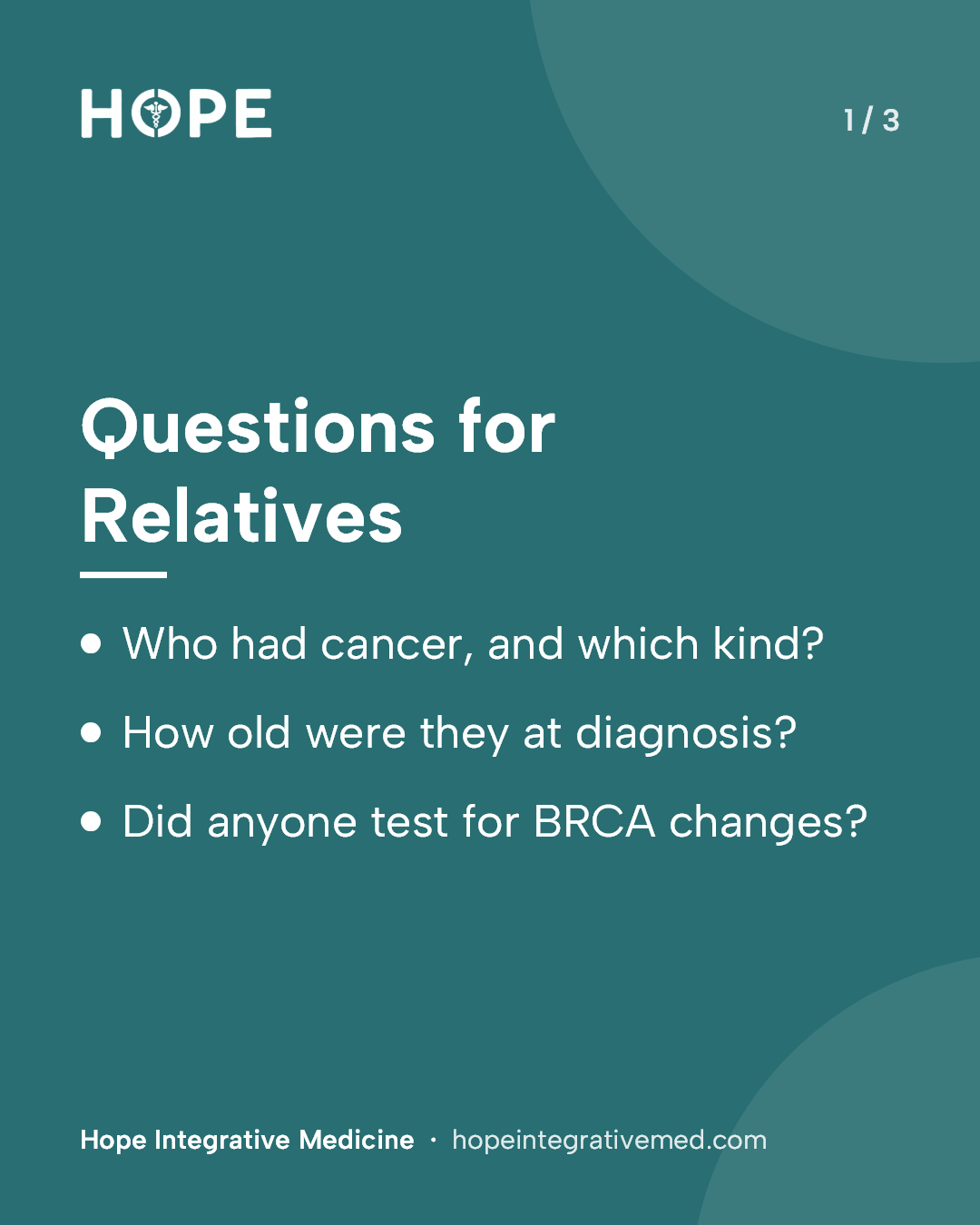
Questions for Relatives
- Who had cancer, and which kind?
- How old were they at diagnosis?
- Did anyone test for BRCA changes?
Easy to Overlook
- Your father's side counts too
- Ovarian, tubal and peritoneal cancer
- Past radiation to your chest
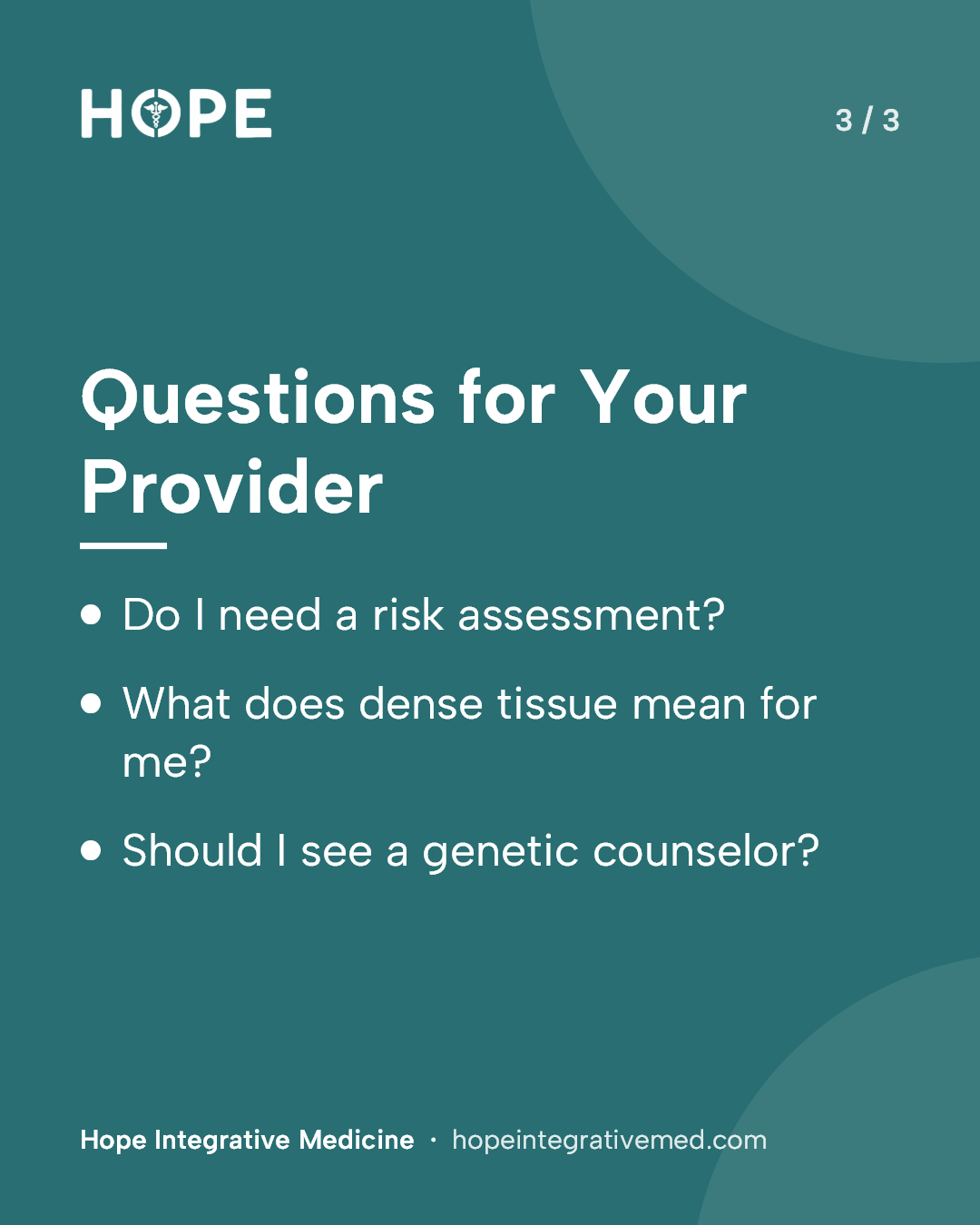
Questions for Your Provider
- Do I need a risk assessment?
- What does dense tissue mean for me?
- Should I see a genetic counselor?
What the guideline says
- About 1 in 8 U.S. women will be diagnosed with breast cancer in her lifetime, according to the American Cancer Society.
- For women at average risk, the current guideline is a mammogram every two years from age 40 through 74.
- The U.S. Preventive Services Task Force recommends a brief risk assessment for women with a personal or family history of breast, ovarian, tubal or peritoneal cancer, or with ancestry linked to BRCA1 or BRCA2 gene changes.
- If that assessment points to higher risk, the next step is genetic counseling and, if appropriate, genetic testing; women without those histories do not need routine genetic testing.
- For women at high risk, the American Cancer Society recommends a breast MRI and a mammogram every year, typically starting at age 30.
- Dense breast tissue makes cancer harder to see and slightly raises risk, so ask your provider whether more imaging makes sense for you.
This guide is general health information and does not replace advice from your own provider.
Frequently Asked Questions
The next step is genetic counseling and, if appropriate, genetic testing. Your primary care provider can review your family history, order your mammogram and refer you for genetic counseling when it fits.
Dense tissue makes cancer harder to see and slightly raises risk. Talk with your provider about your overall risk and whether more imaging makes sense for you.
Yes. The first randomized trial of mammography screening began in New York in 1963 with women aged 40 to 64. Women invited to screening had about 29 percent fewer breast cancer deaths after 10 years.