The 3 Phases of Suboxone Treatment
Based on SUBOXONE sublingual film prescribing information, FDA label via DailyMed
Learn about Suboxone treatment, how it works, and its role in helping individuals overcome opioid addiction.
Looking for a Primary Care Provider?
Checkups, preventive care and ongoing care for chronic conditions in West Ashley, Charleston. New patients are often able to be scheduled within a week of requesting an appointment. Schedule an appointment today.
In this guide
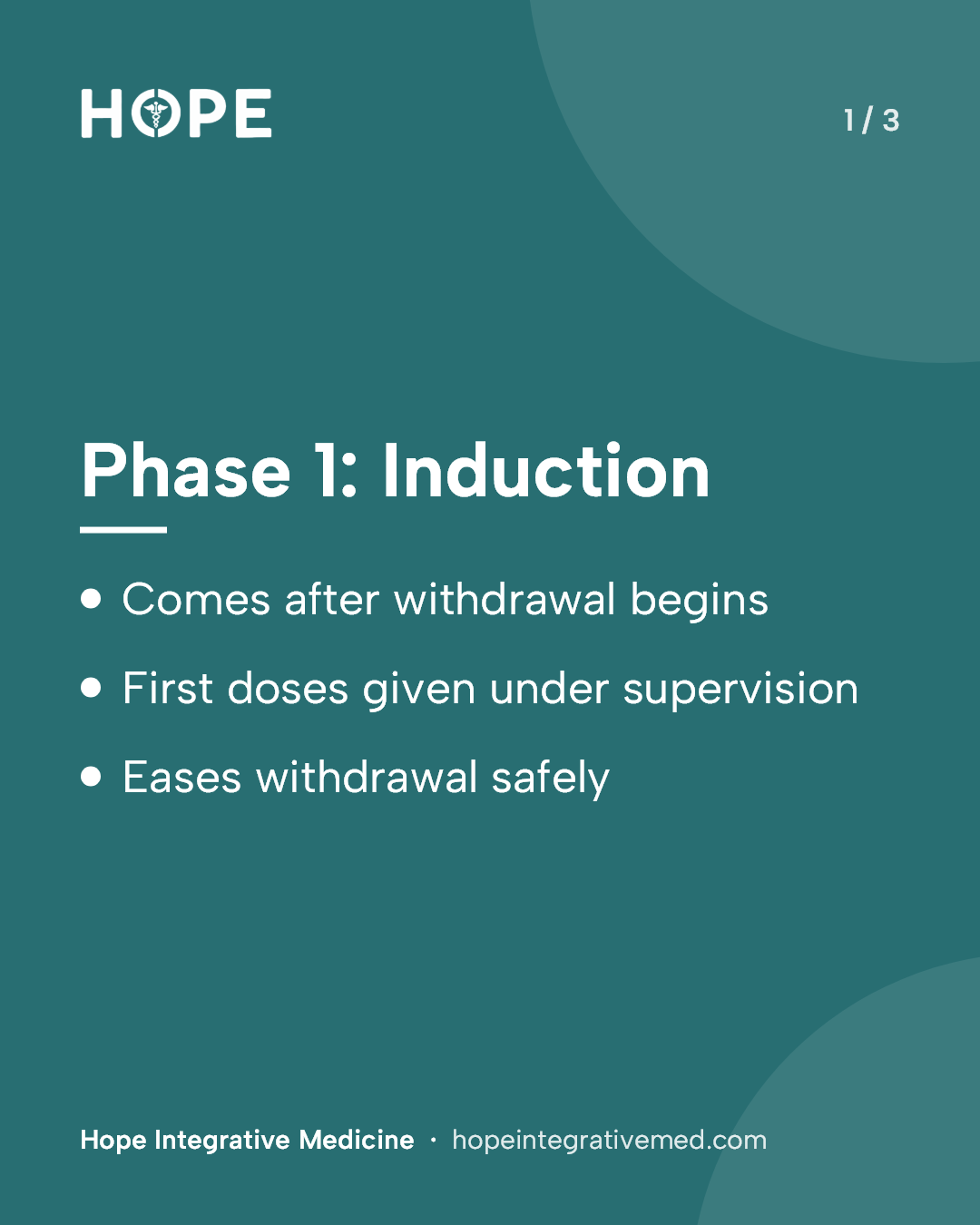
Phase 1: Induction
- Comes after withdrawal begins
- First doses given under supervision
- Eases withdrawal safely
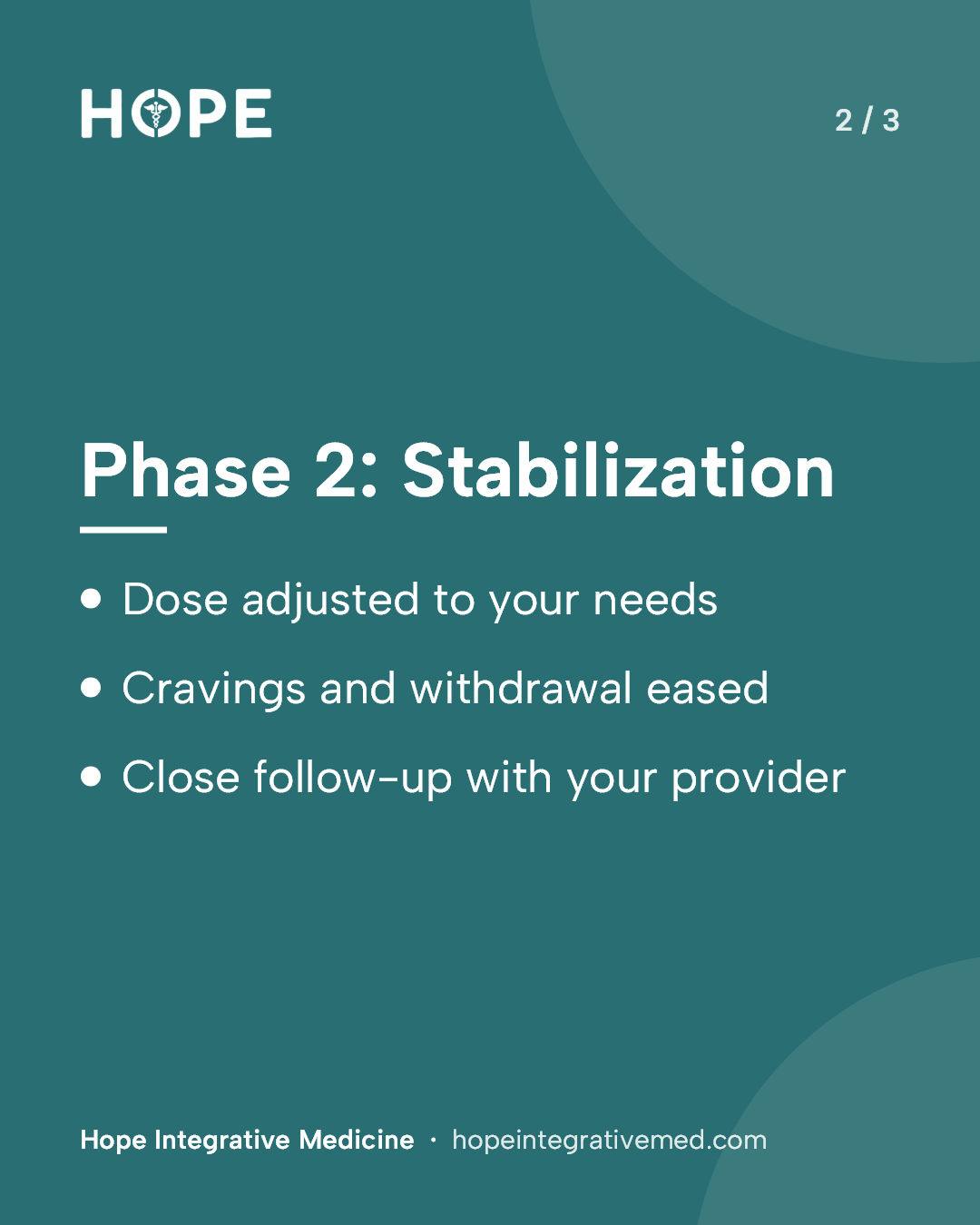
Phase 2: Stabilization
- Dose adjusted to your needs
- Cravings and withdrawal eased
- Close follow-up with your provider
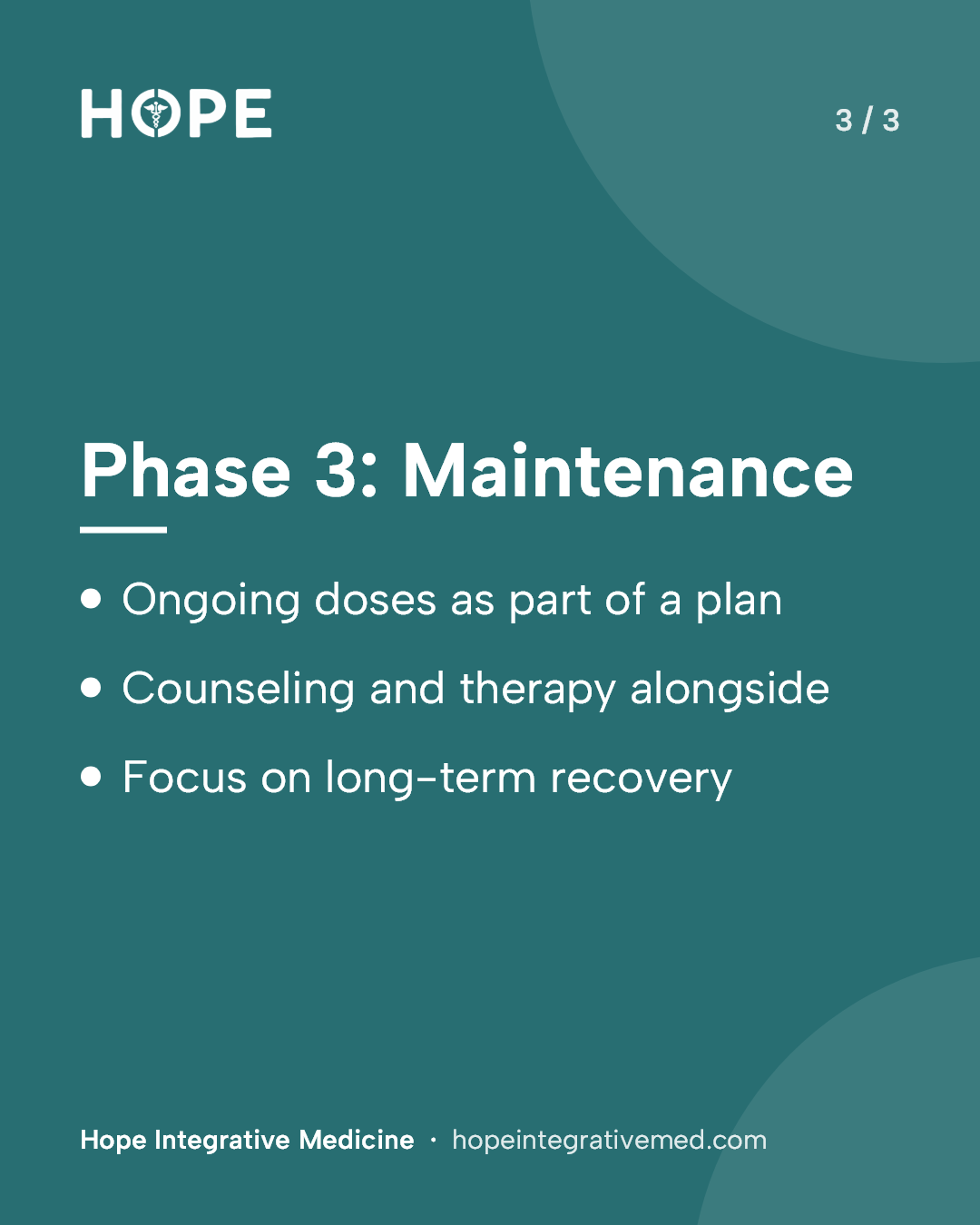
Phase 3: Maintenance
- Ongoing doses as part of a plan
- Counseling and therapy alongside
- Focus on long-term recovery
What the guideline says
- Suboxone is a prescription medicine for opioid use disorder that combines buprenorphine and naloxone.
- Buprenorphine is a partial opioid agonist: it binds to opioid receptors but activates them less intensely, which relieves withdrawal, reduces cravings and lowers the risk of misuse compared with full opioids.
- Naloxone is an opioid antagonist that discourages misuse by bringing on withdrawal if Suboxone is injected instead of taken as prescribed.
- Treatment usually moves through three phases: induction, stabilization and maintenance.
- Buprenorphine has a ceiling effect, which lowers the risk of overdose compared with full opioids.
- Suboxone is most effective as part of a medication-assisted treatment plan that includes counseling and behavioral therapies.
Source: SUBOXONE sublingual film prescribing information, FDA label via DailyMed
Read the full article: Understanding Suboxone Treatment: How It Works and Why It's Effective →
This guide is general health information and does not replace advice from your own provider.
Frequently Asked Questions
Suboxone treatment is typically part of a medication-assisted treatment program that includes counseling and behavioral therapies, and it is most effective when combined with them.
Some people do. Suboxone addresses the changes in brain chemistry caused by opioid addiction, which can improve the chances of success.
At Hope Integrative Medicine in Charleston, treatment begins with an in-person assessment at the West Ashley office and continues with hybrid in-person and virtual care, including weekly in-person or virtual visits. Plans are tailored to each patient.