Spot Health Misinformation: Red Flags to Watch For
Based on MedlinePlus, Evaluating Health Information
Five questions to ask about any health website, red flags to watch for and reliable places to start, for Health Literacy Month.
Looking for a Primary Care Provider?
Checkups, preventive care and ongoing care for chronic conditions in West Ashley, Charleston. New patients are often able to be scheduled within a week of requesting an appointment. Schedule an appointment today.
In this guide
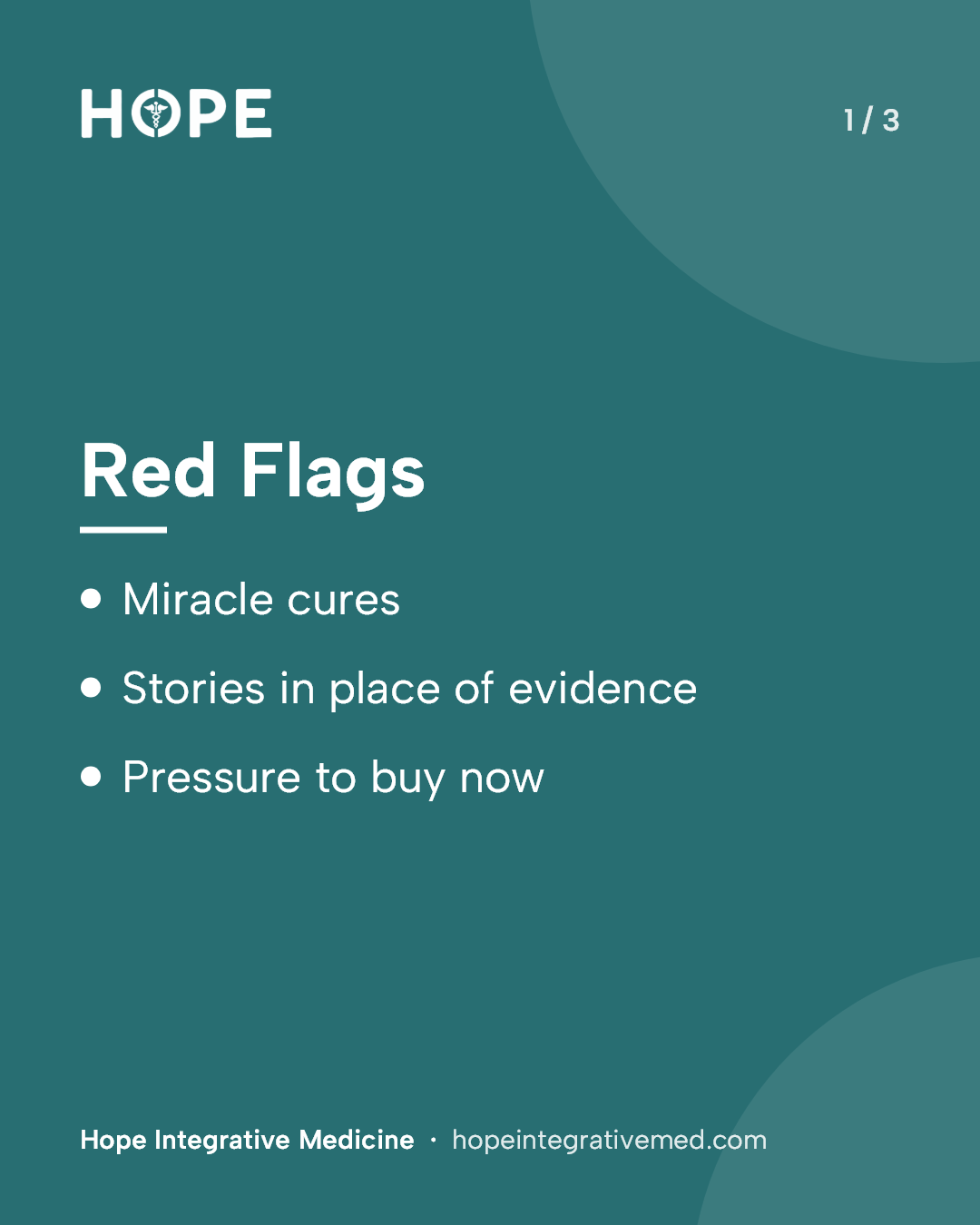
Red Flags
- Miracle cures
- Stories in place of evidence
- Pressure to buy now
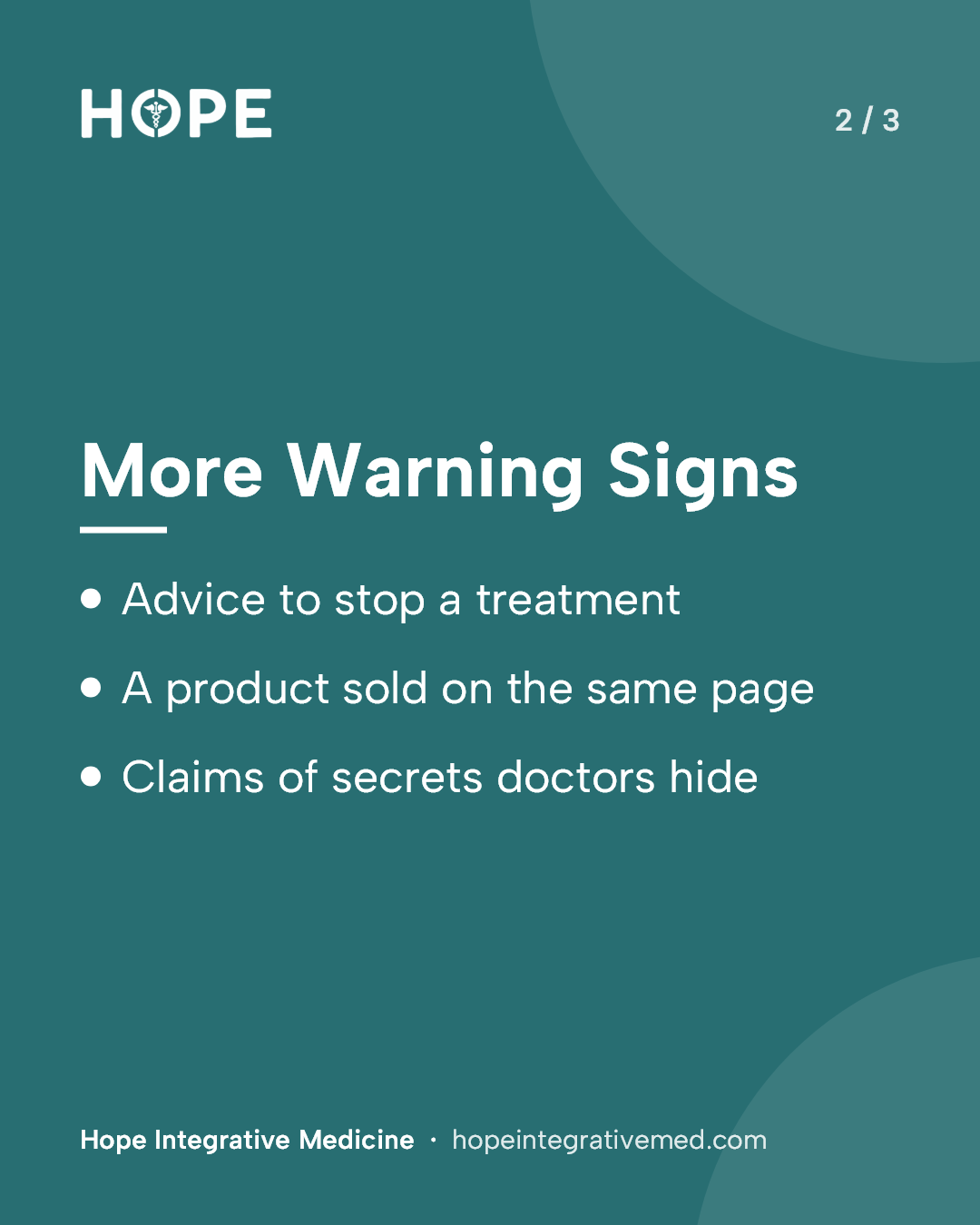
More Warning Signs
- Advice to stop a treatment
- A product sold on the same page
- Claims of secrets doctors hide
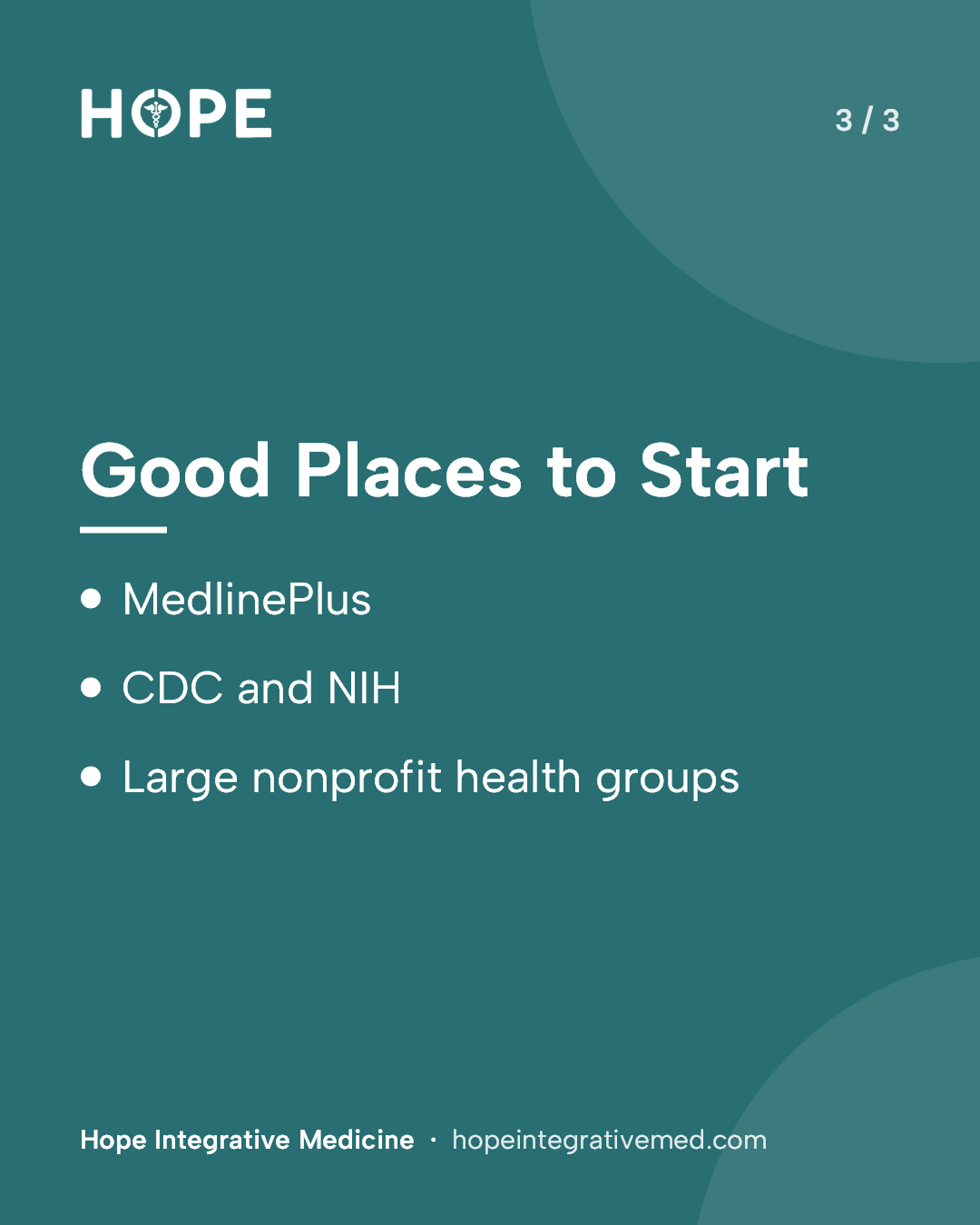
Good Places to Start
- MedlinePlus
- CDC and NIH
- Large nonprofit health groups
What the guideline says
- Healthy People 2030 describes personal health literacy as the ability to find, understand and use health information and services to make decisions for yourself and others.
- A trustworthy site makes clear who is behind it and how to contact them, and U.S. websites ending in .gov belong to official government organizations.
- Good pages point to research or name their sources, present balanced facts rather than promising cures, and show when they were written, reviewed or updated.
- Red flags include miracle cures, personal stories in place of evidence, pressure to buy now and advice to stop a treatment your provider recommended.
- MedlinePlus, the CDC, the National Institutes of Health, medical schools and large nonprofit health organizations are generally reliable places to start.
- If you read something that worries you or sounds promising, bring it to your appointment so your provider can tell you whether it applies to you.
Source: MedlinePlus, Evaluating Health Information
Read the full article: Health Literacy Month: How to Tell if Health Information Online Is Reliable →
This guide is general health information and does not replace advice from your own provider.
Frequently Asked Questions
Good pages point to research or name their sources, and they present balanced facts rather than promising cures.
Advice to stop a treatment your provider recommended is a red flag. Bring what you read to your next visit and talk it through with your provider first.
Yes. Your provider can tell you whether it applies to you, given your health history, and that conversation is part of good care.