Sleep Medicine and Sleep Apnea: 3 Things to Check
Based on U.S. Food and Drug Administration, Certain Prescription Insomnia Medicines: New Boxed Warning

Why undiagnosed sleep apnea matters before relying on sleep medicines, how the workup and sleep study referral work, and why CBT-I is the first-line treatment for insomnia.
Looking for a Primary Care Provider?
Checkups, preventive care and ongoing care for chronic conditions in West Ashley, Charleston. New patients are often able to be scheduled within a week of requesting an appointment. Schedule an appointment today.
In this guide
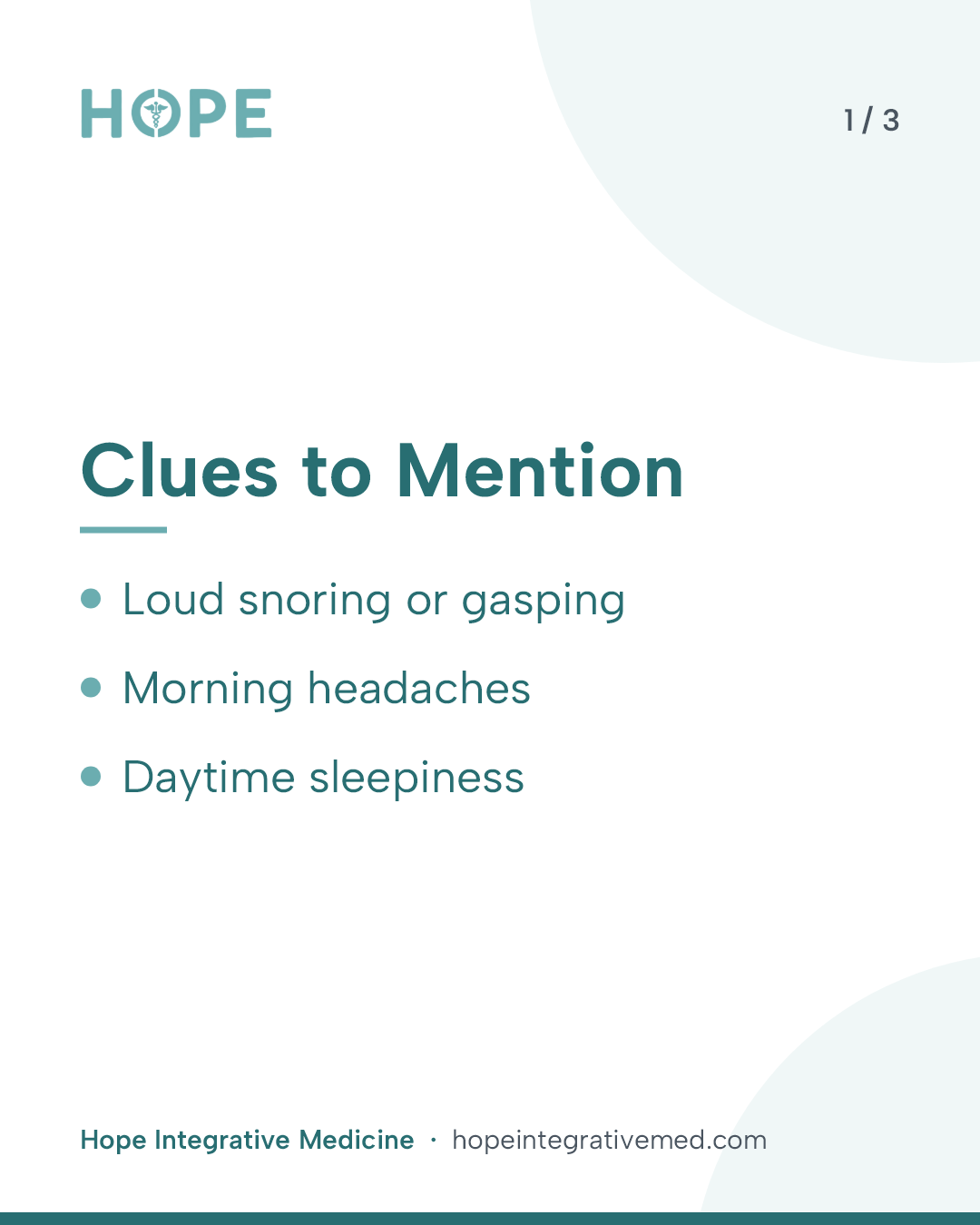
Clues to Mention
- Loud snoring or gasping
- Morning headaches
- Daytime sleepiness
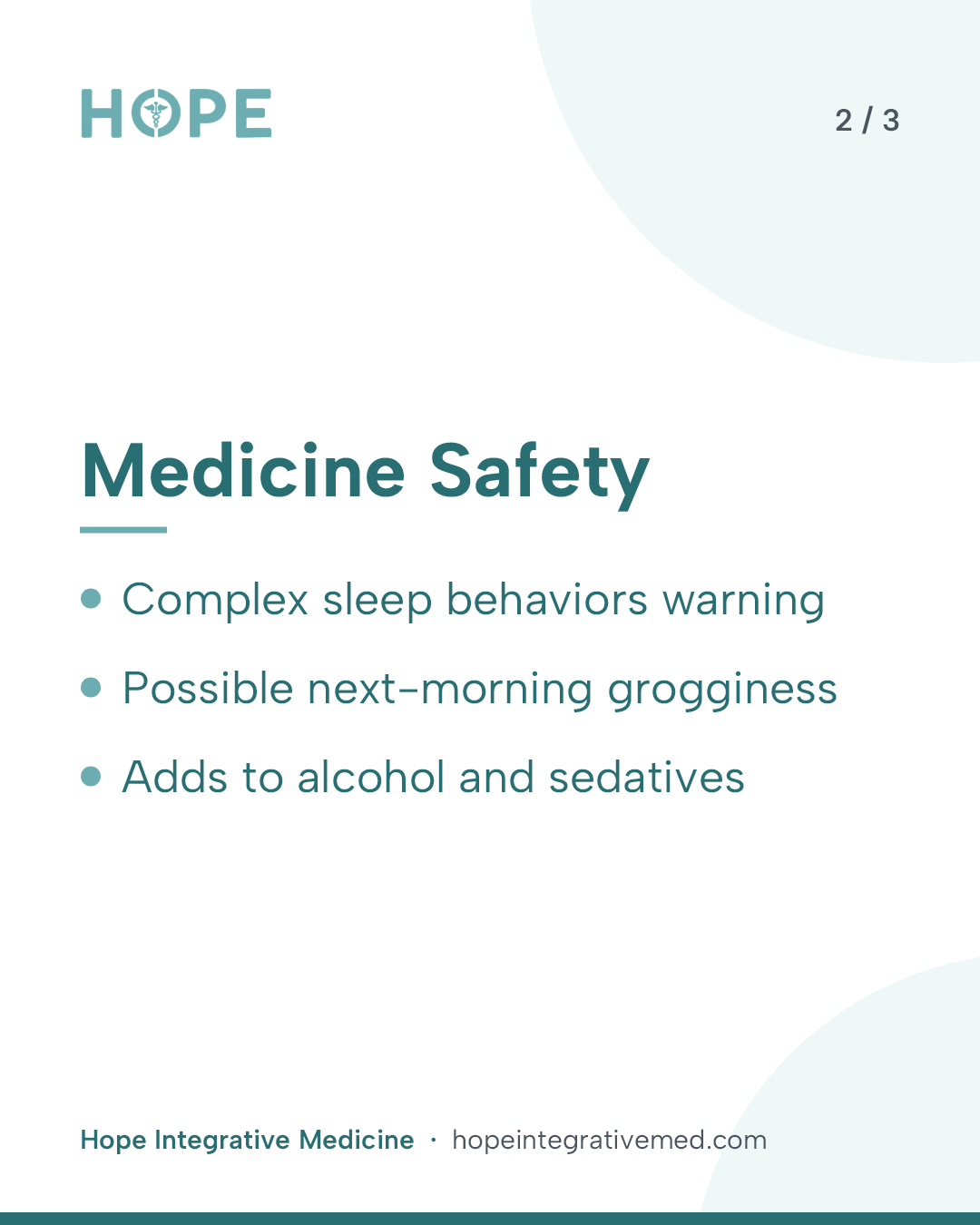
Medicine Safety
- Complex sleep behaviors warning
- Possible next-morning grogginess
- Adds to alcohol and sedatives
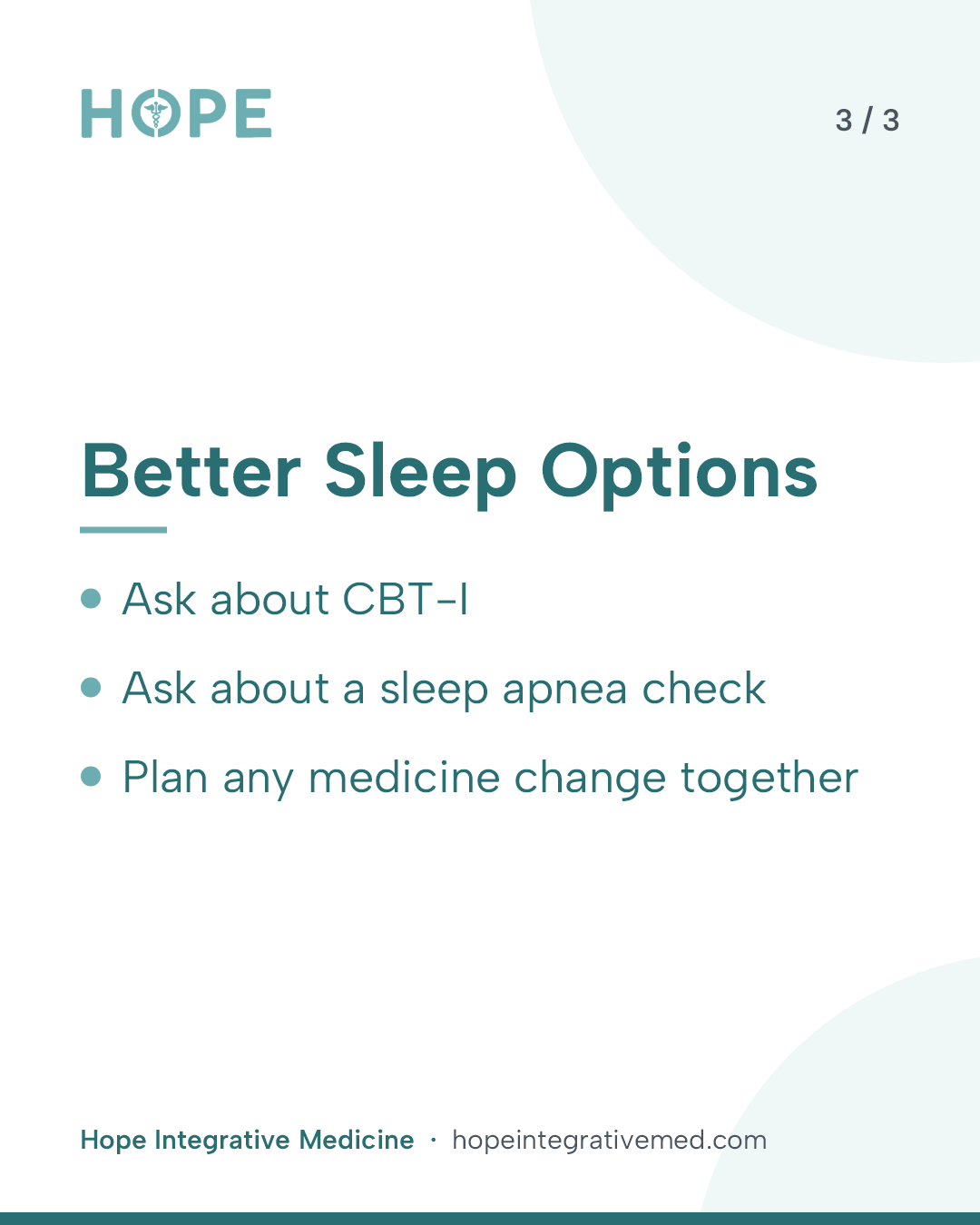
Better Sleep Options
- Ask about CBT-I
- Ask about a sleep apnea check
- Plan any medicine change together
What the guideline says
- Before relying on sleep medicines such as zolpidem (Ambien), eszopiclone (Lunesta) or trazodone long term, it is worth asking whether undiagnosed sleep apnea is part of the problem.
- Obstructive sleep apnea causes repeated pauses in breathing during sleep, leaves people tired no matter how long they sleep, and is common and often missed.
- Sedating medicines can relax the airway further, and treating insomnia without addressing apnea leaves the real problem in place.
- Zolpidem and eszopiclone carry a warning about complex sleep behaviors such as sleepwalking or driving while not fully awake.
- Cognitive behavioral therapy for insomnia, called CBT-I, is the recommended first treatment for long-term insomnia.
Source: U.S. Food and Drug Administration, Certain Prescription Insomnia Medicines: New Boxed Warning
Read the full article: Ambien, Lunesta or Trazodone Long Term? Rule Out Sleep Apnea First →
This guide is general health information and does not replace advice from your own provider.
Frequently Asked Questions
Cognitive behavioral therapy for insomnia, called CBT-I, is the recommended first treatment for long-term insomnia. It works as well as medicine in the short term and better over time.
CBT-I is often combined with a gradual taper of sleep medicines. Any change to a sleep medicine should be planned with your provider.
Feeling tired no matter how long you sleep can be a sign of sleep apnea. Talk with your provider about an initial workup and, if needed, a sleep study.