Protecting Muscle on a Small Appetite: 3 Simple Habits
Based on RealFood.gov, Dietary Guidelines for Americans, 2025 to 2030
Why weight loss can cost muscle, how much protein to aim for under the current guidelines, how to fit it in when your appetite is small, and why strength training matters.
Looking for a Primary Care Provider?
Checkups, preventive care and ongoing care for chronic conditions in West Ashley, Charleston. New patients are often able to be scheduled within a week of requesting an appointment. Schedule an appointment today.
In this guide
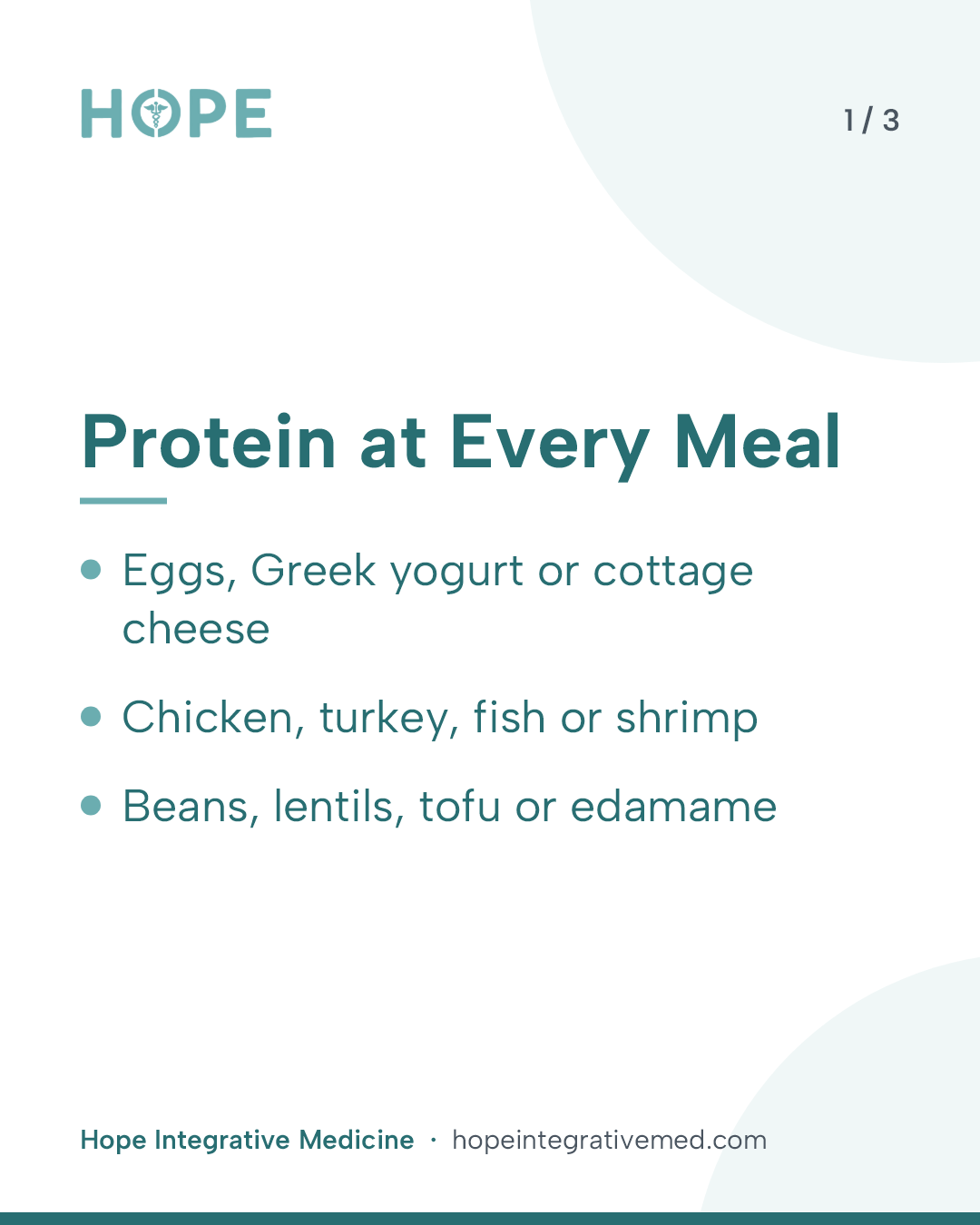
Protein at Every Meal
- Eggs, Greek yogurt or cottage cheese
- Chicken, turkey, fish or shrimp
- Beans, lentils, tofu or edamame
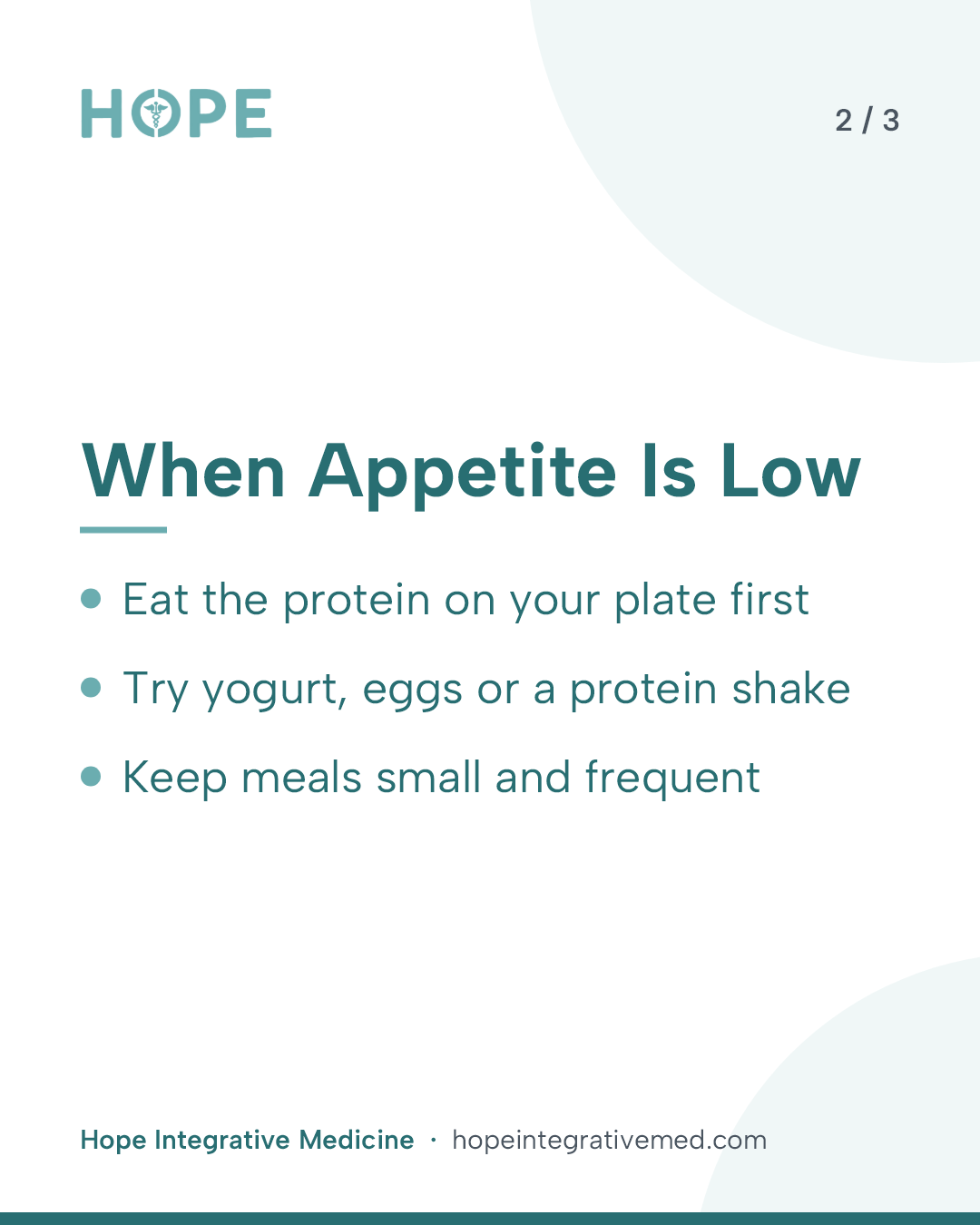
When Appetite Is Low
- Eat the protein on your plate first
- Try yogurt, eggs or a protein shake
- Keep meals small and frequent
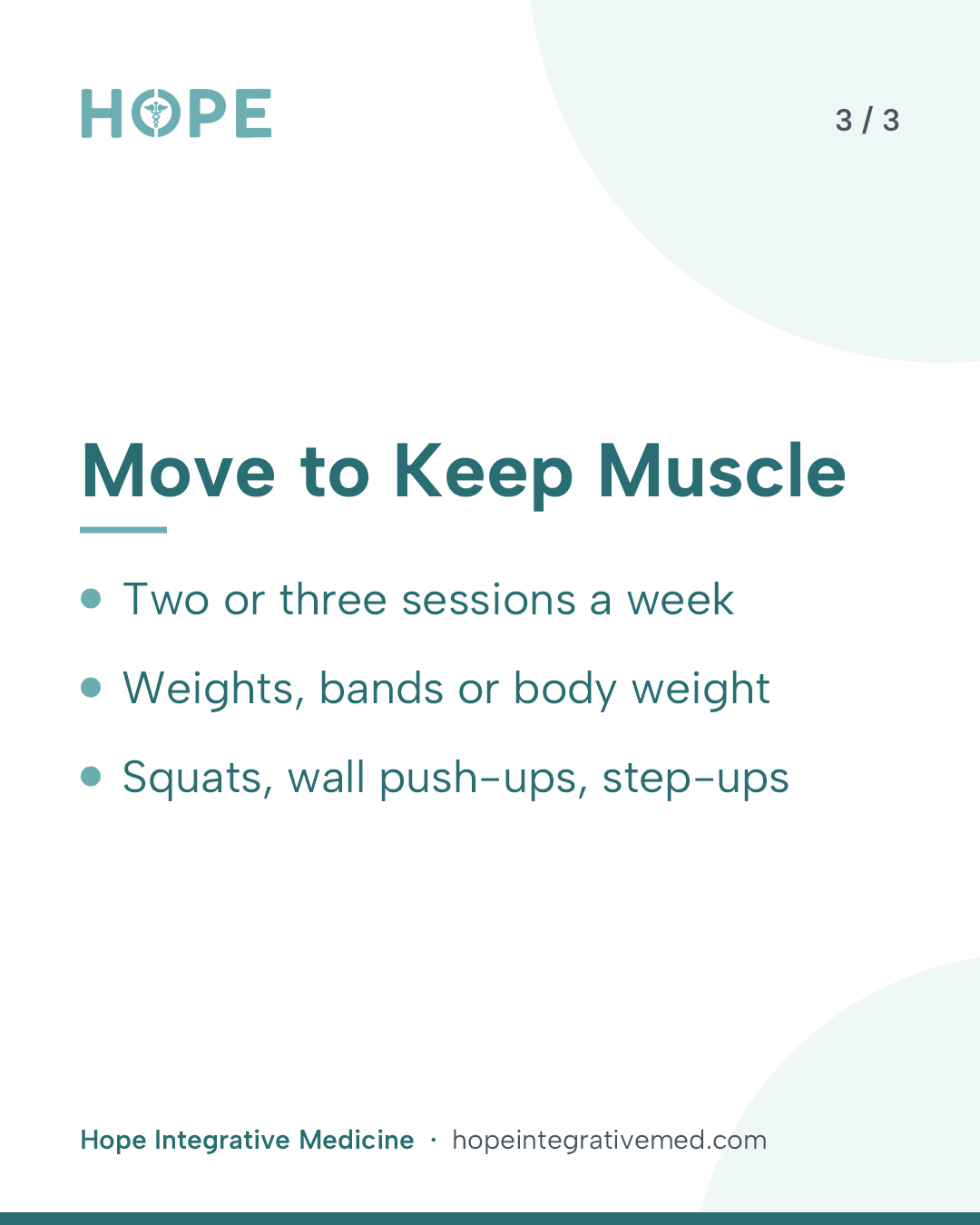
Move to Keep Muscle
- Two or three sessions a week
- Weights, bands or body weight
- Squats, wall push-ups, step-ups
What the guideline says
- When you lose weight, some of what you lose can be muscle rather than fat, whether the loss comes from eating less, from a medication such as semaglutide or tirzepatide, or both.
- The current Dietary Guidelines for Americans set a target of 1.2 to 1.6 grams of protein per kilogram of body weight per day.
- For a person who weighs 170 pounds, about 77 kilograms, that is roughly 90 to 125 grams of protein a day; your provider may set a different target, especially if you have kidney disease.
- A solid source of protein at every meal makes the target easier to reach than one large dinner.
- On low-appetite days, eat the protein on your plate first and choose soft or high-protein options such as yogurt, eggs or a protein shake.
- Two or three strength sessions a week with weights, resistance bands or body-weight exercises signal your body to hold on to muscle.
Source: RealFood.gov, Dietary Guidelines for Americans, 2025 to 2030
This guide is general health information and does not replace advice from your own provider.
Frequently Asked Questions
It is easier to reach your target with a solid source of protein at every meal than with one large dinner.
Weights, resistance bands or body-weight exercises such as squats, wall push-ups and step-ups. Two or three sessions a week signal your body to hold on to muscle.
Keep meals small and frequent and eat the protein on your plate first. If nausea is a problem on a GLP-1, our guide to managing GLP-1 side effects can help.