Holiday Stress: A Simple Check-In
Based on National Institute of Mental Health, I'm So Stressed Out! Fact Sheet
5 cards. Swipe or tap to see the next one.
How to tell everyday holiday stress from anxiety or depression, simple ways to cope, when to reach out, and how Behavioral Health Integration brings mental health care into your primary care.
Ready to Talk With Someone?
We care for anxiety, depression and stress in West Ashley and by telehealth across South Carolina. Schedule an appointment today.
In this guide
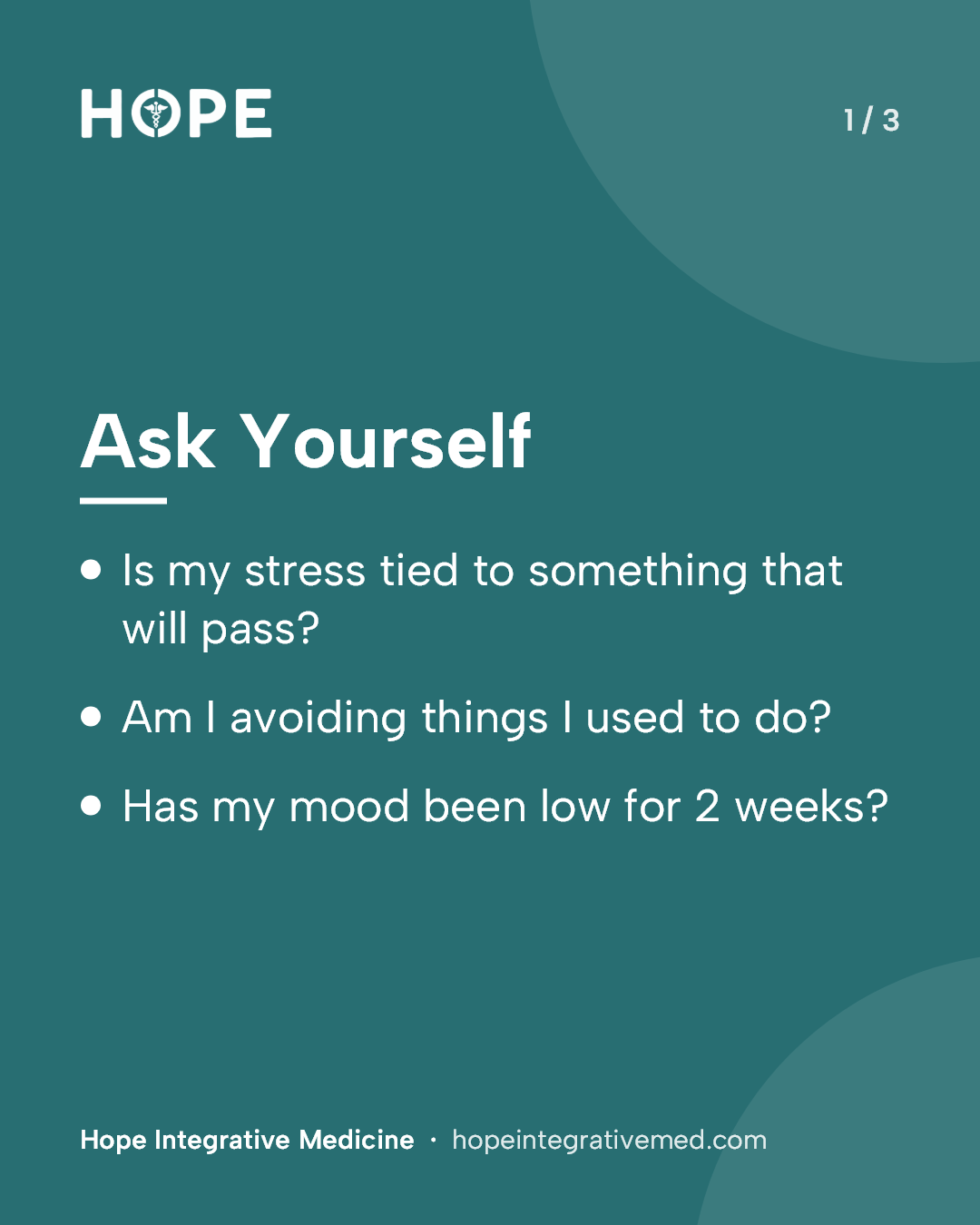
Ask Yourself
- Is my stress tied to something that will pass?
- Am I avoiding things I used to do?
- Has my mood been low for 2 weeks?
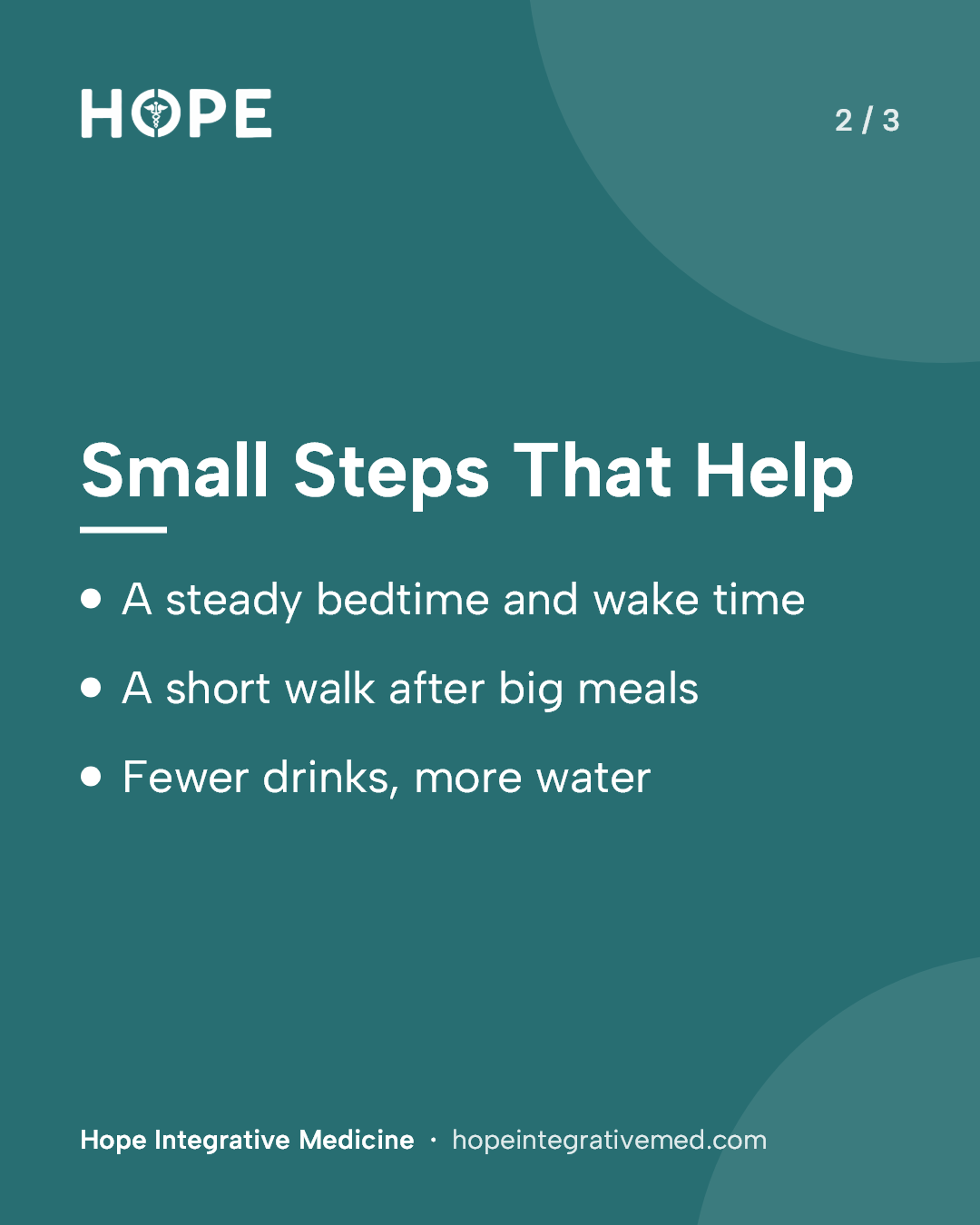
Small Steps That Help
- A steady bedtime and wake time
- A short walk after big meals
- Fewer drinks, more water
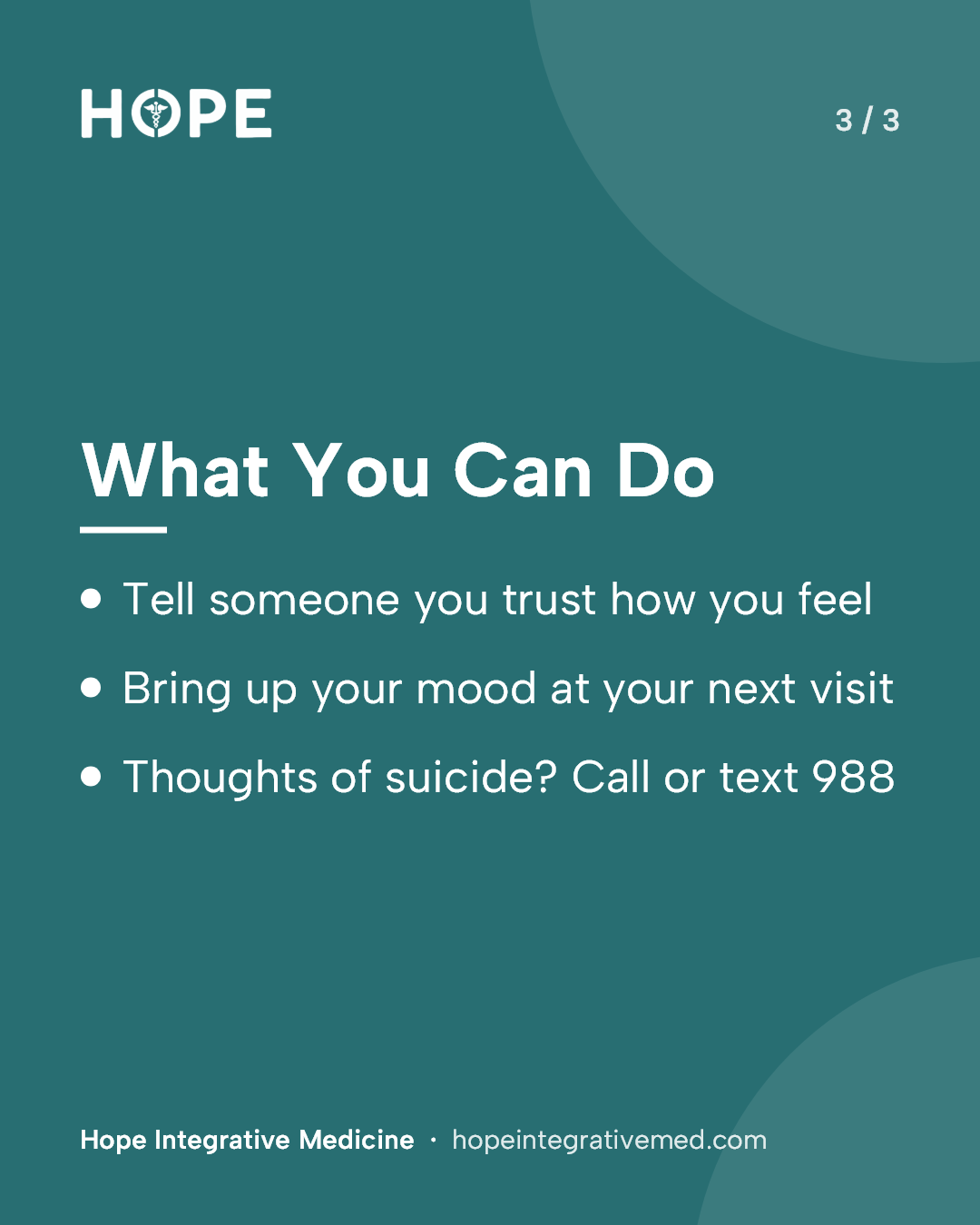
What You Can Do
- Tell someone you trust how you feel
- Bring up your mood at your next visit
- Thoughts of suicide? Call or text 988
What the guideline says
- NIMH says stress is a response to an outside cause and usually goes away once the situation is resolved.
- Anxiety is a persistent feeling of apprehension or dread that does not go away, NIMH says.
- Talk to a professional if stress or anxiety interferes with daily life, makes you avoid things or seems always present.
- CDC suggests 7 or more hours of sleep, regular activity, limiting alcohol and breaks from news and social media.
- Behavioral Health Integration brings mental health care into primary care, through the holidays and after.
Source: National Institute of Mental Health, I'm So Stressed Out! Fact Sheet
Read the full article: Holiday Stress and Your Mood: Coping Through the Season →
This guide is general health information and does not replace advice from your own provider.
Frequently Asked Questions
CDC says adults need 7 or more hours per night and suggests a consistent bedtime and wake time.
CDC suggests that if you drink, men have 2 drinks or less in a day and women 1 drink or less.
Try: "This time of year is hard for me. Could we look at my mood as part of my care plan?"