Getting Started With MAT: 3 Steps
Based on SUBOXONE sublingual film prescribing information, FDA label via DailyMed
If you are facing opioid use disorder, you are not alone. Learn what medication-assisted treatment is, which medicines are used, why counseling matters and how to get started.
Looking for a Primary Care Provider?
Checkups, preventive care and ongoing care for chronic conditions in West Ashley, Charleston. New patients are often able to be scheduled within a week of requesting an appointment. Schedule an appointment today.
In this guide
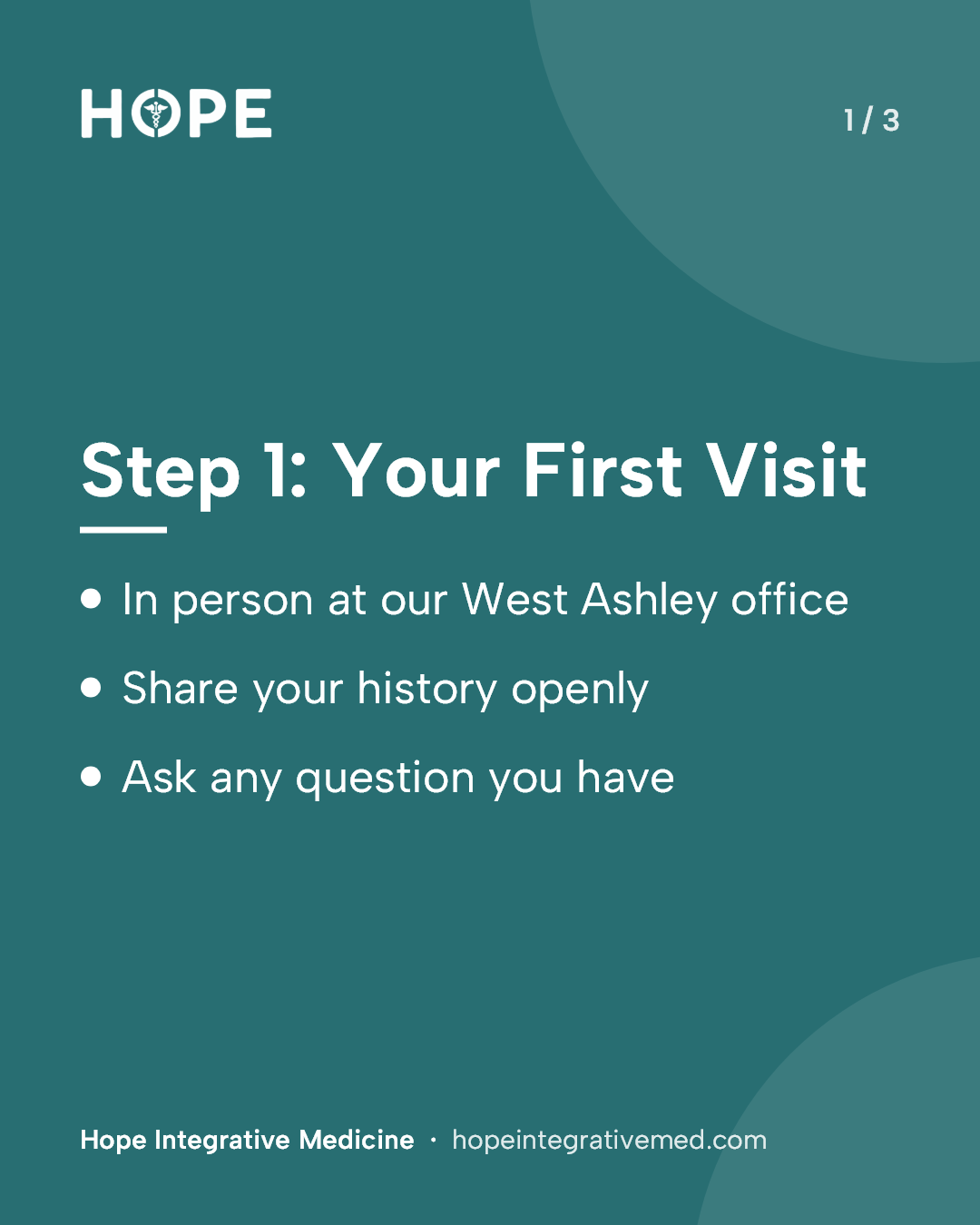
Step 1: Your First Visit
- In person at our West Ashley office
- Share your history openly
- Ask any question you have
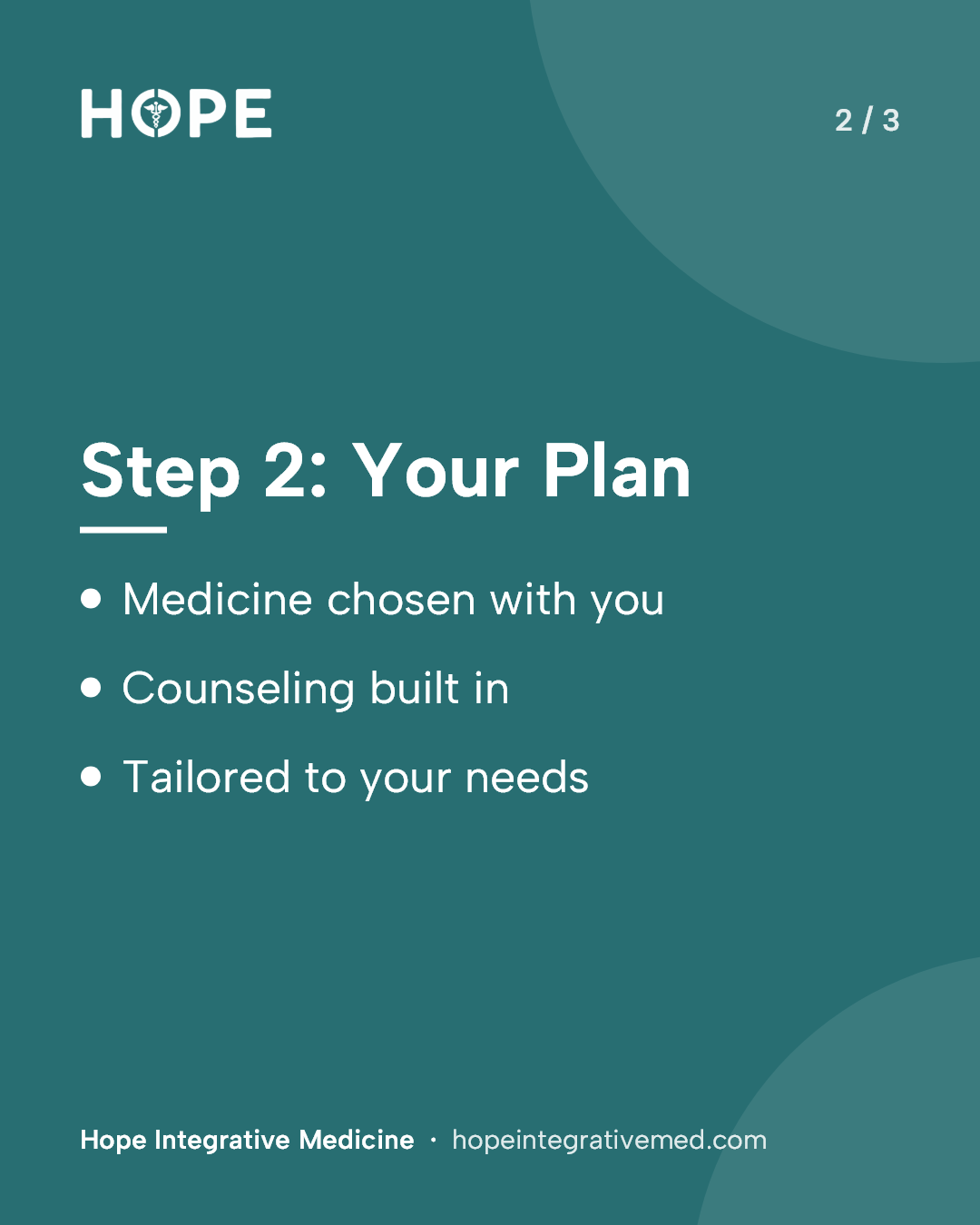
Step 2: Your Plan
- Medicine chosen with you
- Counseling built in
- Tailored to your needs
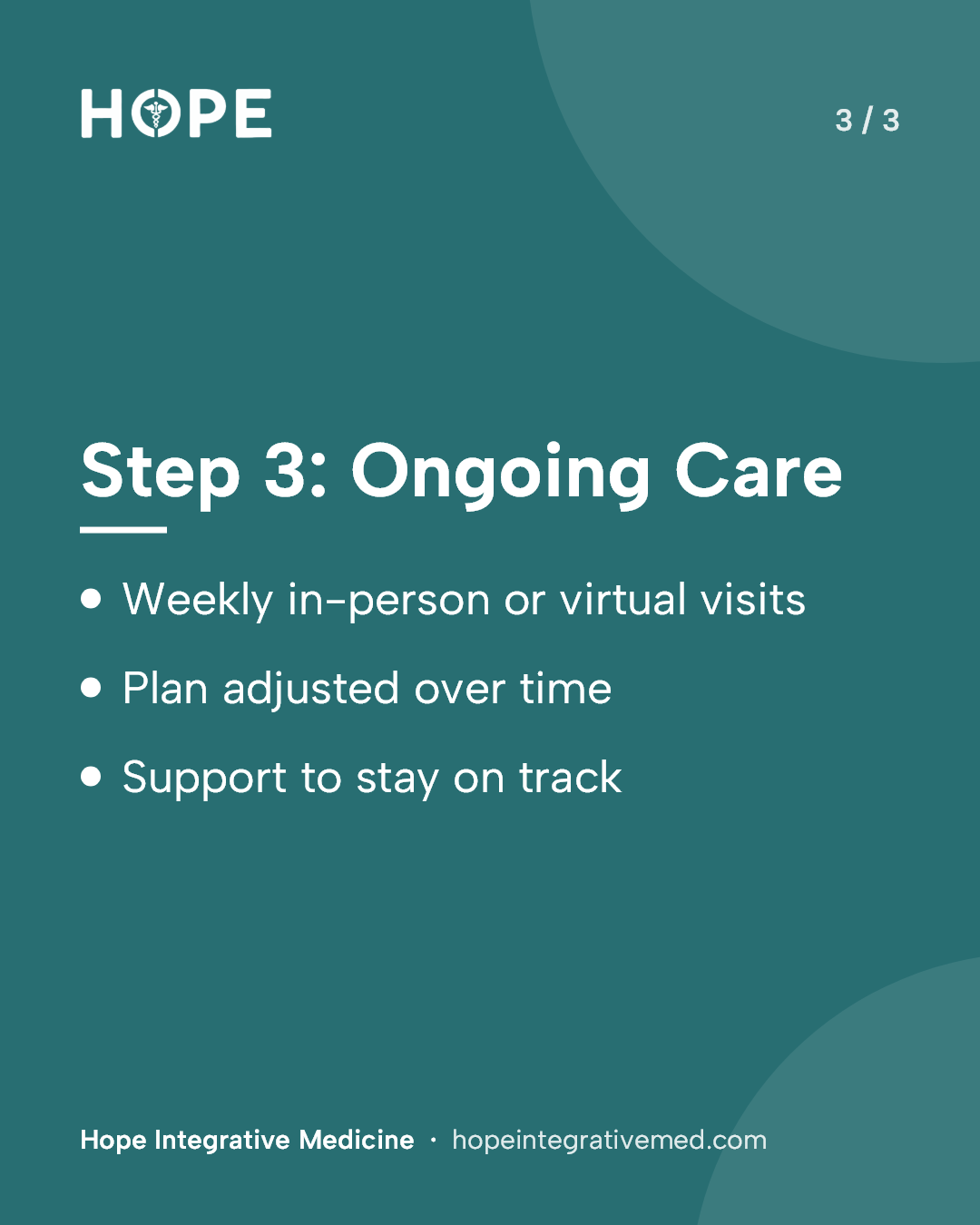
Step 3: Ongoing Care
- Weekly in-person or virtual visits
- Plan adjusted over time
- Support to stay on track
What the guideline says
- Medication-assisted treatment combines FDA-approved medications with counseling and behavioral support to treat opioid use disorder.
- MAT medicines help manage withdrawal symptoms and cravings, so people can take part fully in therapy and other recovery efforts.
- Buprenorphine, found in Suboxone and Sublocade, reduces withdrawal symptoms and cravings and helps stabilize brain chemistry without producing a high when taken as prescribed.
- Naltrexone, given as Vivitrol, blocks the effects of opioids and helps prevent relapse by reducing the reward of opioid use.
- Counseling and behavioral therapies are a key part of MAT, helping people manage triggers, build healthy relationships and create a sustainable recovery plan.
- The length of MAT varies from person to person, and your provider will work with you on a personalized plan.
Source: SUBOXONE sublingual film prescribing information, FDA label via DailyMed
Read the full article: Medication-Assisted Treatment (MAT): What Patients Need to Know →
This guide is general health information and does not replace advice from your own provider.
Frequently Asked Questions
Treatment begins with an in-person assessment at the West Ashley office in Charleston, where your provider learns your history and current situation. Together you build a plan with medicine and counseling, followed by weekly in-person or virtual visits.
Counseling and behavioral therapies help address the underlying causes of addiction and give you tools for managing triggers, building healthy relationships and creating a sustainable recovery plan.
No. Your plan is tailored to your needs and includes medicine and counseling. Recovery is a journey, and ongoing care helps you stay on track.