Daily Benzodiazepines: Risks, Safe Tapering and Options
Based on U.S. Food and Drug Administration, Boxed Warning Updated to Improve Safe Use of Benzodiazepine Drug Class
The risks of daily long-term benzodiazepine use, where these medicines still fit, how to taper safely, and the long-term alternatives for anxiety.
Looking for a Primary Care Provider?
Checkups, preventive care and ongoing care for chronic conditions in West Ashley, Charleston. New patients are often able to be scheduled within a week of requesting an appointment. Schedule an appointment today.
In this guide
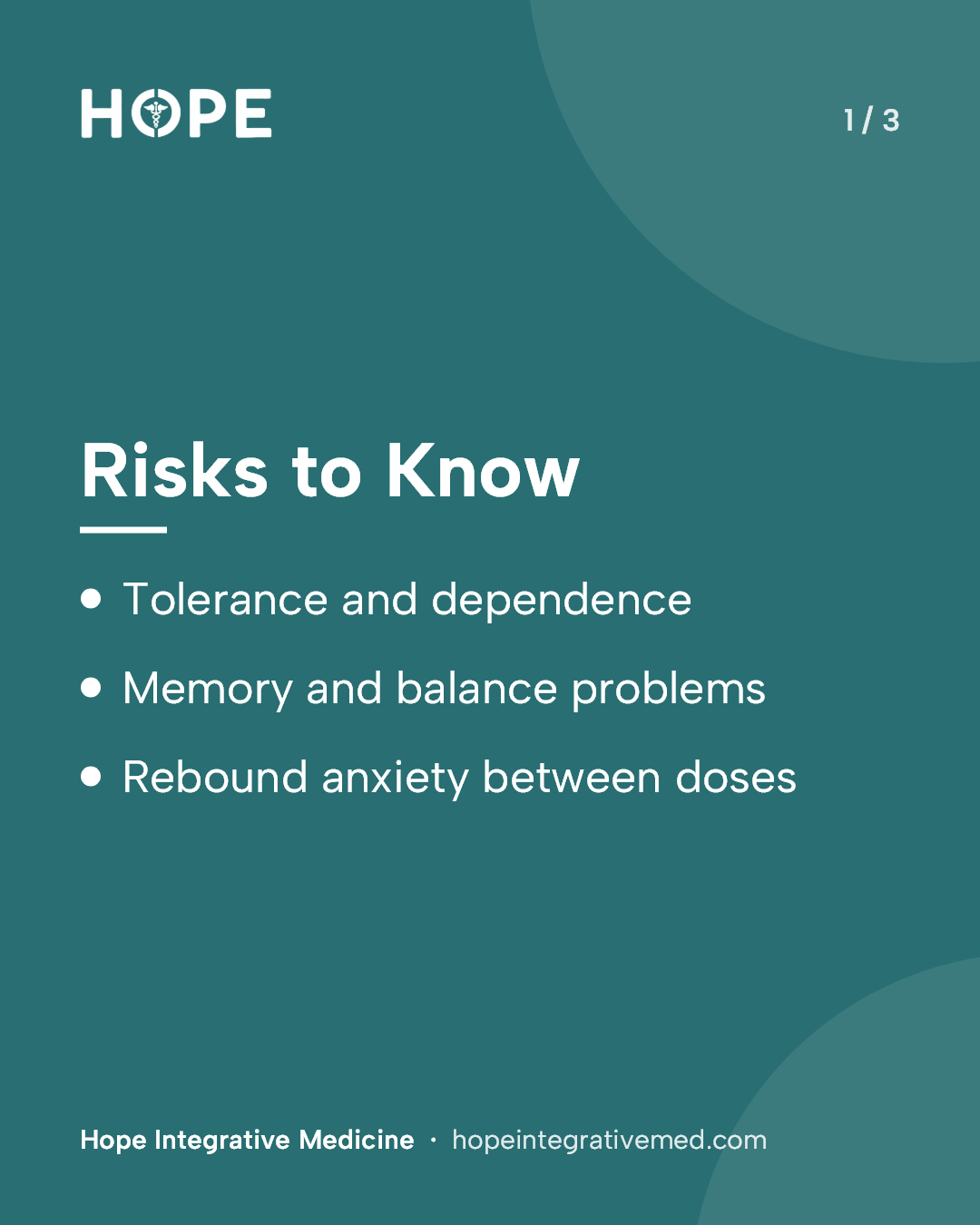
Risks to Know
- Tolerance and dependence
- Memory and balance problems
- Rebound anxiety between doses
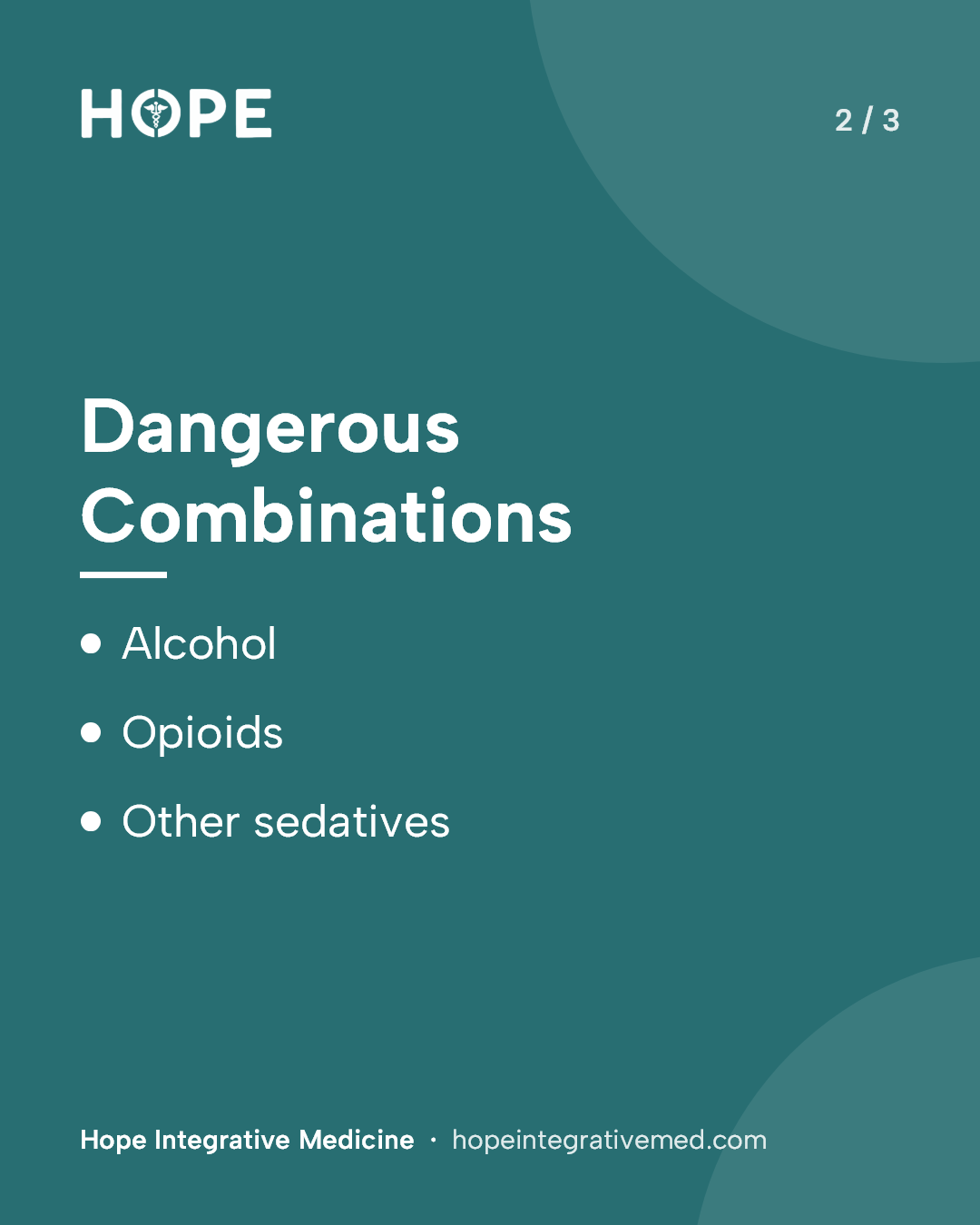
Dangerous Combinations
- Alcohol
- Opioids
- Other sedatives
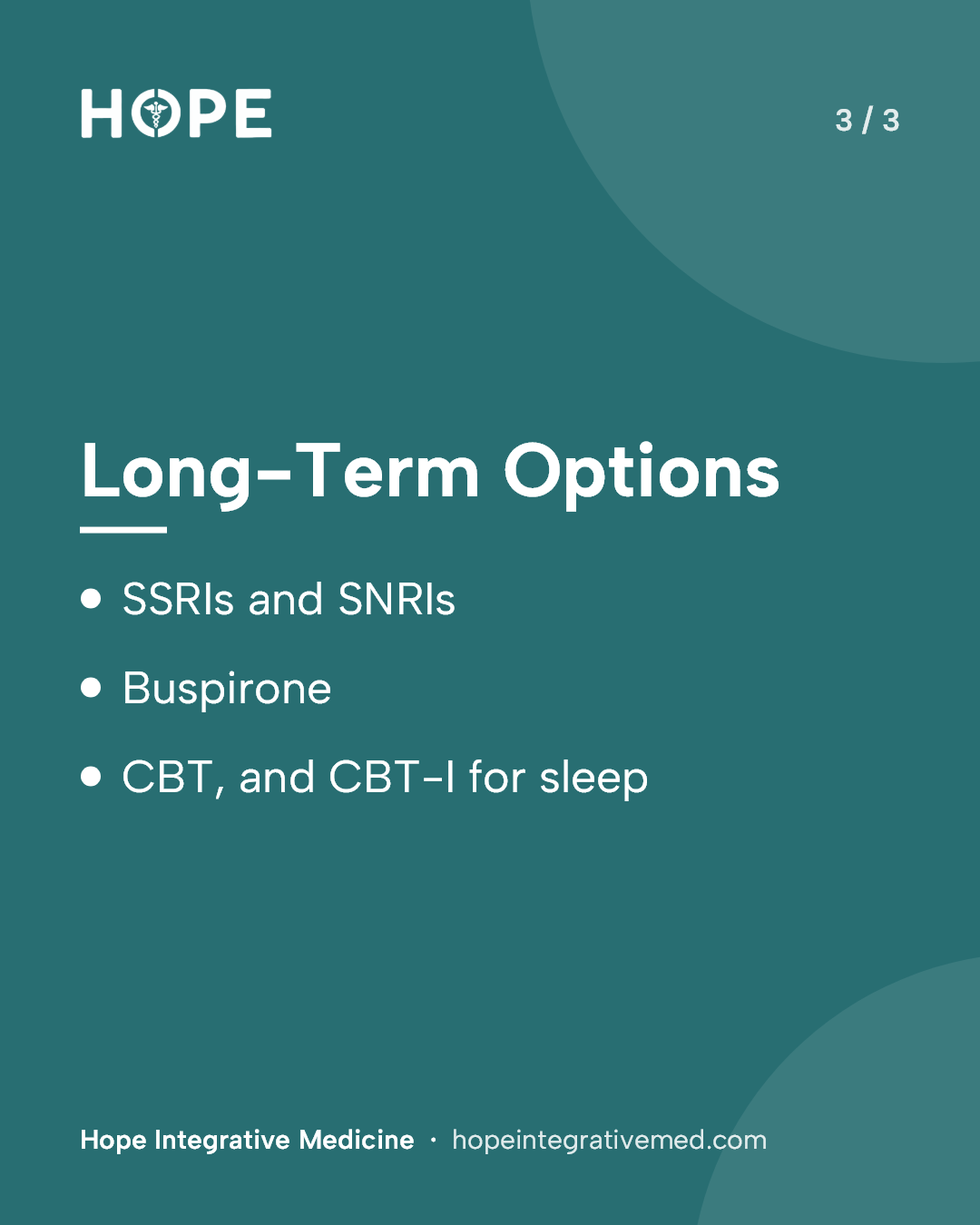
Long-Term Options
- SSRIs and SNRIs
- Buspirone
- CBT, and CBT-I for sleep
What the guideline says
- Benzodiazepines such as alprazolam (Xanax), clonazepam (Klonopin) and lorazepam (Ativan) calm anxiety within minutes, which is why they are so widely used and why daily long-term use causes problems.
- Long-term daily use brings tolerance and dependence, and memory, focus and balance problems, with a higher risk of falls and car crashes, especially in older adults.
- With alcohol, opioids or other sedatives, breathing can slow to a dangerous level.
- In 2020 the FDA updated the boxed warning on all benzodiazepines to cover misuse, dependence and withdrawal reactions.
- After regular use, stopping suddenly can cause severe anxiety, insomnia and, rarely, seizures; a slow, supervised taper over weeks to months, alongside therapy and a long-term treatment, is the safe path.
- Long-term alternatives include SSRIs and SNRIs, buspirone, cognitive behavioral therapy and, for sleep, CBT for insomnia.
Read the full article: Xanax, Klonopin and Ativan: Why Long-Term Daily Use Is Discouraged →
This guide is general health information and does not replace advice from your own provider.
Frequently Asked Questions
Short-term use during a crisis, or while a daily treatment such as an SSRI takes effect, and specific situations such as some procedures.
Do not stop suddenly. After regular use, abrupt discontinuation can cause severe anxiety, insomnia and, rarely, seizures. A slow, supervised taper over weeks to months with your prescriber, alongside therapy and a long-term treatment, is the safe path.
If you are having thoughts of harming yourself, call or text 988, or call 911.