Daily Acid Reducer? 3 Things to Bring Up at Your Next Visit
Based on NIDDK, Treatment for GER and GERD


Who needs long-term acid reducers, what the risks really are, how to step down without rebound heartburn, and the symptoms that need a closer look.
Looking for a Primary Care Provider?
Checkups, preventive care and ongoing care for chronic conditions in West Ashley, Charleston. New patients are often able to be scheduled within a week of requesting an appointment. Schedule an appointment today.
In this guide
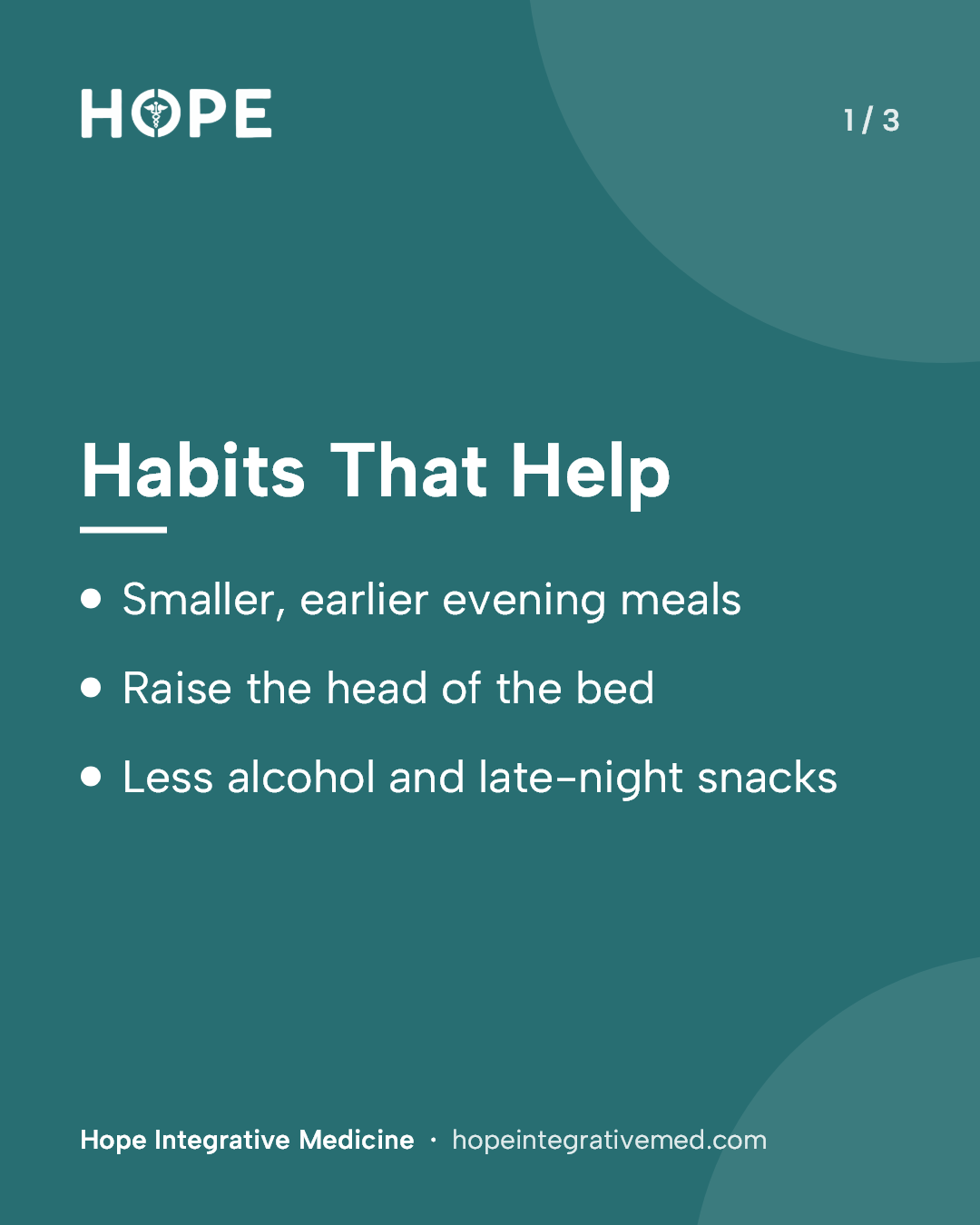
Habits That Help
- Smaller, earlier evening meals
- Raise the head of the bed
- Less alcohol and late-night snacks
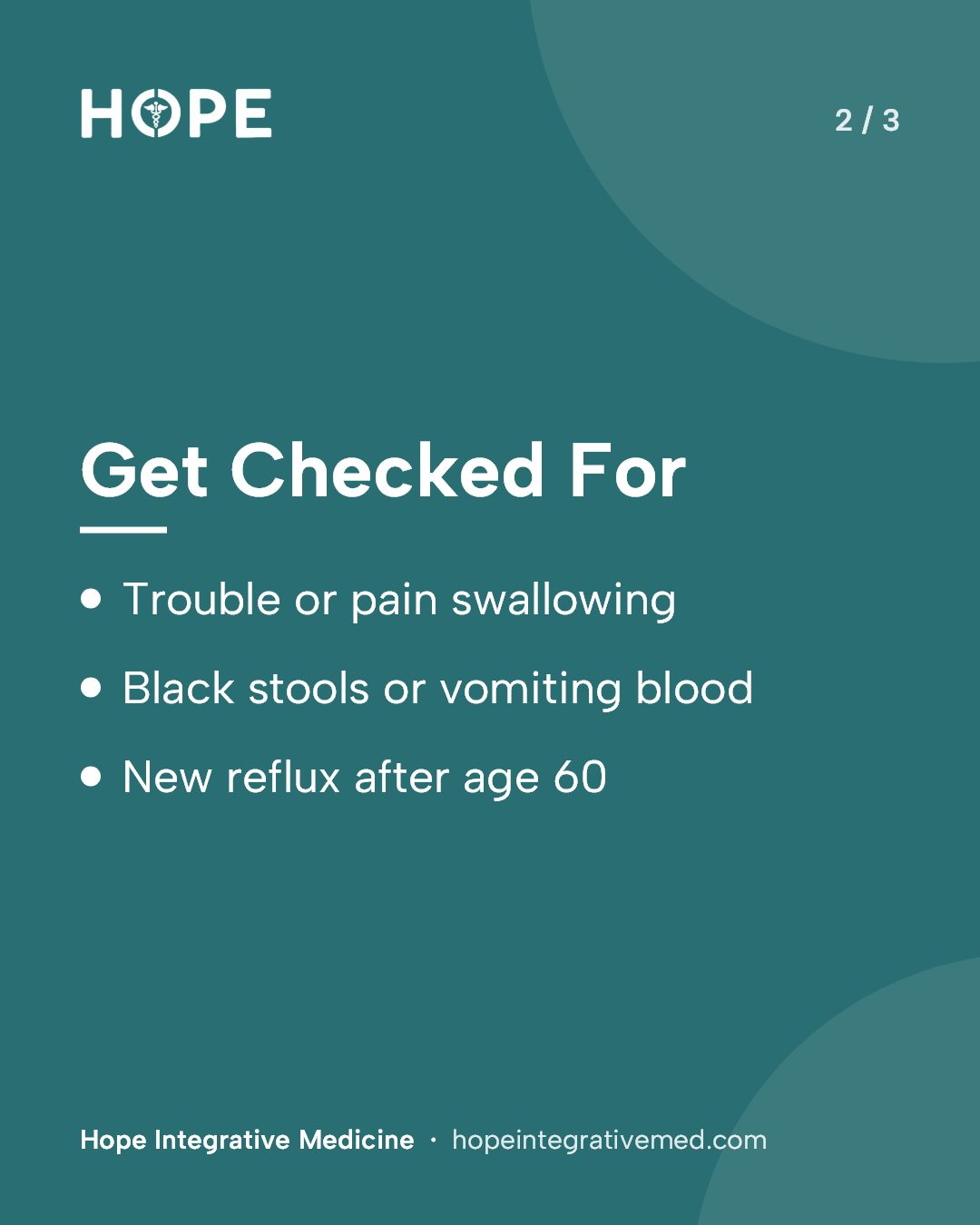
Get Checked For
- Trouble or pain swallowing
- Black stools or vomiting blood
- New reflux after age 60
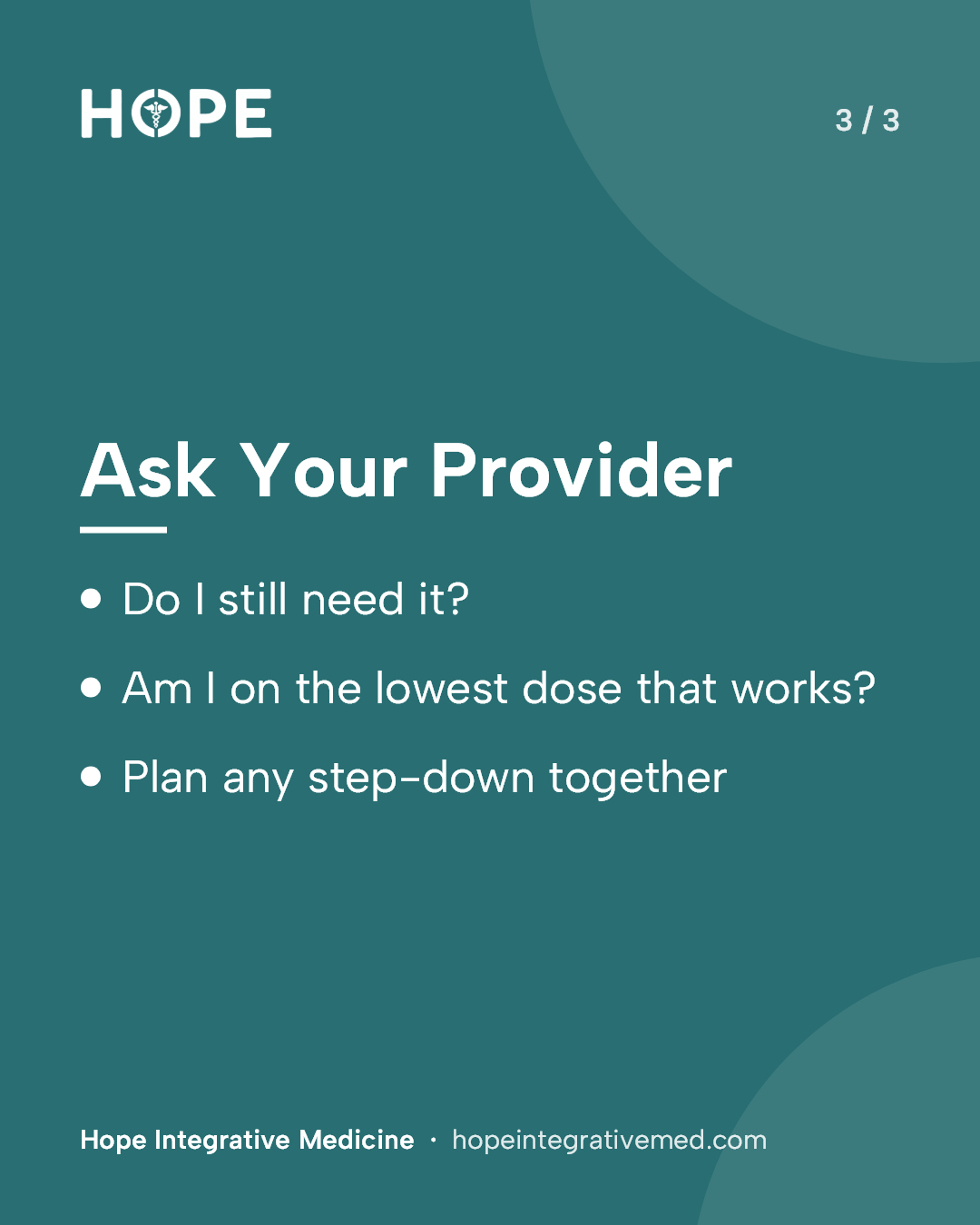
Ask Your Provider
- Do I still need it?
- Am I on the lowest dose that works?
- Plan any step-down together
What the guideline says
- Proton pump inhibitors such as Nexium, Prilosec and Protonix work very well for heartburn and reflux, but many people stay on them for years without revisiting whether they still need them.
- Some people benefit from long-term treatment, including those with Barrett's esophagus, severe erosive esophagitis or a history of stomach ulcer bleeding.
- Long-term use has been linked with low vitamin B12 and magnesium, bone fractures and certain gut infections, but most of these links come from observational studies, so the risk is real but often small.
- The goal is the lowest dose that works for as long as you need it, not to fear the medicine.
- Stopping suddenly often causes rebound heartburn for a few weeks; a gradual step-down planned with your provider works better.
- Trouble or pain with swallowing, unexplained weight loss, vomiting blood, black or tarry stools, or new reflux after age 60 need an evaluation.
Source: NIDDK, Treatment for GER and GERD
Read the full article: Taking Nexium, Prilosec or Protonix Every Day: Is It Safe, and How to Stop →
This guide is general health information and does not replace advice from your own provider.
Frequently Asked Questions
Trouble or pain with swallowing, unexplained weight loss, vomiting blood, black or tarry stools, or new reflux after age 60 need an evaluation, often with an upper endoscopy.
Chest pain that comes with exertion, sweating or shortness of breath may be the heart, not heartburn. Call 911.
Talk with your provider first. Some people need long-term treatment, and stopping suddenly often causes rebound heartburn. Your provider can help you decide whether a gradual step-down makes sense for you.