Coming Off an Antidepressant? What to Know First
Based on Hope Integrative Medicine, Stopping an Antidepressant Safely
5 cards. Swipe or tap to see the next one.
What antidepressant discontinuation feels like, why some medicines are harder to stop, how a taper is built, and how to tell discontinuation from relapse.
Looking for a Primary Care Provider?
Checkups, preventive care and ongoing care for chronic conditions in West Ashley, Charleston. New patients are often able to be scheduled within a week of requesting an appointment. Schedule an appointment today.
In this guide
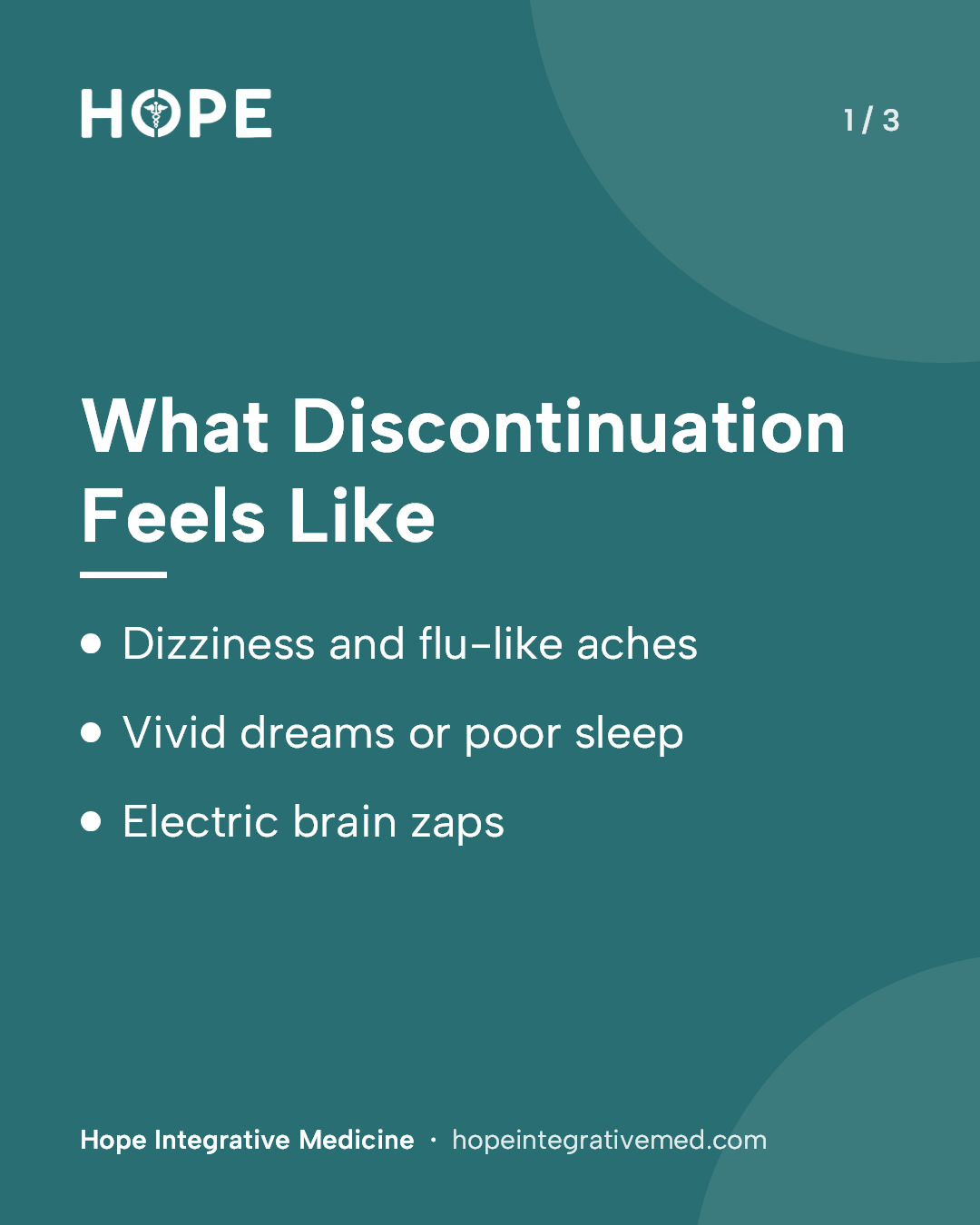
What Discontinuation Feels Like
- Dizziness and flu-like aches
- Vivid dreams or poor sleep
- Electric brain zaps
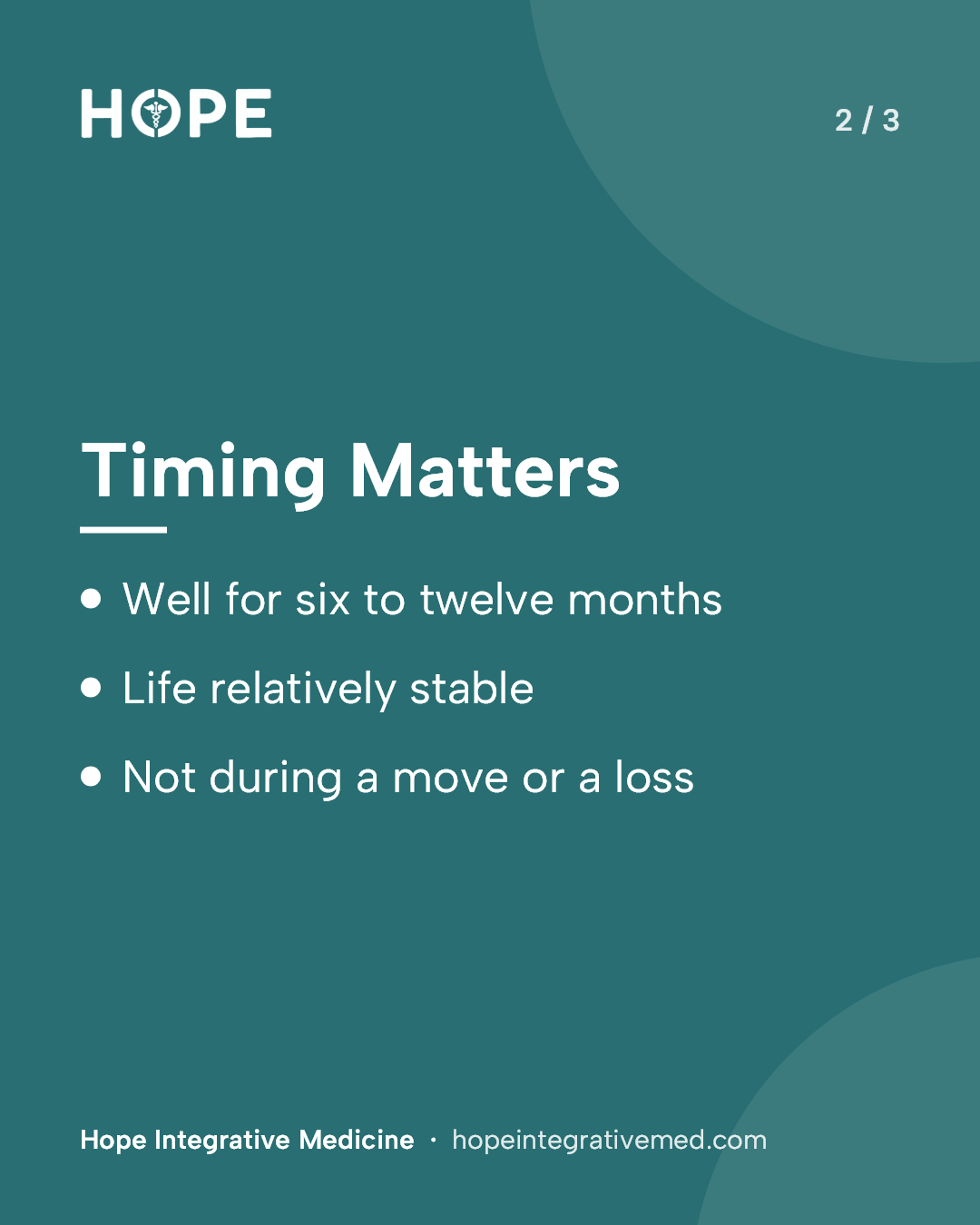
Timing Matters
- Well for six to twelve months
- Life relatively stable
- Not during a move or a loss
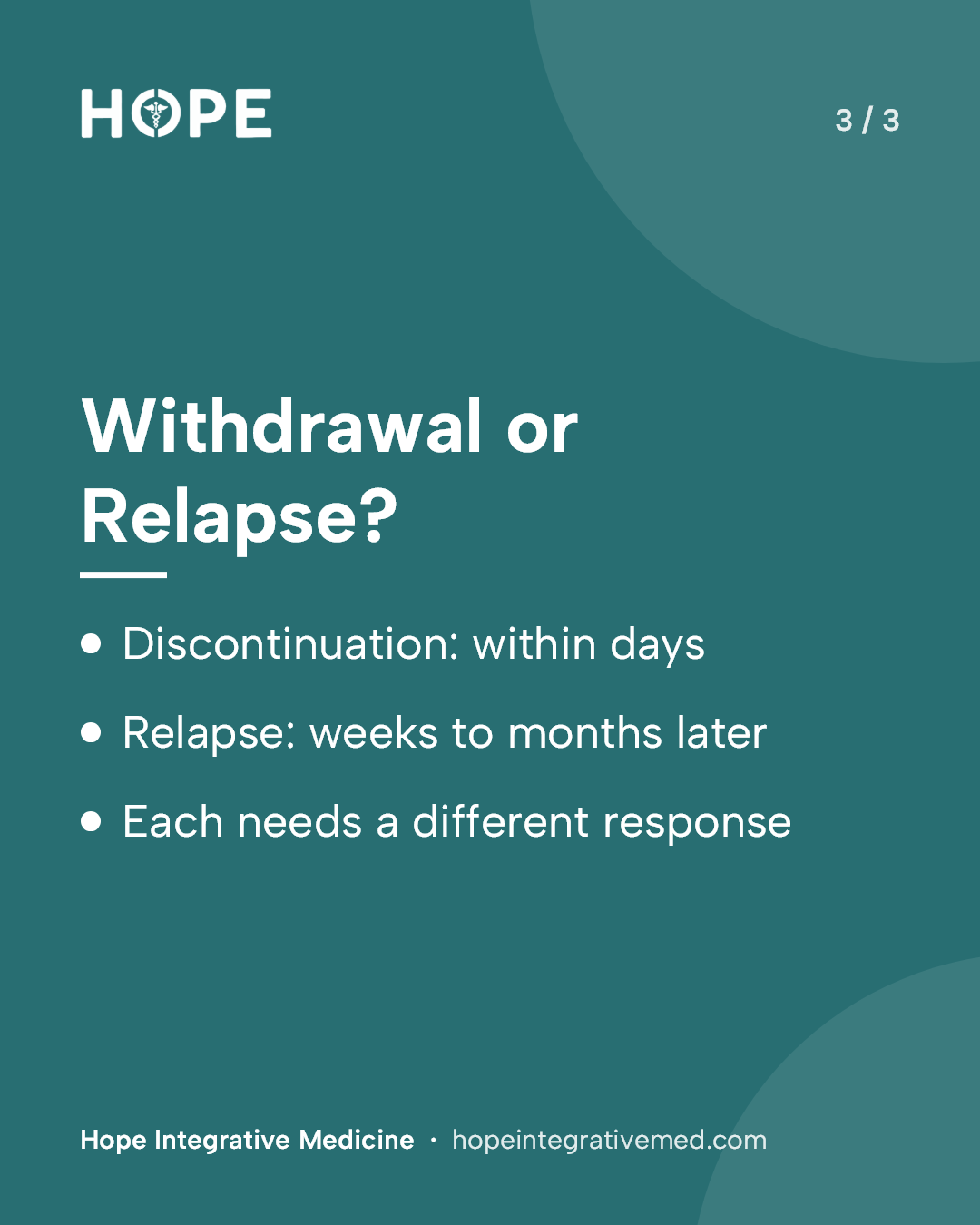
Withdrawal or Relapse?
- Discontinuation: within days
- Relapse: weeks to months later
- Each needs a different response
What the guideline says
- Stopping an antidepressant suddenly can cause discontinuation symptoms such as dizziness, flu-like aches, nausea, trouble sleeping, vivid dreams, irritability and brain zaps.
- These symptoms usually start within a few days of stopping or lowering the dose; they are not a sign of addiction, and they are largely preventable with a gradual plan.
- Medicines that leave the body quickly, such as paroxetine (Paxil) and venlafaxine (Effexor XR), tend to cause stronger symptoms, while fluoxetine (Prozac) leaves slowly and causes fewer.
- A safe taper depends on the medicine, the dose, how long you have taken it and how you have responded to dose changes before, and your prescriber builds the schedule with you.
- Discontinuation symptoms come on within days, while a return of depression or anxiety usually comes on more slowly, weeks to months later, and needs a different response.
Source: Hope Integrative Medicine, Stopping an Antidepressant Safely
This guide is general health information and does not replace advice from your own provider.
Frequently Asked Questions
A good time is when you have been well for at least six to twelve months and life is relatively stable, not in the middle of a move, a loss or a stressful season at work. Talk it through with your prescriber first.
Telling discontinuation symptoms apart from a return of depression or anxiety is one of the most important parts of follow-up, because each needs a different response.
If you are having thoughts of harming yourself, call or text 988 or call 911.