Build a Real-Food Plate in 3 Steps
Based on RealFood.gov, Dietary Guidelines for Americans, 2025 to 2030

What the 2025 to 2030 Dietary Guidelines for Americans recommend on processed food, protein, whole grains, fats and added sugar, and how to put them on your plate.
Looking for a Primary Care Provider?
Checkups, preventive care and ongoing care for chronic conditions in West Ashley, Charleston. New patients are often able to be scheduled within a week of requesting an appointment. Schedule an appointment today.
In this guide
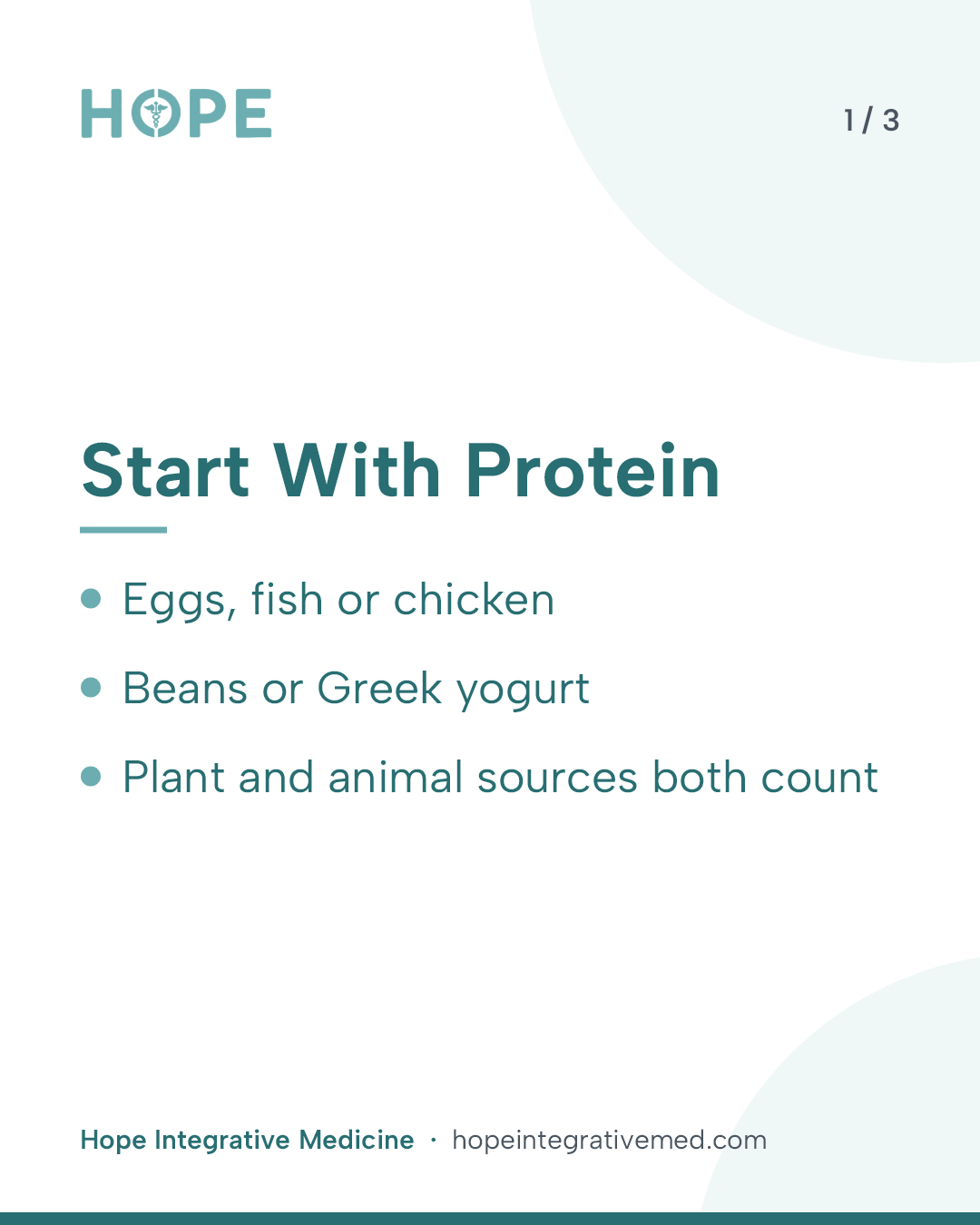
Start With Protein
- Eggs, fish or chicken
- Beans or Greek yogurt
- Plant and animal sources both count
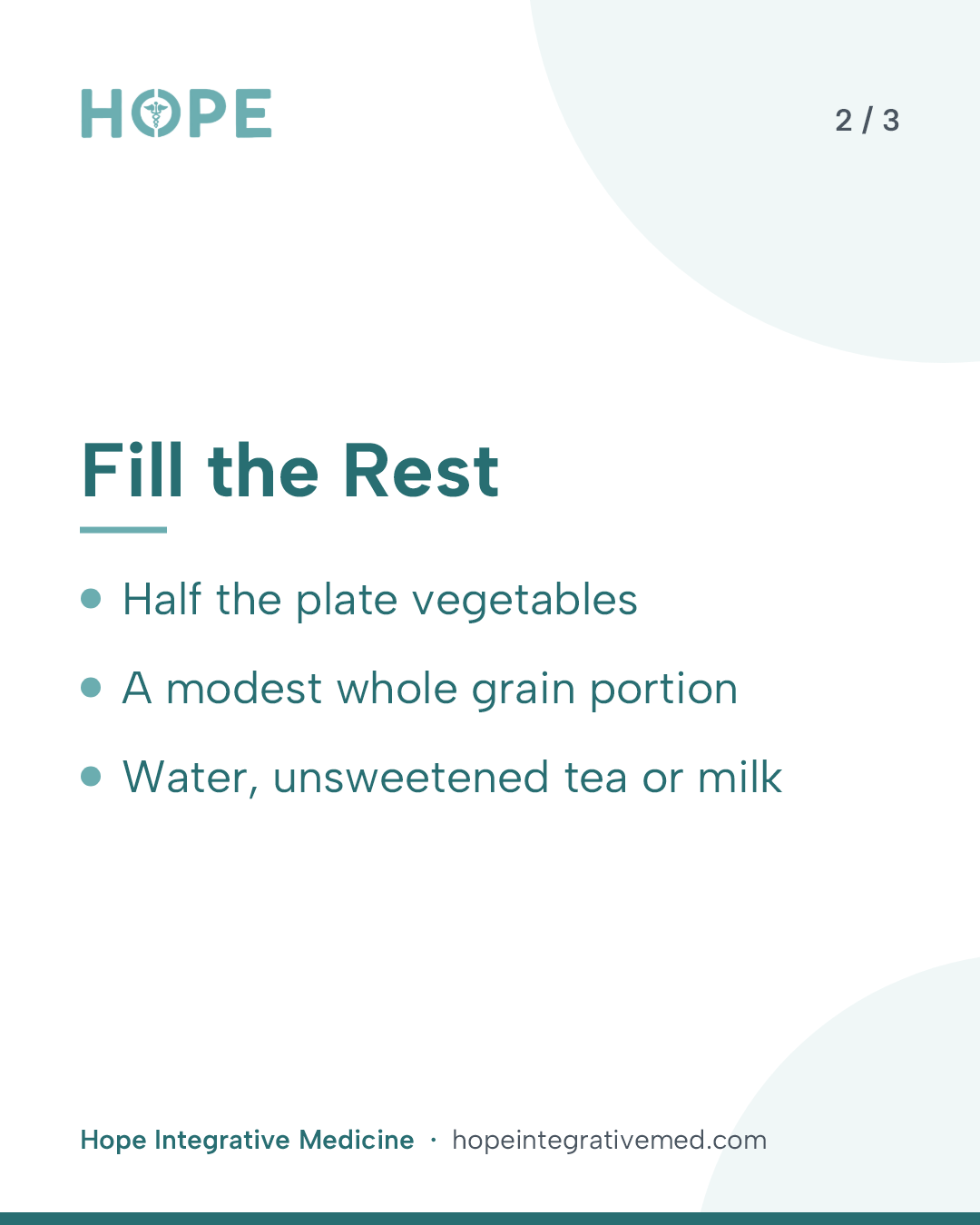
Fill the Rest
- Half the plate vegetables
- A modest whole grain portion
- Water, unsweetened tea or milk
Make It a Habit
- Cook at home more often
- Fruit and nuts for snacks
- Ask about your own targets
What the guideline says
- The Dietary Guidelines for Americans are updated every five years, and the current 2025 to 2030 edition says, for the first time, to avoid highly processed food.
- The guidelines advise building meals from whole foods and making protein a priority at every meal, from both animal and plant sources.
- They call for fiber-rich whole grains and cutting back sharply on refined carbohydrates.
- Healthy fats come from whole foods such as eggs, seafood, meat, full-fat dairy, nuts, seeds, olives and avocados.
- Added sugars are not recommended, but natural sugar in whole fruit and plain dairy is fine.
- Frozen vegetables, canned beans, plain yogurt and whole grain bread are processed in a small way and remain good choices.
Source: RealFood.gov, Dietary Guidelines for Americans, 2025 to 2030
Read the full article: The New Dietary Guidelines: Eat Real Food and Avoid Highly Processed Food →
This guide is general health information and does not replace advice from your own provider.
Frequently Asked Questions
Water, unsweetened tea or coffee, or milk.
National guidelines are written for the population. If you have kidney disease, heart disease, diabetes or another condition, your own targets for protein, fat, sodium or carbohydrates may differ. Your provider can help you adapt them.
No. Nutrition experts still debate parts of the new edition, which is one more reason to talk with your provider about what fits you.