Blood Pressure Habits for Lowcountry Living
Based on American Heart Association, Understanding Blood Pressure Readings
5 cards. Swipe or tap to see the next one.
A guide to managing high blood pressure in Charleston. Learn about integrative approaches, local resources, and lifestyle modifications specific to Lowcountry living.
Looking for a Primary Care Provider?
Checkups, preventive care and ongoing care for chronic conditions in West Ashley, Charleston. New patients are often able to be scheduled within a week of requesting an appointment. Schedule an appointment today.
In this guide
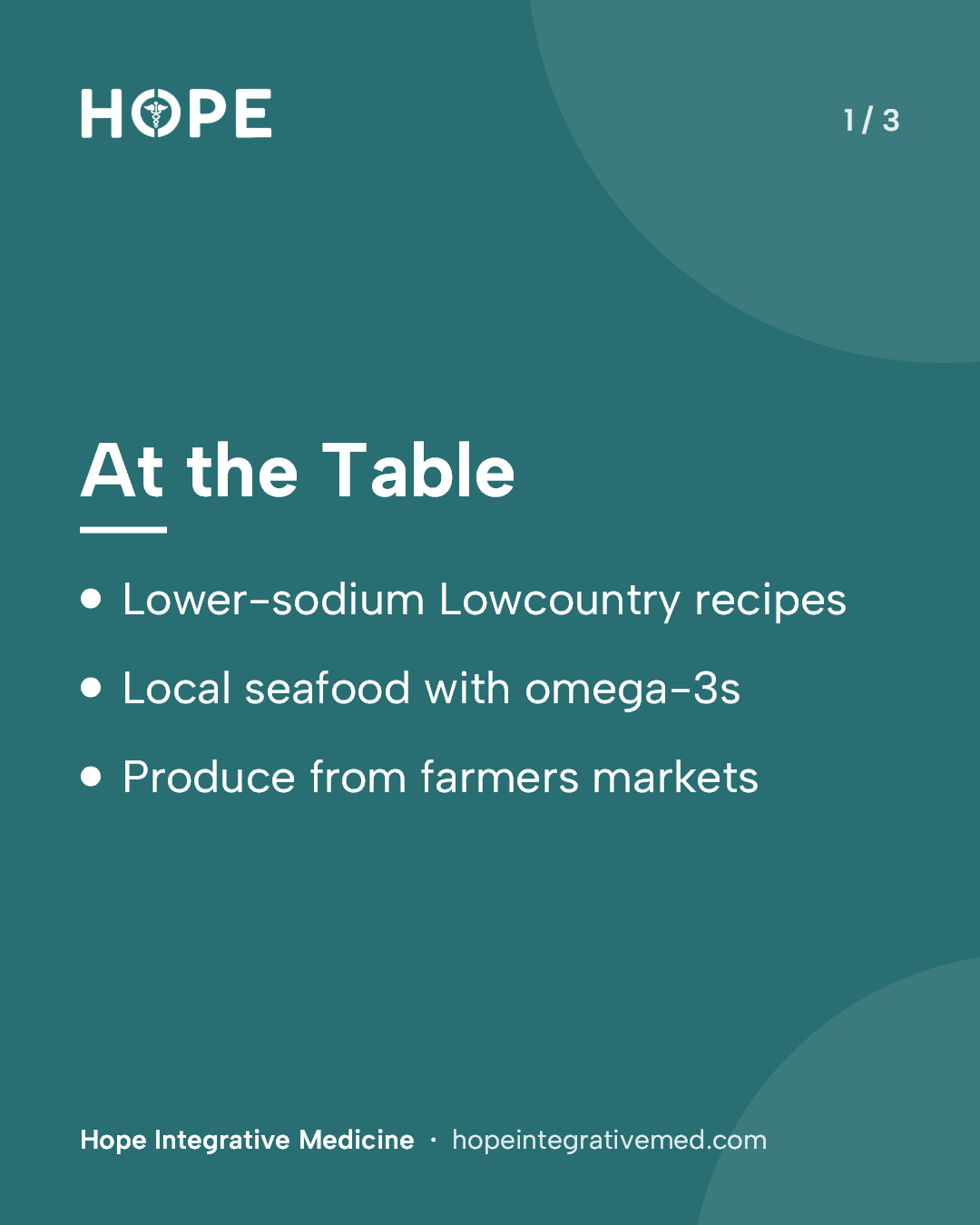
At the Table
- Lower-sodium Lowcountry recipes
- Local seafood with omega-3s
- Produce from farmers markets
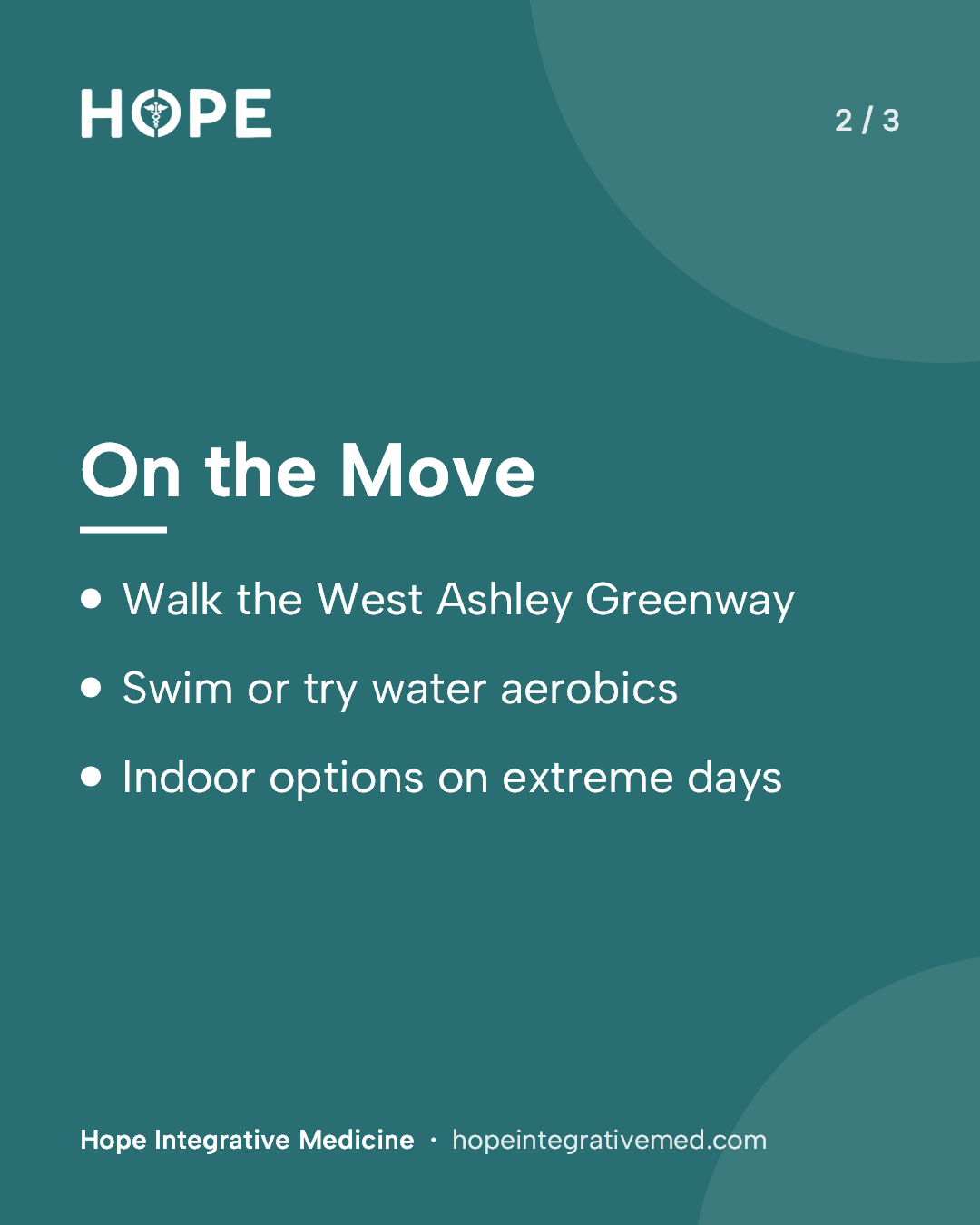
On the Move
- Walk the West Ashley Greenway
- Swim or try water aerobics
- Indoor options on extreme days
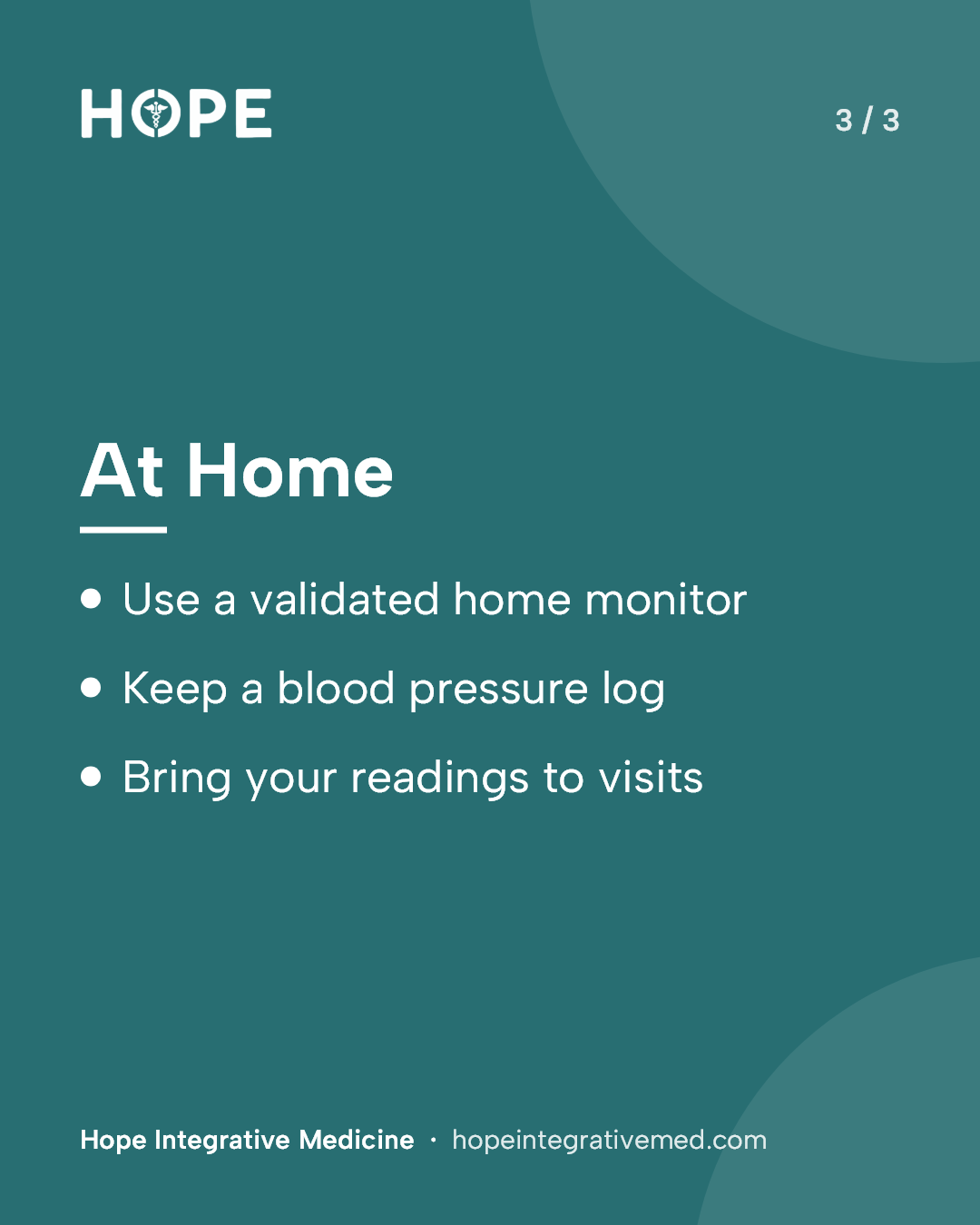
At Home
- Use a validated home monitor
- Keep a blood pressure log
- Bring your readings to visits
What the guideline says
- High blood pressure affects nearly half of American adults and is a leading risk factor for heart disease, stroke and kidney disease.
- It is called the silent killer because it often develops without obvious symptoms while it damages blood vessels, the heart, brain and kidneys.
- The American Heart Association defines normal blood pressure as less than 120 over 80, and stage 1 high blood pressure as 130 to 139 systolic or 80 to 89 diastolic.
- Accurate readings depend on the right cuff size and position, several office readings and home monitoring with a validated device.
- Lifestyle steps include the DASH eating plan, less sodium, regular physical activity, stress management and good sleep, including screening for sleep apnea.
- When lifestyle changes are not enough, medicines such as ACE inhibitors, ARBs, calcium channel blockers and thiazide diuretics can help, and some people need more than one.
Source: American Heart Association, Understanding Blood Pressure Readings
Read the full article: Managing High Blood Pressure in Charleston: A Local Patient's Guide →
This guide is general health information and does not replace advice from your own provider.
Frequently Asked Questions
DASH stands for Dietary Approaches to Stop Hypertension. It emphasizes fruits, vegetables, whole grains and lean proteins, and pairs well with cutting back on sodium.
Traditional Lowcountry dishes can be high in sodium. Ask for lower-sodium choices, watch portion sizes, and enjoy local seafood rich in omega-3 fatty acids and fresh produce from farmers markets.
Never stop blood pressure medicines suddenly on your own. Talk with your provider, who can adjust your plan safely as your numbers change.