3 Questions to Ask About Lung Cancer Screening
Based on U.S. Preventive Services Task Force, Lung Cancer: Screening (2021)
5 cards. Swipe or tap to see the next one.

Who qualifies for a yearly low-dose CT scan for lung cancer, how to count pack-years, the benefits and trade-offs of screening, what insurance and Medicare cover, and where to get help quitting.
Looking for a Primary Care Provider?
Checkups, preventive care and ongoing care for chronic conditions in West Ashley, Charleston. New patients are often able to be scheduled within a week of requesting an appointment. Schedule an appointment today.
In this guide
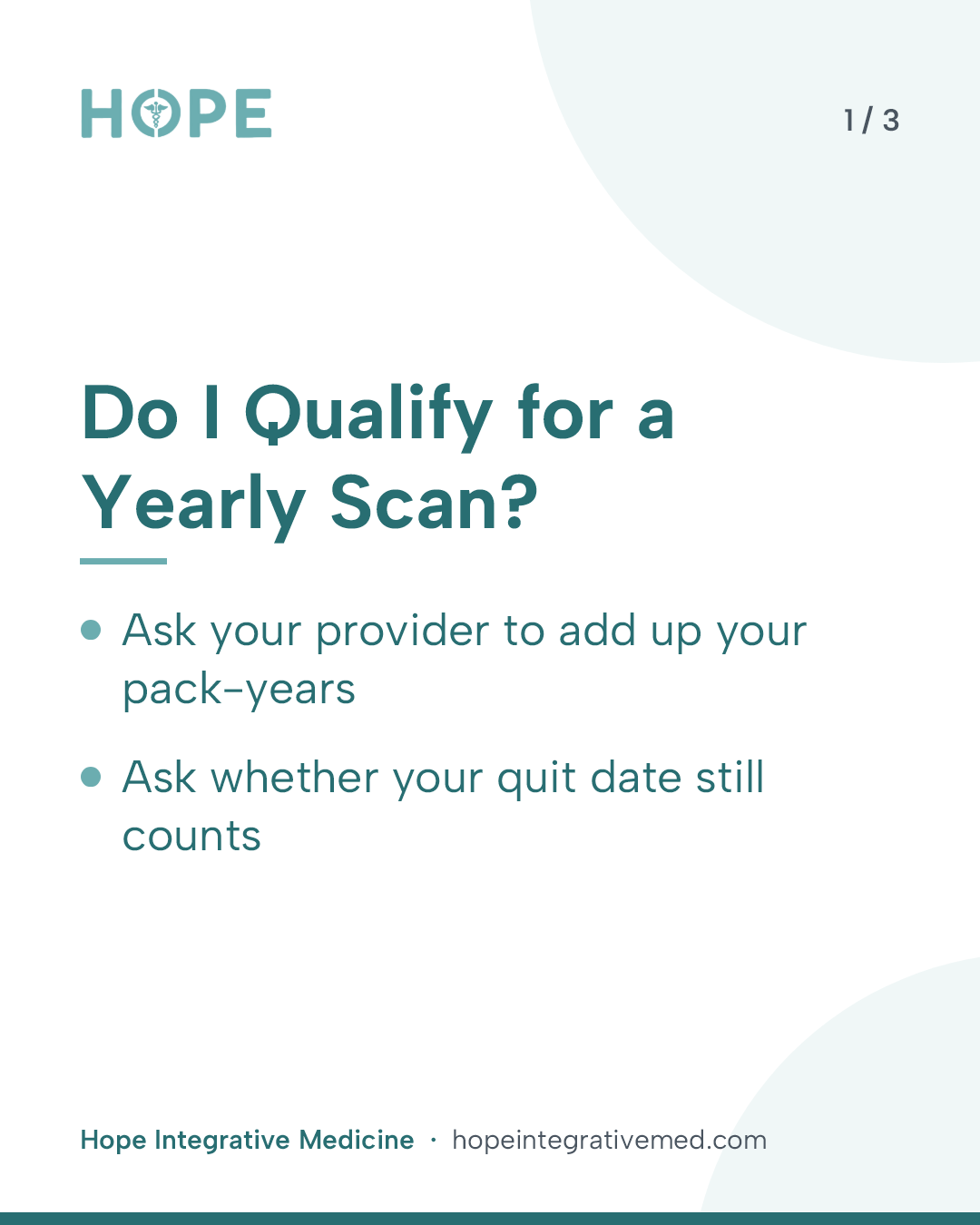
Do I Qualify for a Yearly Scan?
- Ask your provider to add up your pack-years
- Ask whether your quit date still counts
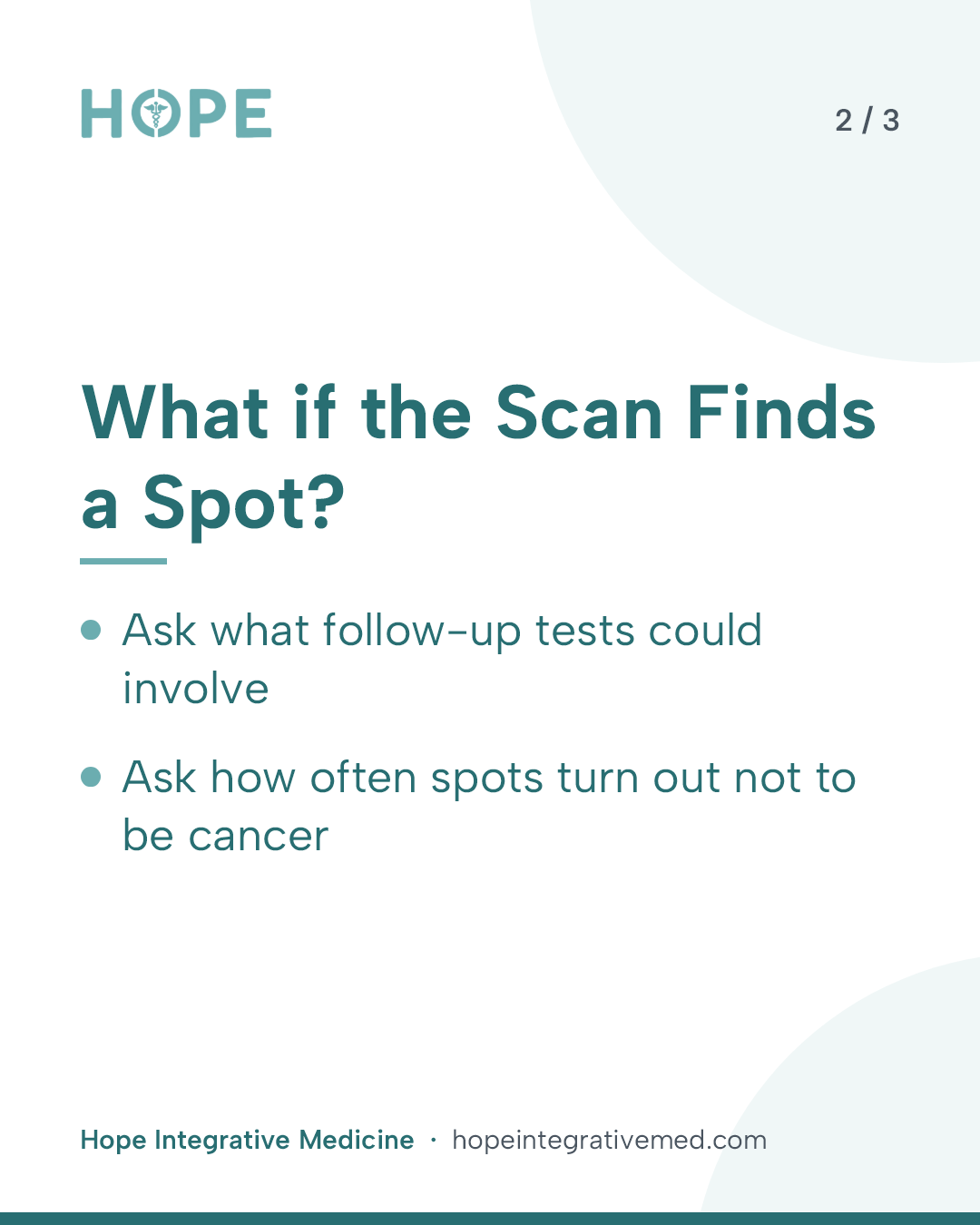
What If the Scan Finds a Spot?
- Ask what follow-up tests could involve
- Ask how often spots turn out not to be cancer
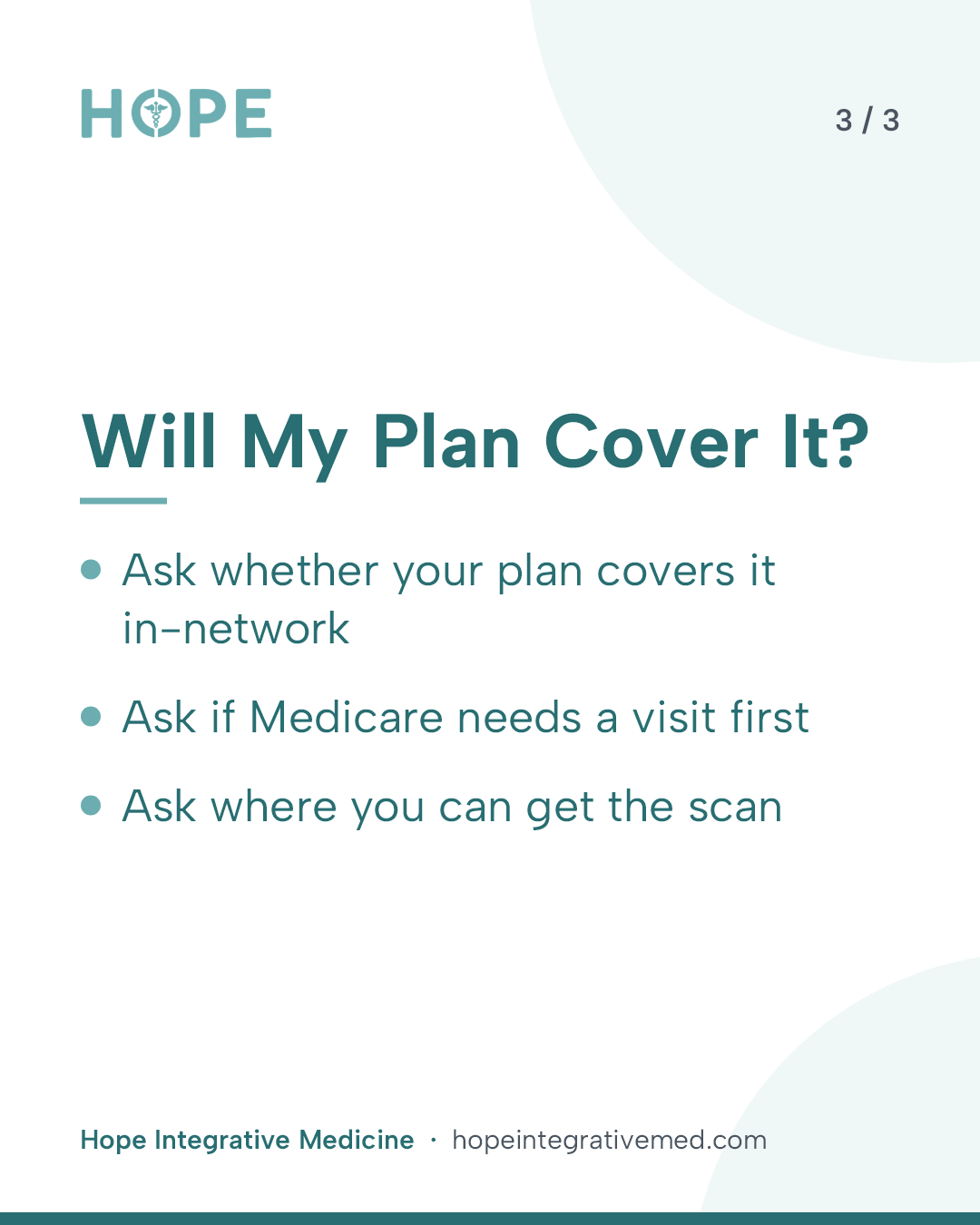
Will My Plan Cover It?
- Ask whether your plan covers it in-network
- Ask if Medicare needs a visit first
- Ask where you can get the scan
What the guideline says
- A national panel of medical experts recommends a yearly low-dose CT scan for adults 50 to 80 with at least 20 pack-years who smoke now or quit within the past 15 years (grade B, 2021).
- Pack-years are packs smoked a day times years smoked; one pack is 20 cigarettes.
- Screening stops after 15 years without smoking, or if another health problem greatly shortens expected lifespan or lung surgery would not be possible or wanted.
- Screening lowered lung cancer deaths in large studies, but false positives, extra tests and overdiagnosis are trade-offs.
- Medicare Part B covers a yearly low-dose CT for people 50 to 77 who meet its rules, after a visit to talk through benefits and harms.
- Screening does not replace quitting; the American Cancer Society says counseling and medicine can double or even triple the chances of quitting.
Source: U.S. Preventive Services Task Force, Lung Cancer: Screening (2021)
Read the full article: Lung Cancer Screening: Who Qualifies for a Yearly Low-Dose CT Scan →
This guide is general health information and does not replace advice from your own provider.
Frequently Asked Questions
If your smoking changed over the years, your provider can help you add it up. Pack-years are packs a day times years smoked.
Yes. Half a pack a day for 30 years equals 15 pack-years, which is below the 20 pack-years the screening recommendation uses.
Besides going 15 years without smoking, screening stops if another health problem greatly shortens your expected lifespan, or if you could not have, or would not want, lung surgery to treat a cancer.