3 Medicines Used in MAT and How They Differ
Based on DailyMed: Vivitrol (naltrexone extended-release injectable suspension) label
Compassionate medication-assisted treatment (MAT) in Charleston, SC, with Suboxone, Sublocade and Vivitrol for opioid and alcohol addiction recovery at Hope Integrative Medicine.
Looking for a Primary Care Provider?
Checkups, preventive care and ongoing care for chronic conditions in West Ashley, Charleston. New patients are often able to be scheduled within a week of requesting an appointment. Schedule an appointment today.
In this guide
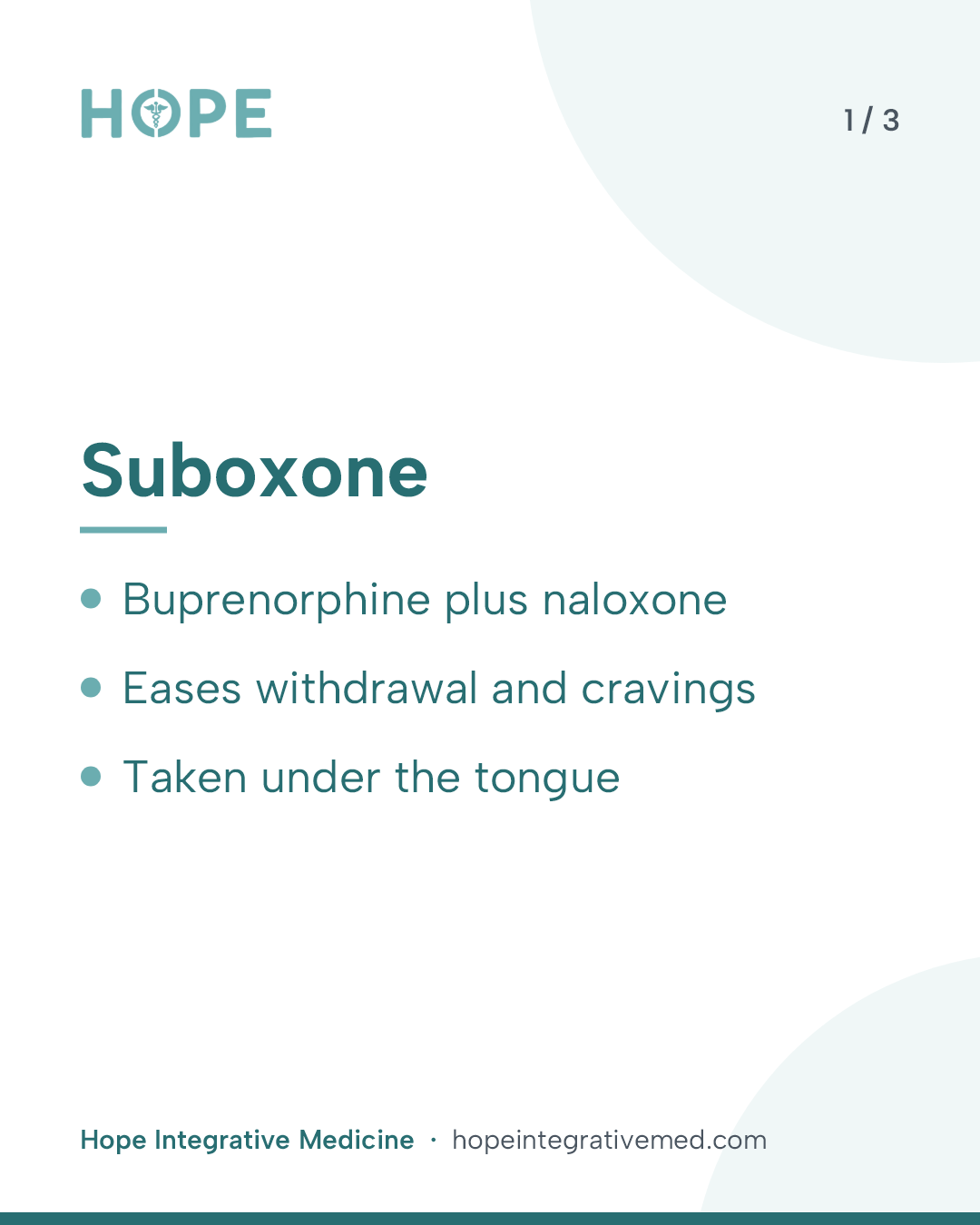
Suboxone
- Buprenorphine plus naloxone
- Eases withdrawal and cravings
- Taken under the tongue
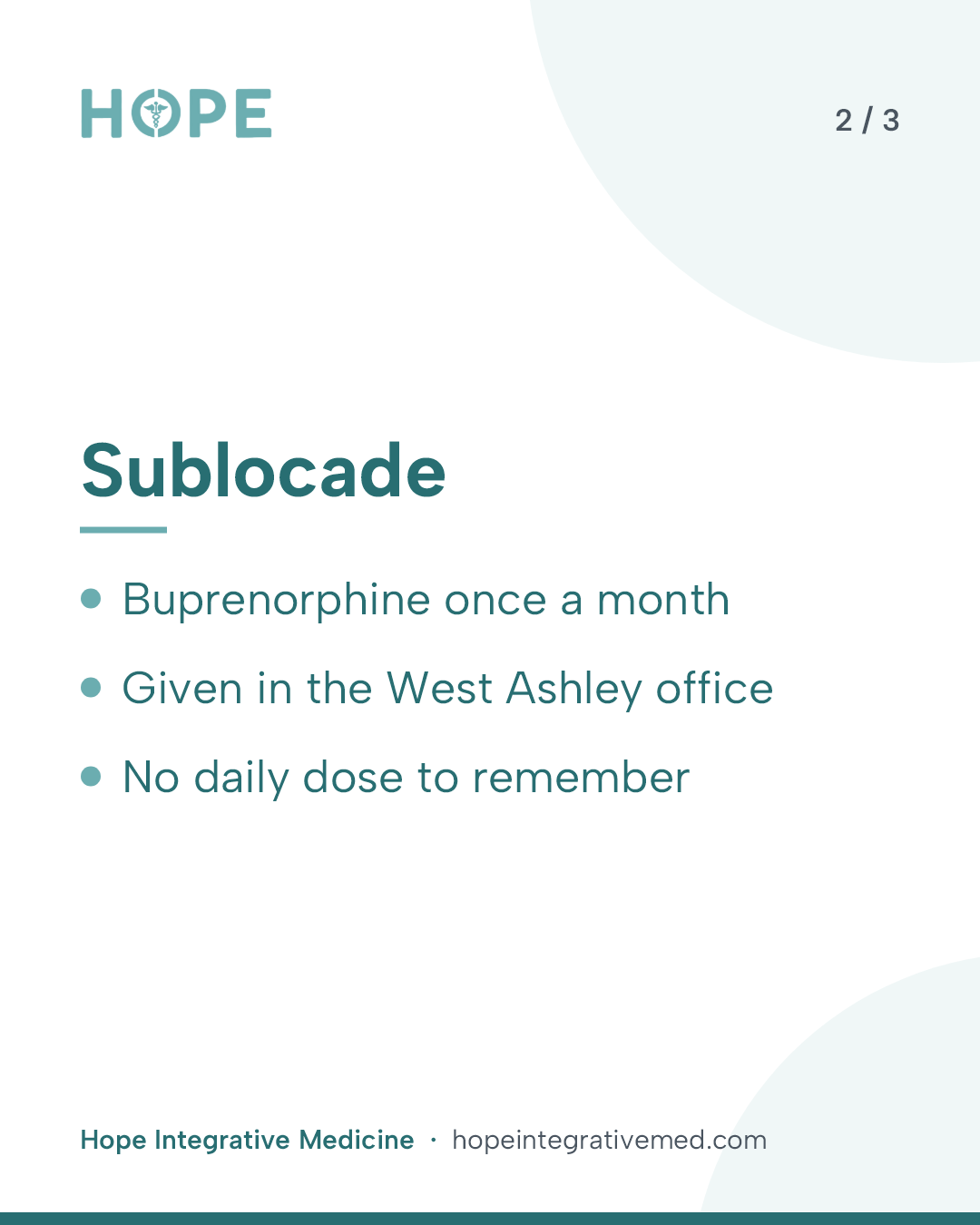
Sublocade
- Buprenorphine once a month
- Given in the West Ashley office
- No daily dose to remember
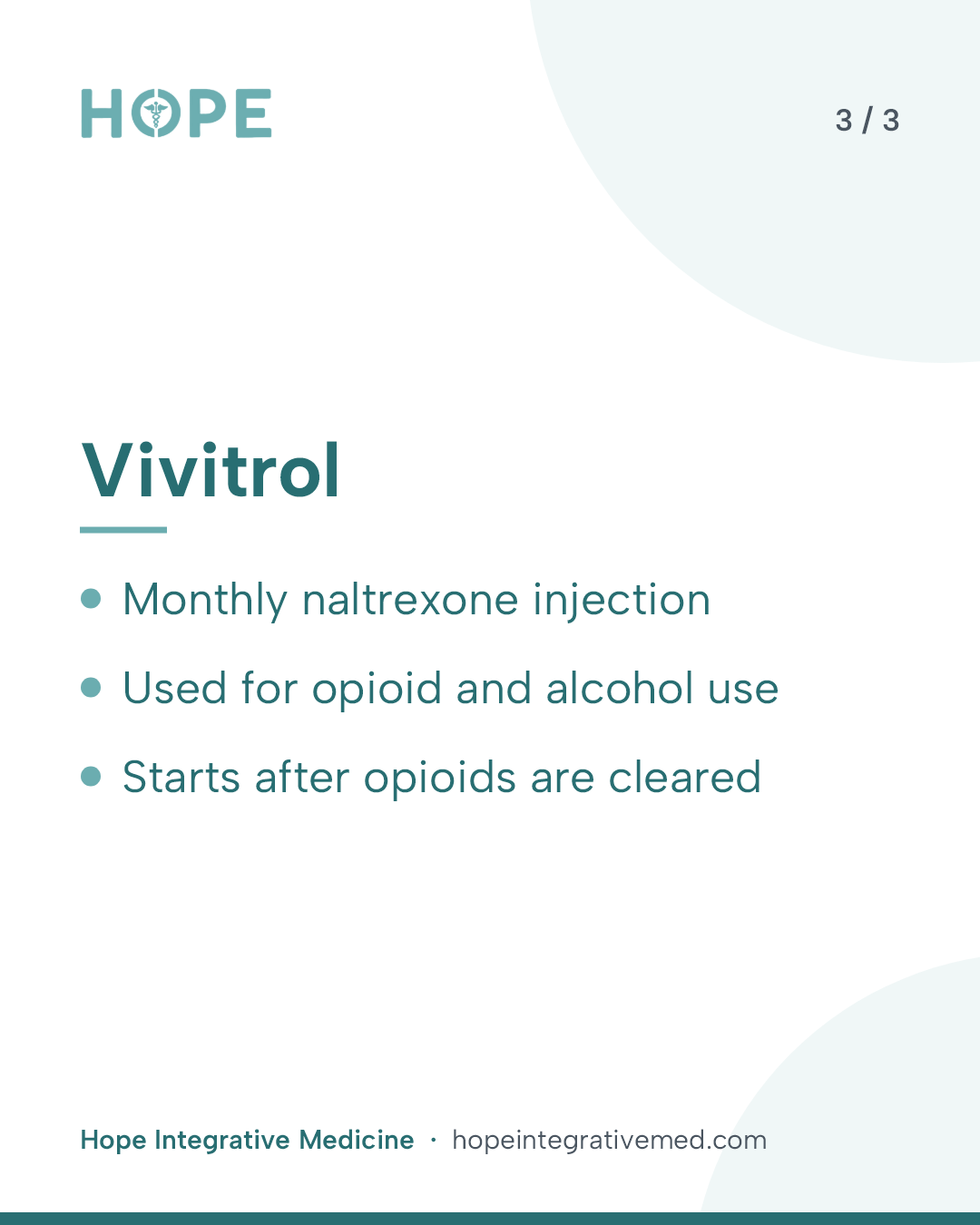
Vivitrol
- Monthly naltrexone injection
- Used for opioid and alcohol use
- Starts after opioids are cleared
What the guideline says
- Medication-assisted treatment combines FDA-approved medications with counseling and behavioral therapies to treat opioid use disorder and alcohol use disorder.
- Buprenorphine, the medicine in Suboxone and Sublocade, is a partial opioid agonist that reduces withdrawal symptoms and cravings.
- Sublocade is a once-monthly buprenorphine injection given by a provider in the West Ashley office, so there is no daily dose.
- Vivitrol is a monthly naltrexone injection that blocks opioid receptors and blunts the rewarding effects of opioids and alcohol; it is started only after opioids have fully cleared the body.
- Each patient gets an individualized plan based on a thorough assessment of medical history, substance use, past treatment, mental health and personal goals.
- How long treatment lasts depends on each person's clinical need; some people stay on maintenance treatment long term, while others work toward a supervised taper when appropriate.
Source: DailyMed: Vivitrol (naltrexone extended-release injectable suspension) label
Read the full article: MAT in Charleston: Recovery Support That Respects Your Journey →
This guide is general health information and does not replace advice from your own provider.
Frequently Asked Questions
Early in treatment, plan on weekly in-person or virtual visits. As treatment stabilizes, visits may become less frequent, such as monthly. Each visit looks at how the medicine is working, side effects, mental health and your progress.
Yes. Medicine is the foundation, and counseling and therapy address the psychological, social and behavioral sides of recovery. Hope provides referrals to addiction counselors, therapists and support groups in the Charleston area.
Yes. Addiction affects whole families. The practice offers education and resources for family members, including referrals to family therapy and support groups.